Bell Albino Leopard Gecko
The Bell Albino is one of the three recognised albino strains of leopard gecko, alongside Tremper and Rainwater.
Last reviewed: July 2026
Species guide: Leopard Gecko · All leopard gecko morphs
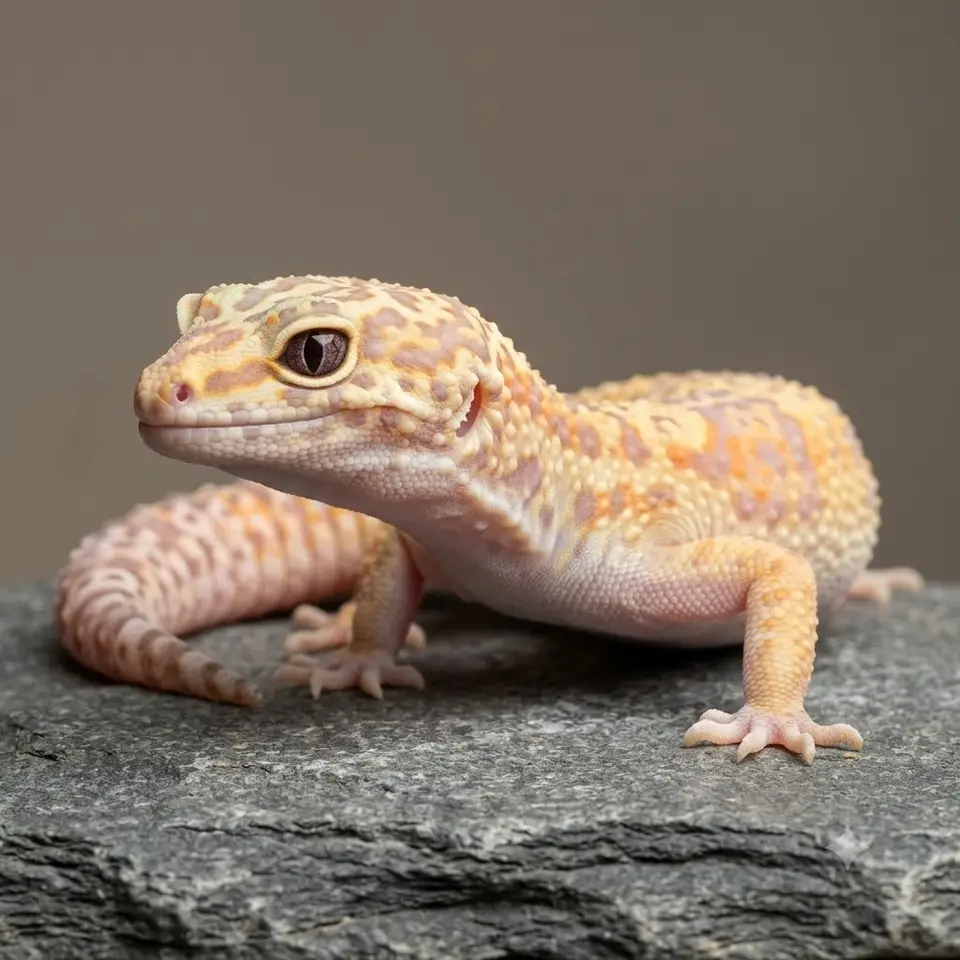 AI illustration
 Overview
The Bell Albino is one of the three recognised albino strains of leopard gecko, alongside Tremper and Rainwater. It replaces the normal dark brown and black pigment with softer brown, caramel, pink and lavender tones, and typically shows striking red or pink-tinged eyes. It is a colour morph of the leopard gecko (Eublepharis macularius).
What it is
Albinism in leopard geckos is not the pure white, red-eyed albinism seen in mammals. It is a lack of the dark melanin pigment, so a Bell Albino keeps yellow, orange and lavender colouring but loses the black spotting and dark banding of a wild-type gecko. Compared with a normal leopard gecko, the markings look brown, plum or purple instead of black, the overall look is lighter and warmer, and the eyes are far more translucent. The Bell strain in particular is often described as having pinker, more lavender tones than the other two albino lines.
The genetics
Bell Albino is a simple recessive trait. A gecko needs two copies of the Bell albino gene - one from each parent - to actually look albino. A gecko carrying a single copy looks completely normal and is called "het" (heterozygous) for Bell albino; it is a hidden carrier. This is standard recessive inheritance, not dominant, co-dominant or incomplete-dominant, so there is no "super" form and no visual difference between a normal gecko and a het carrier.
The important point for this strain is that Bell is a separate, non-compatible line. The three albino strains - Bell, Tremper and Rainwater - sit at different genetic locations. Pairing a Bell albino with a Tremper or Rainwater albino does not produce albino babies; it produces normal-looking offspring that carry one copy of each line but show neither. Because of this, breeders keep the three strains tracked separately and do not treat them as interchangeable.
Appearance
Base colour is typically pale yellow to caramel with lavender or purple wash, especially over the back and along the sides. The banding and spotting that would be jet black on a normal gecko instead appear brown, plum or pinkish. Hatchlings often show the strongest contrast and the most obvious red eyes, which can appear solid ruby in bright light. As the gecko matures the body colour tends to lighten and the banding breaks up into the more scattered spotting typical of adults, while the eyes stay noticeably light and translucent. Because albinos lack dark pigment, individual geckos vary a lot depending on what other colour and pattern genes they carry.
How it is bred
Because it is recessive, a visual Bell Albino only appears when a gecko inherits two copies of the gene. Breeders produce them by pairing two visual Bell albinos, or by pairing a visual albino with a het carrier, or by pairing two hets together. Two hets will produce a mix in which only some offspring are visually albino and others are normal-looking carriers. Keepers must pair within the Bell line, since crossing Bell to Tremper or Rainwater yields normal-looking geckos rather than albinos. Bell albino is also frequently stacked with other traits to create combo morphs, which again relies on both parents carrying the needed genes.
Cost and availability
Bell albino is a well established, widely available strain. A plain Bell Albino is generally moderately priced and easy to find from gecko breeders, sitting in the affordable-to-midrange part of the market. Prices climb when the Bell gene is combined with other sought-after traits, patterns or high-colour lines, but a basic Bell Albino is not a rare or premium-only morph.
Health and ethics
The Bell Albino morph does not carry a known genetic welfare defect. Unlike some morphs in the wider reptile hobby that are tied to neurological or structural problems, albino leopard geckos have no inherent syndrome, lethal super form or balance disorder. The one practical trait to be aware of is light sensitivity: because albinos lack dark eye pigment, they can be uncomfortable under bright light and generally do best with softer, dimmer lighting and shaded hides. This is a lighting consideration, not a defect, and does not make the morph unethical to keep or breed. As with any gecko, choose a reputable breeder who keeps clear lineage records, and see a reptile (herp) veterinarian for any health concern.
Care
Care for a Bell Albino is identical to that of a standard leopard gecko - the morph changes only how the animal looks, not what it needs. The one small adjustment is to keep lighting on the dimmer side and provide plenty of shaded hides, since albino eyes are light-sensitive. For full husbandry - enclosure size, heat and temperature gradient, humidity, substrate, diet and supplementation - follow reputable leopard gecko care resources and consult a herp vet for anything health-related.
Everyday gear for reptiles
Links go to Amazon or a partner brand's own store and may earn us a commission at no extra cost to you. As an Amazon Associate we earn from qualifying purchases. An Amazon link leads to a type of gear and you choose the exact product; a card that names a store leads to that partner's own shop.
Bell Albino Leopard Gecko - frequently asked questions
Can a Bell Albino be bred to a Tremper or Rainwater albino to make more albinos?
No. The three strains are separate and not compatible, so pairing them produces normal-looking offspring that quietly carry one copy of each line, not visible albinos. Albino babies only appear when both parents share the same albino strain.
Do Bell Albinos have health problems because of their red eyes?
The red eyes come from a lack of dark pigment, not from disease. They are not a welfare defect, but they do make the gecko more sensitive to bright light, so keep lighting soft and provide shaded hides.