Butter Corn Snake
The Butter is a color morph of the corn snake (Pantherophis guttatus), one of the most popular pet snakes in the world.
🗓️ Last reviewed: July 2026
Overview
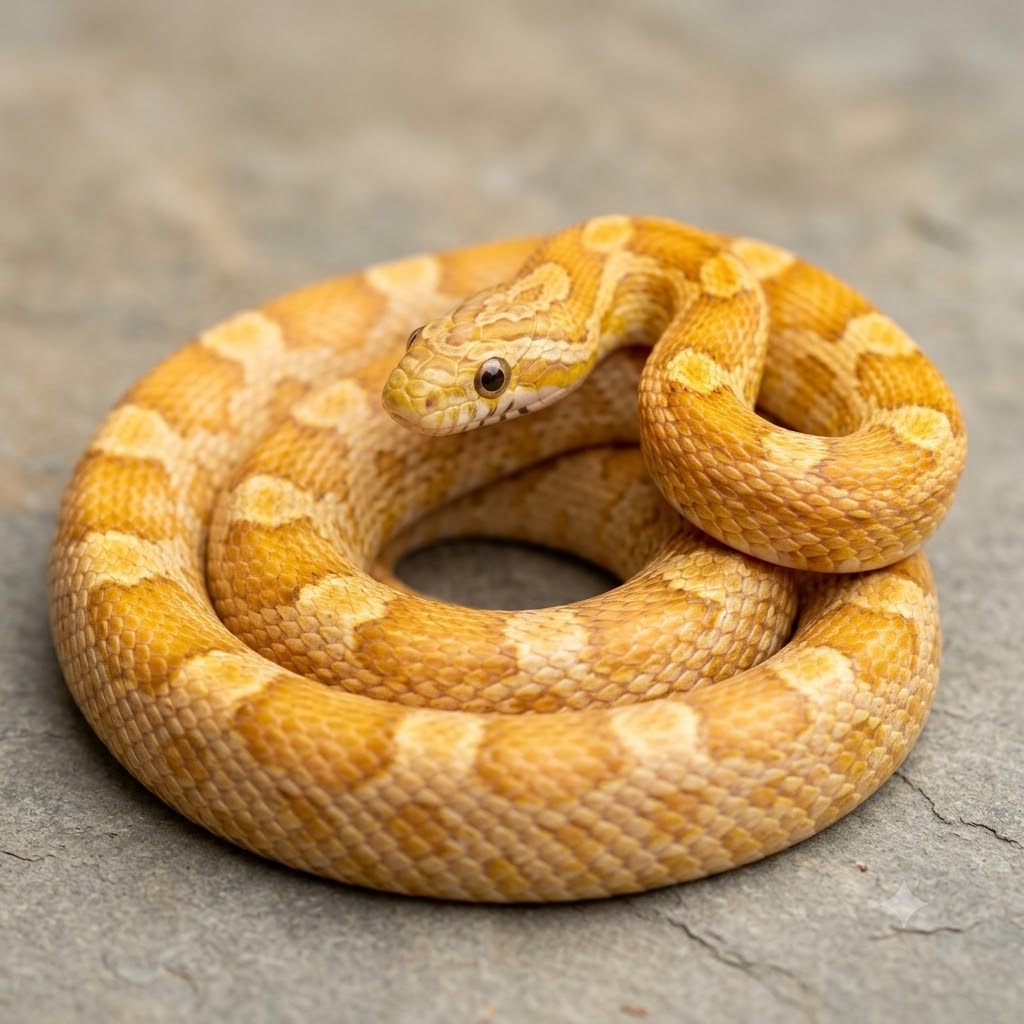
The Butter is a color morph of the corn snake (Pantherophis guttatus), one of the most popular pet snakes in the world. It is a two-gene combination that produces a soft, near-uniform lemon-to-golden yellow animal with the black pigment removed. Butters are a longtime favorite among keepers who want a bright, low-contrast snake.
What it is
A normal (wild-type) corn snake is orange to reddish with bold red-orange saddle blotches outlined in black, plus a checkered black-and-white belly. The Butter strips away all of that black and shifts the ground color toward yellow, so the snake reads as a clean butter-yellow animal with faint, slightly deeper yellow-to-pale-orange saddles instead of high-contrast markings.
The genetics
Butter is a recessive combination morph: it is amelanistic (amel) plus caramel expressed together. Both amelanism and caramel are simple recessive genes, so a Butter snake carries two copies of each - it is homozygous for both. Amelanism removes the black/brown melanin, and caramel is a yellow-based color gene; stacked together they create the butter look. Because both traits are recessive, a snake must inherit both genes from each parent to show the morph.
Appearance
Butters are predominantly yellow, ranging from a pale creamy lemon to a richer golden or mustard tone depending on the line. Saddle markings are still present but low in contrast, appearing as slightly warmer yellow or soft peach patches rather than sharply outlined blotches. Eyes are typically ruby-to-reddish because the black pigment is absent. Hatchlings often look paler or more muted and tend to deepen and warm in color as they mature over the first year or two.
How it is bred
Because both amel and caramel are recessive, a snake needs two copies of each gene to look Butter. A snake with only one copy of a recessive gene shows no visible sign of it but is a "het" (heterozygous) carrier that can pass it on. To reliably produce Butters, breeders pair animals that are either Butter or carry both genes as hets, so offspring can inherit two copies of each. This is different from dominant or incomplete-dominant traits, which show with a single copy, and from line-bred traits, which are gradually intensified by selecting the best-looking animals over generations. Butter is a stacked combo: two independent recessive genes brought together.
Cost and availability
Butter is a well-established, widely available morph and is generally inexpensive, sitting in the affordable end of the corn snake market. Prices rise modestly for especially bright, clean, or high-yellow examples, or when Butter is combined with additional genes.
Health and ethics
Butter carries no special health or welfare problems - it is purely a color combination, and amelanistic and caramel corn snakes live full, normal lives with no known defects tied to these genes. There is no lethal super form or structural issue associated with it. As with any snake, choose a reputable breeder who keeps clean records of genetics and health, and see a qualified reptile (herp) veterinarian for any medical concerns.
Care
Care is identical to any standard corn snake - the morph changes appearance only, not needs. Corn snakes are hardy, beginner-friendly colubrids with well-documented husbandry. For specifics on enclosure size, heating, and feeding, follow guidance from reputable breeders and a herp vet.
Butter Corn Snake - frequently asked questions
Is a Butter corn snake just a yellow amel?
Essentially, yes - Butter is an amelanistic corn snake that also carries the caramel gene, which pushes the color toward a cleaner, richer yellow than amel alone.
Do Butter corn snakes have any special care needs?
No. They need exactly the same care as a normal corn snake; the genes only affect color and pattern, not the animal's health or requirements.