Bumblebee Ball Python
The Bumblebee is one of the best known "combo" morphs in the ball python hobby, prized for its bright yellow base and clean, reduced pattern.
Last reviewed: July 2026
Species guide: Ball Python · All ball python morphs
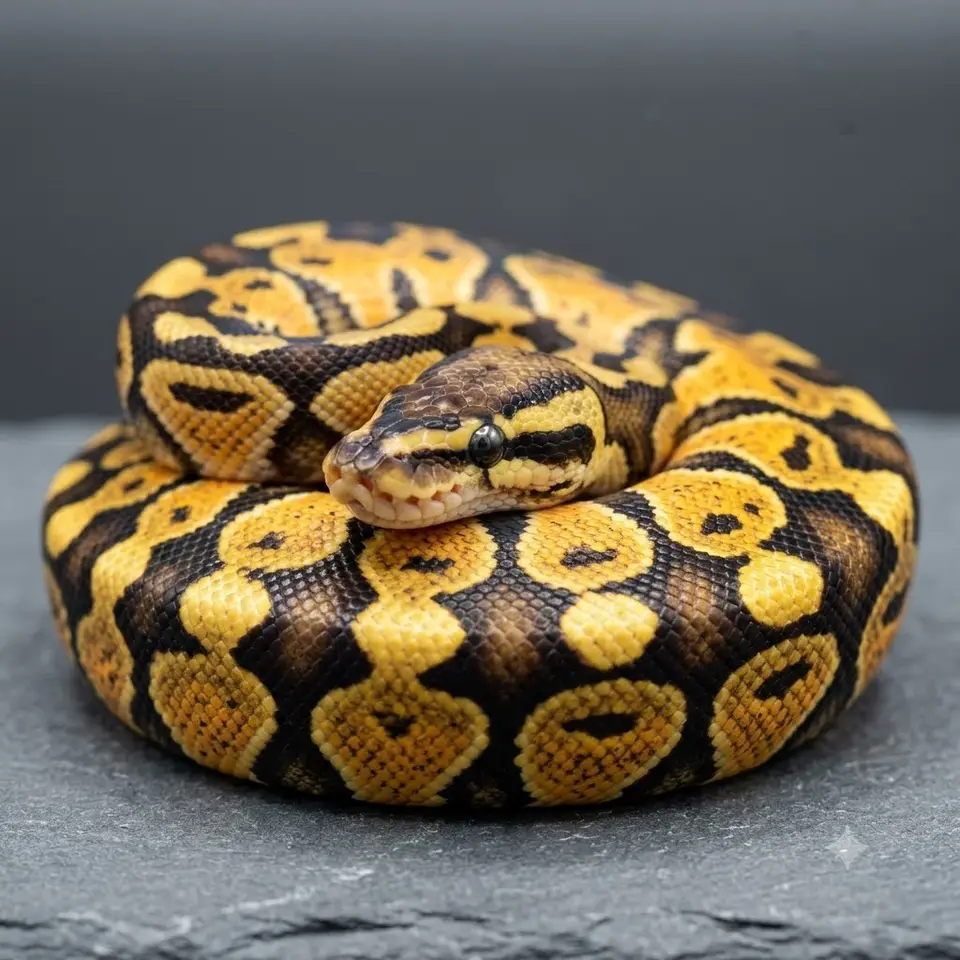 AI illustration
 Overview
The Bumblebee is one of the best known "combo" morphs in the ball python hobby, prized for its bright yellow base and clean, reduced pattern. It is produced by combining two single genes, Pastel and Spider, so it looks flashier than either parent morph alone. It is a color and pattern morph of the ball python (Python regius).
What it is
A Bumblebee stacks the effects of Pastel and Spider on one animal. Pastel lightens and brightens the ground color and often adds green-tinged eyes, while Spider thins and reduces the dark pattern into fine, web-like lines. The result is a high-contrast snake with strong yellow tones and much less black than a normal (wild-type) ball python, which is typically brown and tan with large blotchy markings.
The genetics
Bumblebee is a designer combo, not a single gene. It is the pairing of two separate morphs on one snake: Pastel and Spider. Both Pastel and Spider are inherited as dominant to incomplete-dominant traits, meaning a single copy of each gene is enough to change the animal's look. Pastel is one of the morphs the hobby often calls "co-dominant" because it has a visibly different super form (Super Pastel); technically that behavior is incomplete-dominant rather than true co-dominance. Spider is best described as a dominant trait, and importantly no confirmed "super Spider" exists, which is discussed further in the health section.
Appearance
The base color is a bright, clean yellow, warmer and lighter than a normal ball python because of the Pastel gene. The pattern is broken up and thinned by the Spider gene into narrow, connecting lines with reduced dark pigment, giving an open, "washed" look along the sides and back. Eyes often carry the lighter, greenish cast Pastel can add. Like many yellow-based morphs, some Bumblebees show a degree of "browning out" or darkening as they mature, though they usually stay noticeably brighter than a wild-type animal.
How it is bred
Because both parent genes are dominant to incomplete-dominant, a breeder only needs one copy of each to make the look. In practice a Bumblebee is made by pairing a Spider with a Pastel, or by pairing a Bumblebee with another compatible animal, so that some offspring inherit both genes at once. There are no hidden "het" pairings required as there would be with a recessive morph, and there is no viable super form of Spider to aim for. This is a combo that simply stacks two visual genes; it is not a step-by-step breeding project.
Cost and availability
Bumblebees are common and generally inexpensive by morph standards. Both Pastel and Spider are widespread, long-established genes, so the combo is easy to find and sits toward the affordable end of the market. Price varies with quality, brightness, and any extra genes added on top, but a plain Bumblebee is usually one of the more budget-friendly combos.
Health and ethics
This morph carries a real welfare issue that should not be downplayed. The Spider gene is linked to a neurological condition commonly called the "wobble," which can cause head tremors, a tilted or corkscrewing head posture, and coordination problems, especially when the animal is stressed or feeding. Severity varies from barely noticeable to significant, and it is present to some degree in essentially all Spider-based animals, including Bumblebees. There is also no confirmed viable super form of Spider, which points to the gene having a lethal super, so responsible breeders avoid trying to make one. Because of the wobble, many keepers and breeders choose not to work with Spider-based morphs at all, and those who do should be transparent about it and manage feeding and stress carefully. If you keep one, choose a reputable breeder who is honest about the wobble, and see a qualified reptile (herp) veterinarian for any health concern.
Care
Care is identical to a standard ball python. The Bumblebee combo changes only appearance, not the animal's needs, so the same temperatures, humidity, enclosure, and feeding apply as for any Python regius. Follow reputable, established ball python care resources for husbandry details, and consult a herp vet for health questions. The one practical difference is that a wobbling animal may need extra care around feeding and handling to reduce stress.
Everyday gear for reptiles
Links go to Amazon or a partner brand's own store and may earn us a commission at no extra cost to you. As an Amazon Associate we earn from qualifying purchases. An Amazon link leads to a type of gear and you choose the exact product; a card that names a store leads to that partner's own shop.
Bumblebee Ball Python - frequently asked questions
Is the Bumblebee a single gene morph?
No. It is a designer combo of two separate genes, Pastel and Spider, combined on one snake. Neither gene alone makes a Bumblebee.
Does a Bumblebee wobble?
It can, because it carries the Spider gene. The wobble ranges from mild to severe and can affect head posture, coordination, and feeding, so it should be considered before acquiring one.