Candy Cane Coral
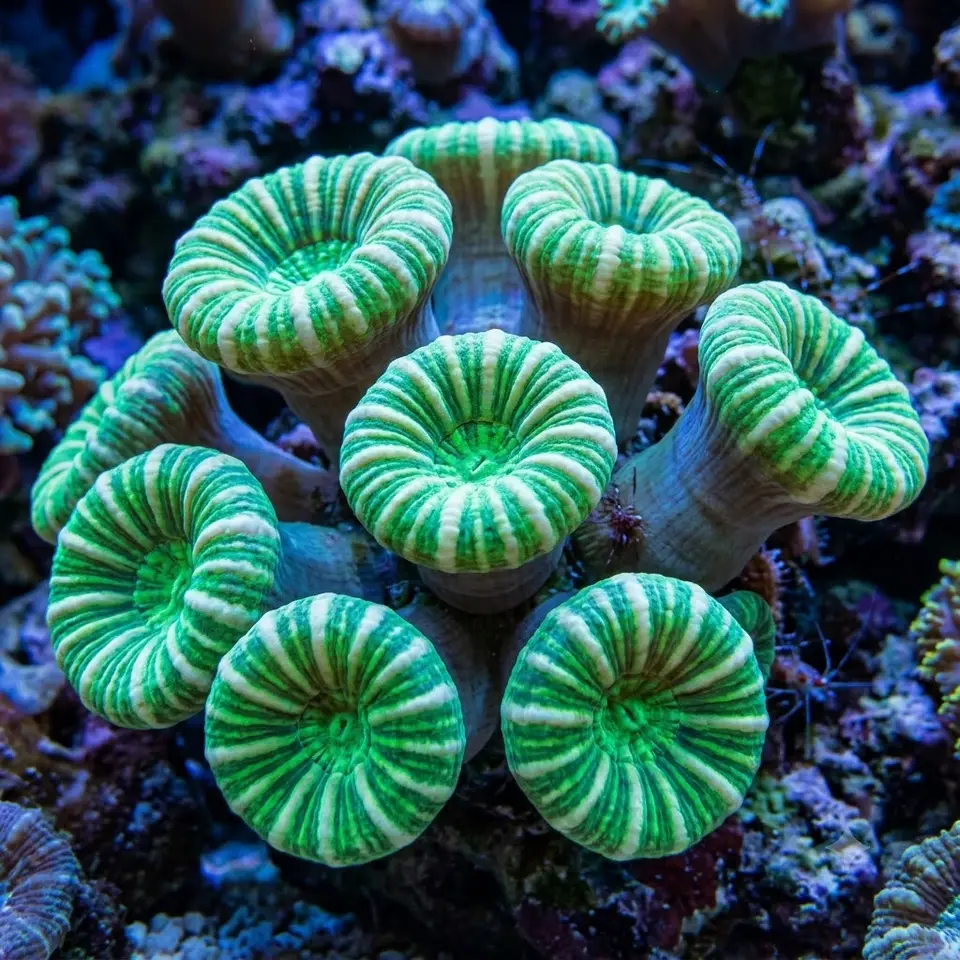
The candy cane (or trumpet) coral is one of the best beginner LPS corals - fat, rounded heads on branching stony stalks, striped like candy in green and cream, that are hardy, easy to feed, and readily grow new heads you can frag.
Last reviewed: July 2026
 AI illustration
 Overview
The candy cane (or trumpet) coral is one of the best beginner LPS corals - fat, rounded heads on branching stony stalks, striped like candy in green and cream, that are hardy, easy to feed, and readily grow new heads you can frag. (Caulastraea furcata.)
Origin & Habitat
Indo-Pacific reefs, in lower-light, gentle-flow areas of the reef.
Appearance
Rounded fleshy heads on trumpet-like stony branches, often two-tone green and tan with striped bodies; puffs up with water by day.
Placement & Temperament
Peaceful and not aggressive - a good community-reef LPS. Give a little room as it branches and grows outward.
Tank & Water Conditions
Salinity 1.024-1.026, 24-27°C, stable alkalinity 8-11 dKH, calcium 400-450, magnesium 1300-1350.
Lighting & Flow
Low to moderate light (about 50-120 PAR) and gentle flow.
Feeding
Photosynthetic, but grows noticeably faster with regular target feeding of small meaty foods - it extends feeder tentacles at night.
Health & Growth
Hardy and forgiving; among the first LPS corals recommended to new reefers. Splits into new heads steadily.
Pros & Cons
Pros
- Hardy, peaceful beginner LPS
- Easy to feed and grow
- Frags itself into new heads
Cons
- Muted colours in low light
- Needs feeding to grow fast
- Sensitive to sudden parameter swings
Everyday gear for a reef tank
Links go to Amazon or a partner brand's own store and may earn us a commission at no extra cost to you. As an Amazon Associate we earn from qualifying purchases. An Amazon link leads to a type of gear and you choose the exact product; a card that names a store leads to that partner's own shop.
Candy Cane Coral - frequently asked questions
Is candy cane coral good for beginners?
Yes - it is one of the most recommended first LPS corals: hardy, peaceful, and it grows quickly if you feed it.
How do I feed a candy cane coral?
After lights-out it extends feeding tentacles. Target-feed small meaty foods (mysis, tiny pellets) onto the heads a couple of times a week for fast growth.