Hammer Coral
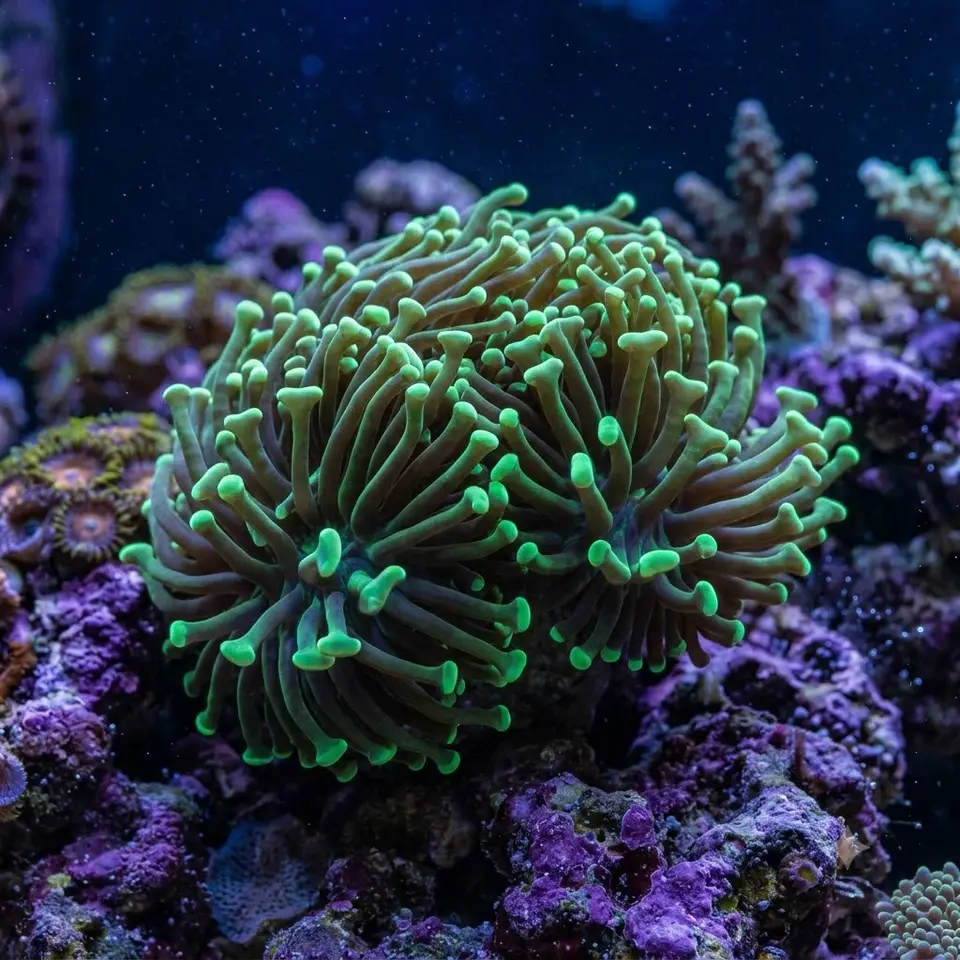
The hammer coral is one of the most popular large-polyp stony (LPS) corals - a flowing mass of tentacles tipped with hammer- or anchor-shaped heads that sway beautifully in the current.
Last reviewed: October 2026
 AI illustration
 Overview
The hammer coral is one of the most popular large-polyp stony (LPS) corals - a flowing mass of tentacles tipped with hammer- or anchor-shaped heads that sway beautifully in the current. It is hardy and rewarding, but it packs stinging sweeper tentacles, so it needs elbow room. (Euphyllia ancora.)
Origin & Habitat
Indo-Pacific reefs, on the reef slope in moderate light and gentle-to-moderate flow.
Appearance
Long fleshy tentacles tipped with T- or anchor-shaped ends, in green, gold, or two-tone; the stony skeleton hides beneath the flowing polyps.
Placement & Temperament
Aggressive - it extends long stinging 'sweeper' tentacles at night that can kill neighbouring corals. Leave at least 15 cm (6 in) of clear space around it. It generally tolerates other Euphyllia (hammer/frogspawn) but keep torch corals separate.
Tank & Water Conditions
Salinity 1.024-1.026, 24-27°C, stable alkalinity 8-11 dKH, calcium 400-450, magnesium 1300-1350. Stability matters more than perfection.
Lighting & Flow
Moderate light (about 100-175 PAR) and gentle to moderate flow - too much flow and the heads cannot open.
Feeding
Photosynthetic, but responds well to occasional target feeding of small meaty foods, which speeds growth.
Health & Growth
Hardy for an LPS. Watch for 'brown jelly' infection (a fast rotting slime) - isolate and dip an affected head immediately. Never let its skeleton's sharp edges cut you when handling.
Pros & Cons
Pros
- Beautiful flowing movement
- Hardy, rewarding LPS
- Splits into new heads over time
Cons
- Stinging sweepers: needs space
- Brown jelly can spread fast
- Sensitive to parameter swings
Everyday gear for a reef tank
Links go to Amazon or a partner brand's own store and may earn us a commission at no extra cost to you. As an Amazon Associate we earn from qualifying purchases. An Amazon link leads to a type of gear and you choose the exact product; a card that names a store leads to that partner's own shop.
Hammer Coral - frequently asked questions
How far apart should I place my hammer coral?
Give it at least 15 cm of clear space from non-Euphyllia corals - it fires long stinging sweeper tentacles at night. It usually gets along with other hammers and frogspawn, but keep torches separate.
My hammer looks deflated - why?
Common causes are too much flow, a parameter swing, a nearby coral stinging it, or being pestered by a fish. Check flow and stability first.