Plate Coral
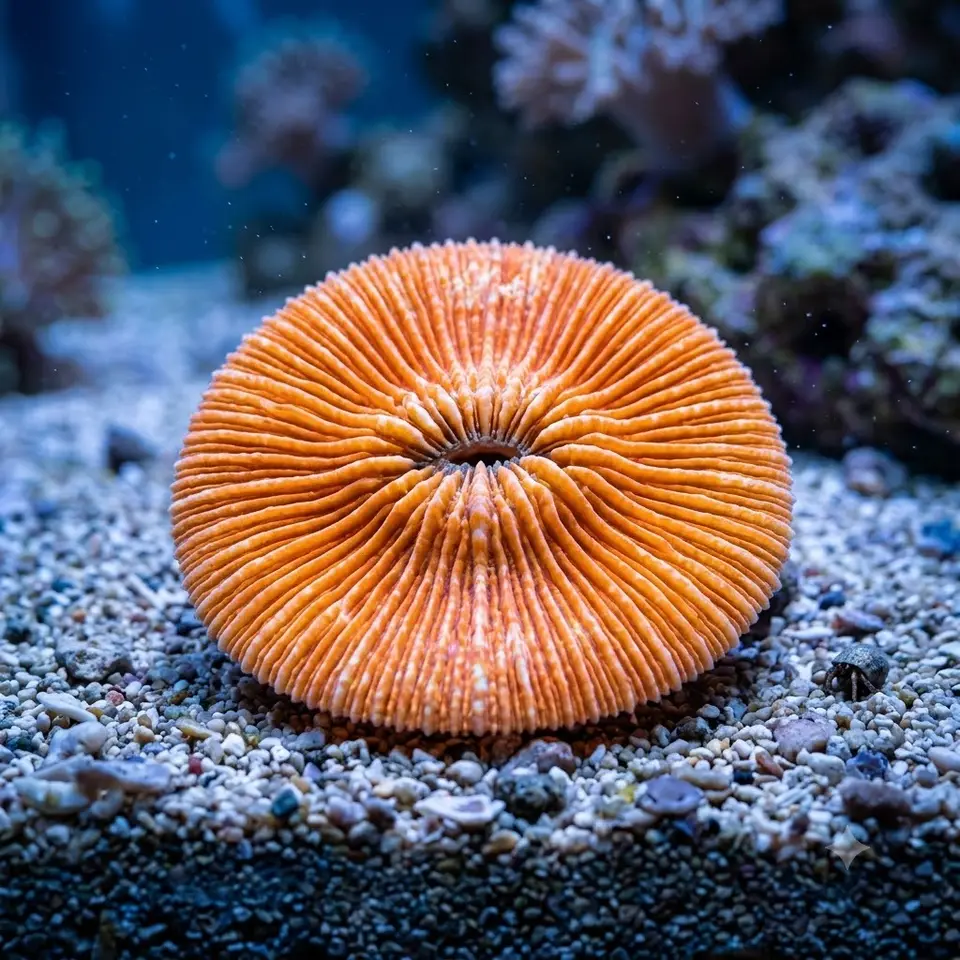
The plate (or disc) coral is unusual - a single large free-living polyp shaped like a domed disc that is not attached to rock but sits loose on the sand, and can even slowly inflate and move itself.
Updated: July 2026
 AI illustration
 Overview
The plate (or disc) coral is unusual - a single large free-living polyp shaped like a domed disc that is not attached to rock but sits loose on the sand, and can even slowly inflate and move itself. Hardy and striking, with one firm rule: keep it on soft sand, not rock. (Fungia and relatives.)
Origin & Habitat
Indo-Pacific reefs, lying free on sandy and rubble beds at the base of the reef.
Appearance
A round or oval disc with radiating ridges and a central mouth, in green, orange, pink or mottled tones; fleshy tissue puffs up over the skeleton.
Placement & Temperament
Solitary and free-living. Keep it on open sand, not wedged in rock, and clear of stinging neighbours - it cannot move away quickly if attacked.
Tank & Water Conditions
Salinity 1.024-1.026, 24-27°C, stable alkalinity 8-11 dKH, calcium 400-450, magnesium 1300-1350.
Lighting & Flow
Low to moderate light (about 50-120 PAR) and gentle flow.
Feeding
Photosynthetic, but has a large central mouth and takes meaty target feeds readily, which speeds recovery and growth.
Health & Growth
Hardy if not damaged - the soft tissue tears easily on sharp rock, and torn tissue invites infection. Handle by the skeleton edge, never the flesh, and keep it on sand.
Pros & Cons
Pros
- Unique free-living disc coral
- Bold colours and a big feeding mouth
- Hardy on open sand
Cons
- Tissue tears easily on rock
- Torn tissue can get infected
- Must sit on soft substrate
Everyday gear for a reef tank
Links go to Amazon or a partner brand's own store and may earn us a commission at no extra cost to you. As an Amazon Associate we earn from qualifying purchases. An Amazon link leads to a type of gear and you choose the exact product; a card that names a store leads to that partner's own shop.
Plate Coral - frequently asked questions
Can I put a plate coral on the rocks?
No - keep it on soft sand. Its fleshy underside tears on sharp rock, and damaged tissue often gets infected. It is a free-living, sand-dwelling coral.
My plate coral looks puffed up and huge - is that OK?
Yes. Fungia inflate their tissue with water, which can make them balloon well beyond the skeleton. It is normal and a sign of health.