Pocillopora Coral
Pocillopora is a small-polyp stony (SPS) coral - a colonial reef-building animal (a cnidarian), not a plant.
Updated: September 2026
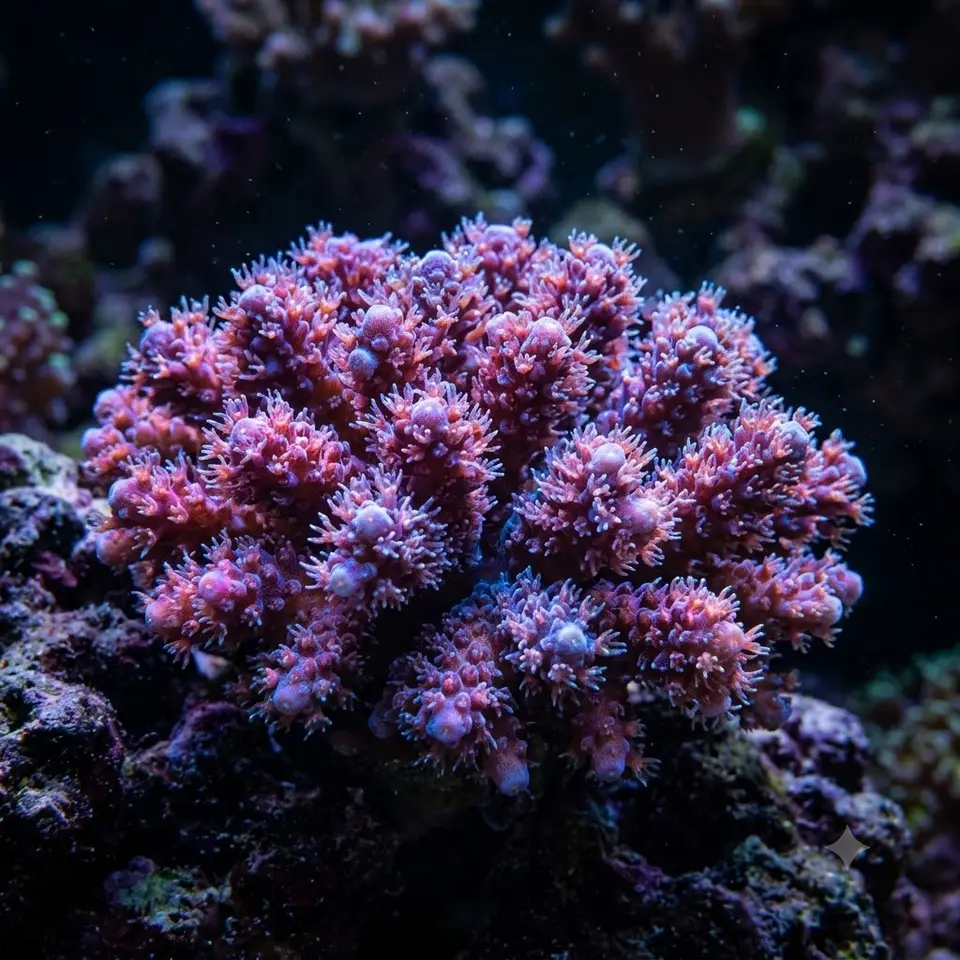 AI illustration
 Overview
Pocillopora is a small-polyp stony (SPS) coral - a colonial reef-building animal (a cnidarian), not a plant. It is closely related to the birdsnest corals (and includes the species sold as cauliflower coral), forming branching colonies covered in distinctive warty bumps called verrucae. Among SPS corals it is one of the fastest-growing and most forgiving, which makes it a popular first stony coral for reefers moving up from softies and LPS.
Origin & Habitat
Pocillopora is a widespread Indo-Pacific genus, found across reefs from the Red Sea and East Africa through the Indian Ocean to the central Pacific, and it is also a major reef-builder on the eastern Pacific coast. In the wild it thrives on shallow, sunlit, high-energy reef crests and slopes where wave action keeps water moving and oxygenated. Buy aquacultured frags rather than wild colonies - wild collection is regulated and all stony corals (order Scleractinia) are listed under CITES Appendix II.
Appearance
Colonies grow as clusters of stout, upright branches studded with the raised warts (verrucae) that set the genus apart from smoother birdsnest corals. Colours range from pink and salmon to green, brown, cream, and deep purple, with the branch tips often showing the brightest colour. During the day the tiny polyps may be retracted and the surface looks smooth and warty; at night, and often when fed, the colony fuzzes over as fine polyps extend to feed.
Placement & Temperament
Pocillopora is a relatively peaceful SPS coral. It lacks the long, damaging sweeper tentacles of aggressive LPS corals like Euphyllia or Lobophyllia, so it is unlikely to sting neighbours. Its real weapon is speed - it grows fast and will overtop and shade slower corals if crowded, so give it a few inches of clearance on all sides. Place it in the upper-to-middle third of the rockwork, secured firmly to solid rock where it gets bright light and strong flow, not on shifting sand.
Tank & Water Conditions
Like all SPS corals it needs a mature, stable reef tank with low nutrients but not barren water. Target salinity 1.024-1.026, temperature 24-27 C (75-81 F), and hold the reef "big three" steady: alkalinity 8-11 dKH, calcium 400-450 ppm, and magnesium 1300-1350 ppm. Stability matters more than chasing perfect numbers - Pocillopora is especially sensitive to swinging alkalinity, which is a leading cause of tip burn and tissue loss, so dose consistently and test regularly.
Lighting & Flow
Give it bright reef lighting in the roughly 150-300 PAR range - it adapts well but shows its best colour under strong light, so acclimate gradually to avoid bleaching. Flow should be strong and turbulent, mimicking the wave-swept reef crests it comes from; brisk, varied current keeps detritus off the branches, delivers food, and supports its rapid growth.
Feeding
Most of its energy comes from symbiotic zooxanthellae (photosynthetic algae in its tissue), so good light is its main "food." It also captures plankton with its polyps and responds well to occasional target feeding of fine foods such as reef roe, baby brine, or powdered coral foods, especially in the evening when polyps are extended. Feeding is optional in a well-lit, lightly fed tank but can boost growth and colour.
Health & Growth
Pocillopora is one of the hardier and faster-growing SPS corals, which is why it is often recommended as a first stony - established frags can encrust and branch noticeably within months. Watch for progressive tissue loss from the base (often tied to unstable alkalinity or pests), and inspect new colonies for Acropora-eating flatworms or "monti"-type nudibranchs before adding them. Warning signs include browning (too little light or excess nutrients), bleaching or tip burn (light shock or an alkalinity swing), and receding flesh exposing white skeleton - all signals to check parameter stability first.
Pros & Cons
Pros
- One of the hardier, fastest-growing SPS corals - a forgiving entry into stony corals
- Peaceful with no damaging sweeper tentacles, so it is easy to place near other corals
- Bright, varied colours and readily available as aquacultured frags
Cons
- Very sensitive to alkalinity swings; needs a stable, mature tank and consistent dosing
- Fast growth can shade or crowd slower neighbours if not given space
- Can carry SPS-specific pests (flatworms, nudibranchs) that require inspection and dipping
Everyday gear for a reef tank
Links go to Amazon or a partner brand's own store and may earn us a commission at no extra cost to you. As an Amazon Associate we earn from qualifying purchases. An Amazon link leads to a type of gear and you choose the exact product; a card that names a store leads to that partner's own shop.