Acan Lord Coral
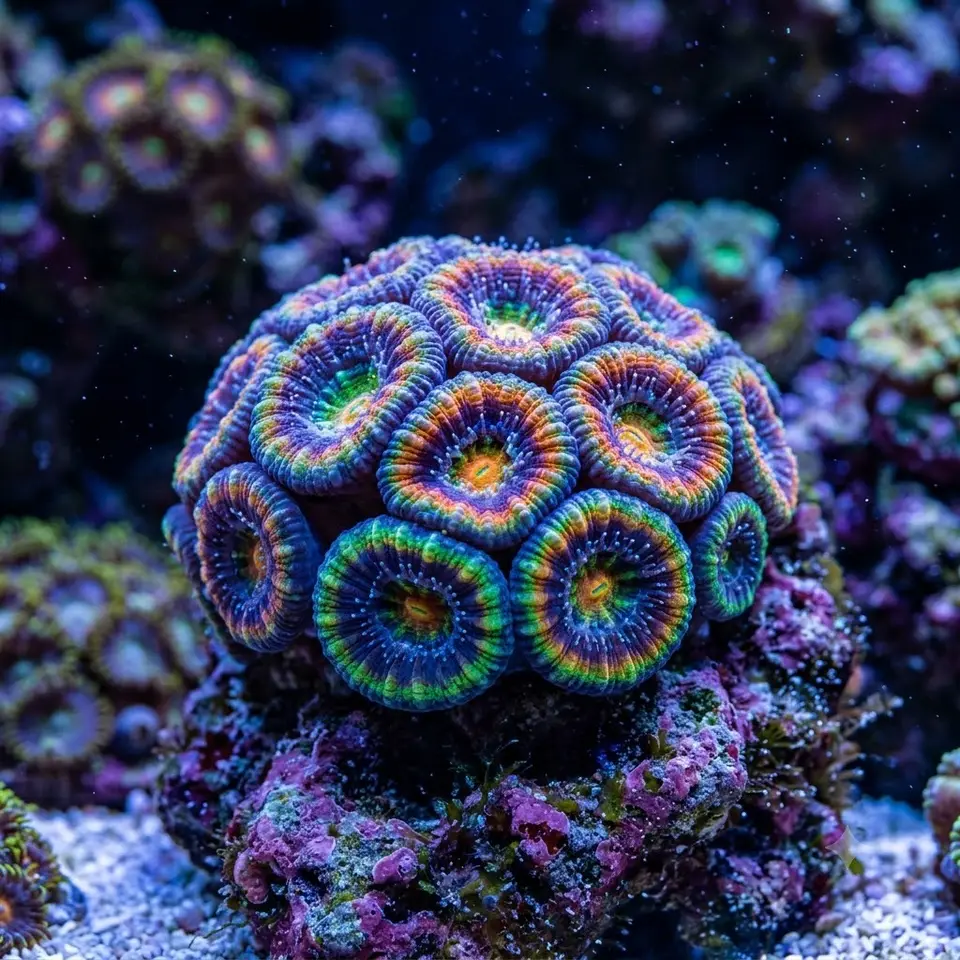
Acan lords ('acans') are collector LPS corals - fleshy, jewel-toned encrusting colonies in electric rainbow patterns, prized like zoanthids for their colour morphs.
Last reviewed: July 2026
 AI illustration
 Overview
Acan lords ('acans') are collector LPS corals - fleshy, jewel-toned encrusting colonies in electric rainbow patterns, prized like zoanthids for their colour morphs. They are hardy, love to eat, and grow into gem-like mats. (Micromussa lordhowensis, formerly Acanthastrea.)
Origin & Habitat
Indo-Pacific and Australian reefs, in lower-light, moderate-flow zones.
Appearance
Rows of fat, fleshy round polyps in vivid multicolour rings - greens, reds, oranges, blues - on an encrusting stony base.
Placement & Temperament
Mildly aggressive - acans can extend feeder/sweeper tentacles at night, so give a few centimetres between colonies. Otherwise reasonable community corals.
Tank & Water Conditions
Salinity 1.024-1.026, 24-27°C, stable alkalinity 8-11 dKH, calcium 400-450, magnesium 1300-1350.
Lighting & Flow
Low to moderate light (about 50-120 PAR) - too much bleaches the colours - and gentle flow.
Feeding
Strongly feeding-responsive; target-feed small meaty foods for fast growth and richer colour.
Health & Growth
Hardy and rewarding. Colours fade in too-bright light; keep them lower in the tank. Dip new frags for pests.
Pros & Cons
Pros
- Spectacular collectible colours
- Hardy and feeding-responsive
- Grows into gem-like colonies
Cons
- Mild night-time aggression
- Colours bleach in strong light
- Rare morphs get pricey
Everyday gear for a reef tank
Links go to Amazon or a partner brand's own store and may earn us a commission at no extra cost to you. As an Amazon Associate we earn from qualifying purchases. An Amazon link leads to a type of gear and you choose the exact product; a card that names a store leads to that partner's own shop.
Acan Lord Coral - frequently asked questions
Why are my acan's colours fading?
Usually too much light. Acans keep their richest colour in lower light, placed down the rockwork or in shade. Feeding also deepens colour.
Do acans need feeding?
They photosynthesise, but they are enthusiastic eaters - regular target feeding of small meaty foods boosts growth and colour markedly.