Colt Coral
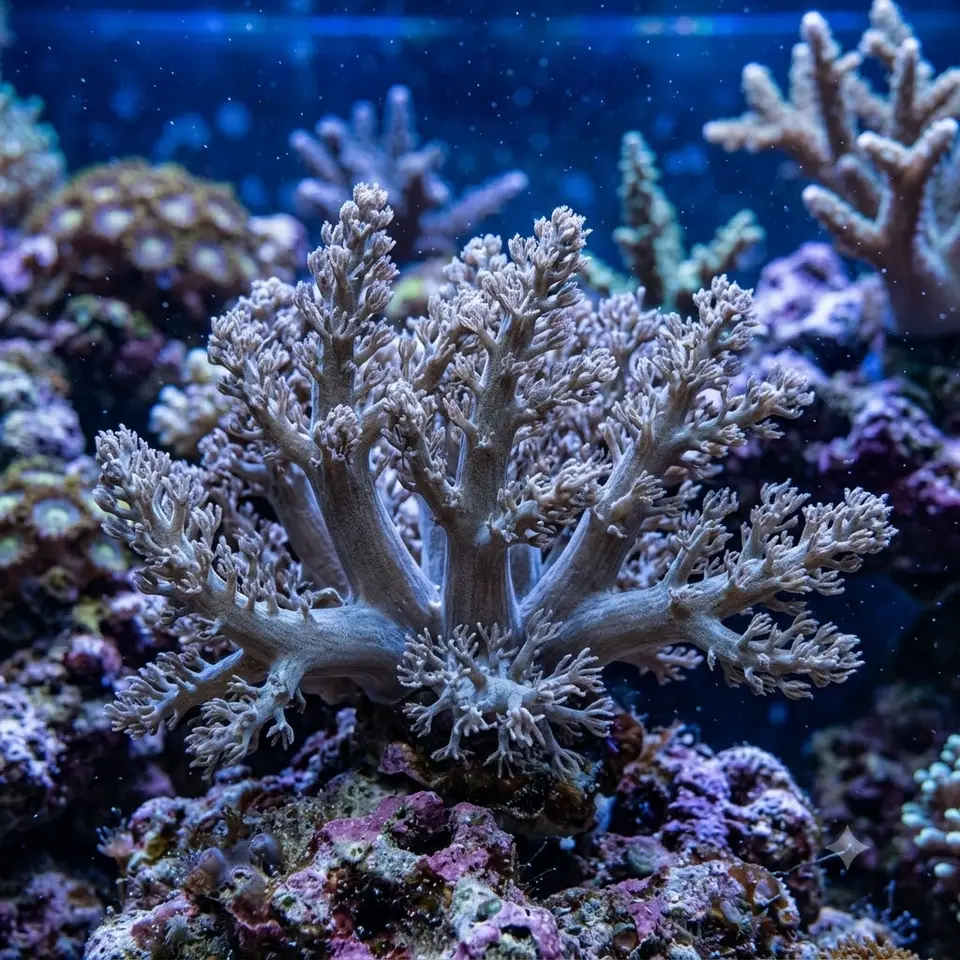
The colt coral is a soft, rubbery, finger-branched coral - a bushy tan-to-grey 'hand' that sways in the current and is one of the most forgiving corals for a young tank, tolerant of imperfect water and moderate light.
Last reviewed: July 2026
 AI illustration
 Overview
The colt coral is a soft, rubbery, finger-branched coral - a bushy tan-to-grey 'hand' that sways in the current and is one of the most forgiving corals for a young tank, tolerant of imperfect water and moderate light. (Cladiella species.)
Origin & Habitat
Indo-Pacific reefs, on rock in moderate light and flow.
Appearance
Soft, slippery, pale tan or grey branching lobes tipped with small polyps; deflates and re-inflates, swaying gently.
Placement & Temperament
Peaceful; like other leathers it can shed a film and gives off mild chemicals, so a little space and good water changes keep neighbours happy.
Tank & Water Conditions
Salinity 1.024-1.026, 24-27°C, stable alkalinity 8-11 dKH, calcium 400-450, magnesium 1300-1350.
Lighting & Flow
Low to moderate light (about 50-130 PAR) and moderate flow.
Feeding
Photosynthetic; no target feeding needed.
Health & Growth
Hardy and tolerant of a maturing tank. Periodic shedding and deflation are normal self-cleaning.
Pros & Cons
Pros
- Very forgiving beginner soft coral
- Pleasant swaying movement
- Tolerates moderate light
Cons
- Muted colours
- Sheds and deflates periodically
- Mild chemical warfare in small tanks
Everyday gear for a reef tank
Links go to Amazon or a partner brand's own store and may earn us a commission at no extra cost to you. As an Amazon Associate we earn from qualifying purchases. An Amazon link leads to a type of gear and you choose the exact product; a card that names a store leads to that partner's own shop.
Colt Coral - frequently asked questions
Is colt coral good for a new reef tank?
Yes - it is among the hardiest soft corals and tolerates the less-than-perfect water of a young system better than most.
Why is it slimy and closed?
Shedding, like other leather corals. Increase flow to blow the film off; it reopens within a few days.