Scolymia Coral
The Scolymia, often called a "scoly," is a large-polyp stony (LPS) coral - a reef-building animal (a cnidarian), not a plant.
Updated: October 2026
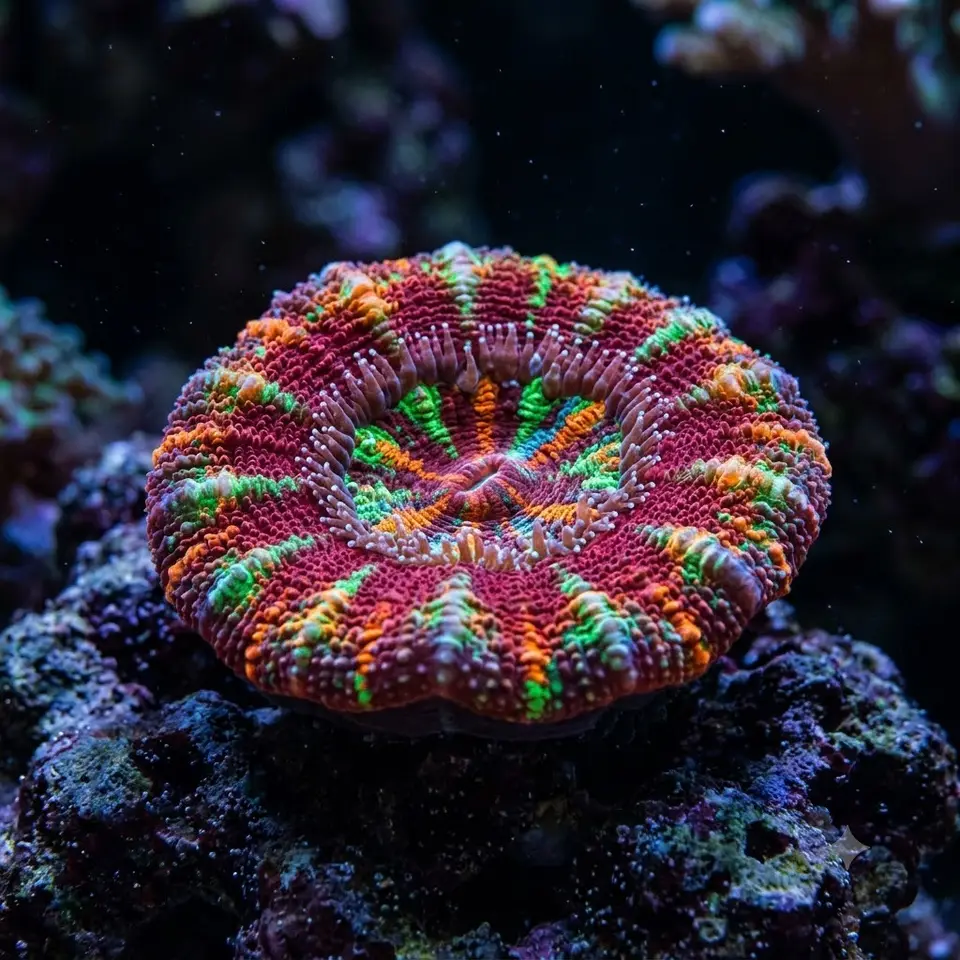 AI illustration
 Overview
The Scolymia, often called a "scoly," is a large-polyp stony (LPS) coral - a reef-building animal (a cnidarian), not a plant. It is famous for being a single, large, fleshy disc-shaped polyp rather than a branching colony, which makes each specimen a standout show piece. Vivid colour and a manageable footprint have made it one of the most prized "collector" corals in the reef hobby.
Origin & Habitat
The name is used loosely in the trade for a few related corals. True Scolymia are Caribbean and Atlantic reef species, while the intensely coloured "Aussie scolys" most people keep are Indo-Pacific corals in the genus Homophyllia (formerly grouped with Scolymia and Australomussa). In the wild they sit on reef slopes, rubble, and lower reef zones - often in shaded, lower-light pockets rather than the bright, wave-swept reef crest.
Appearance
A scoly is a single circular or slightly folded polyp, typically a few inches across, with a fleshy dome that inflates over its skeleton. Colours can be spectacular and multi-toned: deep reds, oranges, greens, blues, and rings or "eyes" where the mouth sits, sometimes with contrasting speckles or a bullseye pattern. By day the polyp is puffed up and smooth; at night it may deflate and extend short feeder tentacles to catch food.
Placement & Temperament
Scolys are relatively peaceful compared to aggressive LPS, yet they can sting corals that touch them and may extend short feeder tentacles at night. Give a clear buffer of a few inches on all sides so the polyp can inflate without contacting neighbours. Place it on the sand bed or a low, stable rock ledge, where lighting and flow are gentler. Make sure the inflated tissue cannot rub against sharp rock, which can tear it.
Tank & Water Conditions
This coral needs a mature, stable reef tank. Aim for salinity 1.024-1.026, temperature 24-27 C (75-81 F), and hold the reef "big three" steady: alkalinity 8-11 dKH, calcium 400-450 ppm, and magnesium 1300-1350 ppm. As a stony coral it draws on calcium and alkalinity to maintain its skeleton, so stability matters more than chasing peak numbers - swings stress the polyp faster than slightly off targets do.
Lighting & Flow
Scolys prefer lower light than most LPS: roughly 50-120 PAR is a sensible range, and they colour up nicely toward the lower end. Too much light bleaches or shrinks the tissue. Keep flow low to moderate and indirect - enough to keep detritus from settling on the polyp, but never so strong that the tissue cannot fully inflate or gets blasted back over the skeleton.
Feeding
Like most reef corals it hosts symbiotic zooxanthellae and gets much of its energy from light. It also feeds well: target-feed meaty foods such as mysis shrimp, chopped seafood, or small pellets once or twice a week by gently placing food on the polyp after it opens or extends tentacles in the evening. Regular feeding supports colour and slow tissue growth but should not replace clean, stable water.
Health & Growth
Scolys are moderately hardy for an intermediate keeper and are not a chronic-decline species the way Goniopora can be - given space, gentle light, and stable parameters they tend to settle in well. Growth is slow; a scoly stays a single polyp and gradually thickens rather than spreading. Watch for warning signs: failure to inflate, tissue recession off the skeleton, tearing on rock, or "brown jelly" (a rapid slimy infection) after physical damage. Poor flow, being crowded, or too much light are the usual causes of a struggling polyp.
Pros & Cons
Pros
- Striking single-polyp show coral with intense, collectible colours
- Compact footprint suits nano and mixed reef tanks
- Photosynthetic and readily target-fed, so it is forgiving of feeding schedule
Cons
- Sensitive to too much light or flow, and to being crowded
- Slow-growing single polyp, so it will not fill a tank
- Prone to tissue tears and brown jelly if damaged or scraped on rock
Everyday gear for a reef tank
Links go to Amazon or a partner brand's own store and may earn us a commission at no extra cost to you. As an Amazon Associate we earn from qualifying purchases. An Amazon link leads to a type of gear and you choose the exact product; a card that names a store leads to that partner's own shop.