Tricolor Crested Gecko
The Tricolor is a colour-and-pattern morph of the crested gecko (Correlophus ciliatus), a small tree-dwelling lizard from New Caledonia.
🗓️ Last reviewed: July 2026
Overview
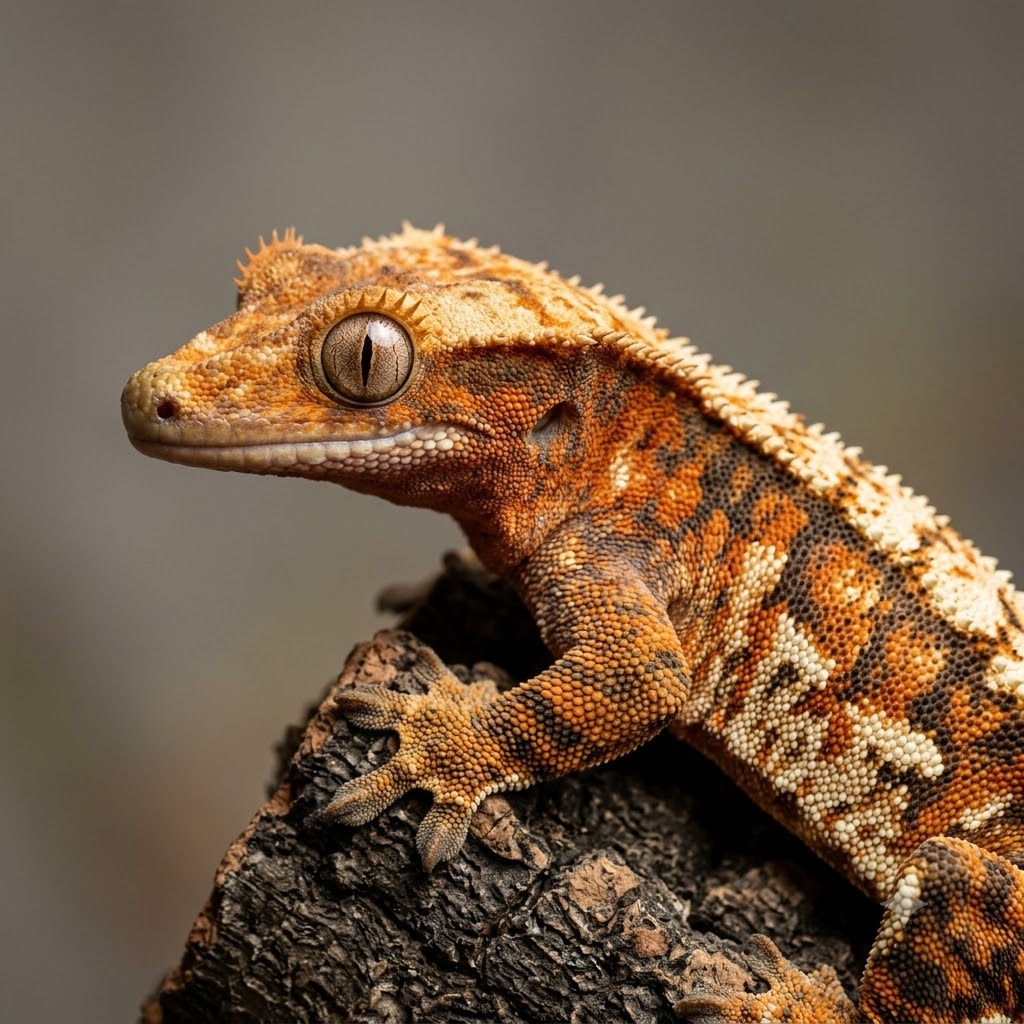
The Tricolor is a colour-and-pattern morph of the crested gecko (Correlophus ciliatus), a small tree-dwelling lizard from New Caledonia. The name simply describes the look: a gecko that carries three distinct, clearly separated colours in its markings. It is one of the descriptive "morphs" hobbyists use to sort geckos by appearance rather than by a single known gene.
What it is
A wild-type crested gecko is usually one or two blended tones - browns, tans, olives, or reds - across the back and sides. A Tricolor stands out by showing three separate colours that read as distinct blocks or contrasts rather than a smooth blend, for example a base colour with cream markings and a third contrasting shade such as red or orange. The term is about how many clean colours are visible, not about a specific pattern shape.
The genetics
Tricolor is a polygenic, line-bred trait, not a simple recessive or dominant gene. There is no single "Tricolor gene" that switches on or off, and no reliable het to carry. Instead the appearance comes from many small genetic factors acting together, which breeders concentrate by choosing parents that already show strong, clean three-colour contrast. Because it is polygenic, results vary from clutch to clutch and even between siblings, and outcomes are described in terms of likelihood rather than fixed ratios.
Appearance
Expect a base colour broken up by two additional distinct shades, often arranged so that the third colour appears as highlights, a dorsal pattern, or contrasting fringes. Crested geckos are well known for "firing up" and "firing down," so the same animal looks darker and more saturated when active or stressed and paler when calm, which changes how sharply the three colours read at any moment. Hatchlings frequently look muddier and less defined; the clean separation of colours usually becomes clearer as the gecko matures over its first several months to a year. Adult colour can settle differently from what a baby first suggests.
How it is bred
It helps to compare the types of traits. Recessive morphs need two copies to show, so a visual animal is bred from two carriers (hets) or visuals. Dominant and incomplete-dominant morphs show with just one copy. Tricolor is neither of these - it is line-bred, meaning a breeder selects the best-looking three-colour geckos each generation and pairs them to gradually improve and stabilise the trait. It can also be combined with other traits, and appearance-based labels stack, so a gecko may be described as a Tricolor alongside pattern terms like harlequin or pinstripe.
Cost and availability
Tricolor crested geckos are widely available because crested geckos are one of the most commonly kept reptiles. Price depends heavily on the quality and cleanliness of the colour separation: plainer examples sit near the general crested gecko price range, while animals with bold, well-defined three-colour contrast command more. Since the label is descriptive, two geckos both called "Tricolor" can differ a lot, so buyers judge by the actual photos rather than the name alone.
Health and ethics
Tricolor carries no known genetic health problem - it is a colour description, not a gene with a lethal super form or a physical deficit, unlike some crested gecko lines that do raise welfare concerns. There is no special risk beyond the normal care needs of the species. As with any reptile, choose reputable breeders who keep clear records and healthy stock, and see a qualified reptile (herp) veterinarian for any health questions.
Care
Care is identical to a standard crested gecko - the morph changes looks only, not needs. Crested geckos are kept in a suitably sized, ventilated arboreal enclosure with moderate humidity, room temperatures (they do not need high heat), climbing height, and a proper crested gecko diet. For full husbandry, follow guidance from a reputable breeder and a herp vet rather than relying on colour labels.
Tricolor Crested Gecko - frequently asked questions
Is Tricolor a recessive or dominant gene?
Neither. It is a polygenic, line-bred trait, so it comes from many small genetic factors rather than a single on/off gene, and there is no het to carry.
Will two Tricolor parents always produce Tricolor babies?
No. Because the trait is polygenic, offspring vary; good three-colour parents raise the odds of strong babies but do not guarantee every hatchling will show clean three-colour contrast.
Does a hatchling's colour stay the same?
Often not. Crested geckos change as they grow and also fire up and down daily, so the clean colour separation usually becomes clearer with maturity and looks different depending on the gecko's mood and activity.