Axanthic Crested Gecko
The Axanthic Crested Gecko is a colour morph of the crested gecko (Correlophus ciliatus), the same New Caledonian species kept by reptile hobbyists worldwide.
🗓️ Last reviewed: September 2026
Overview
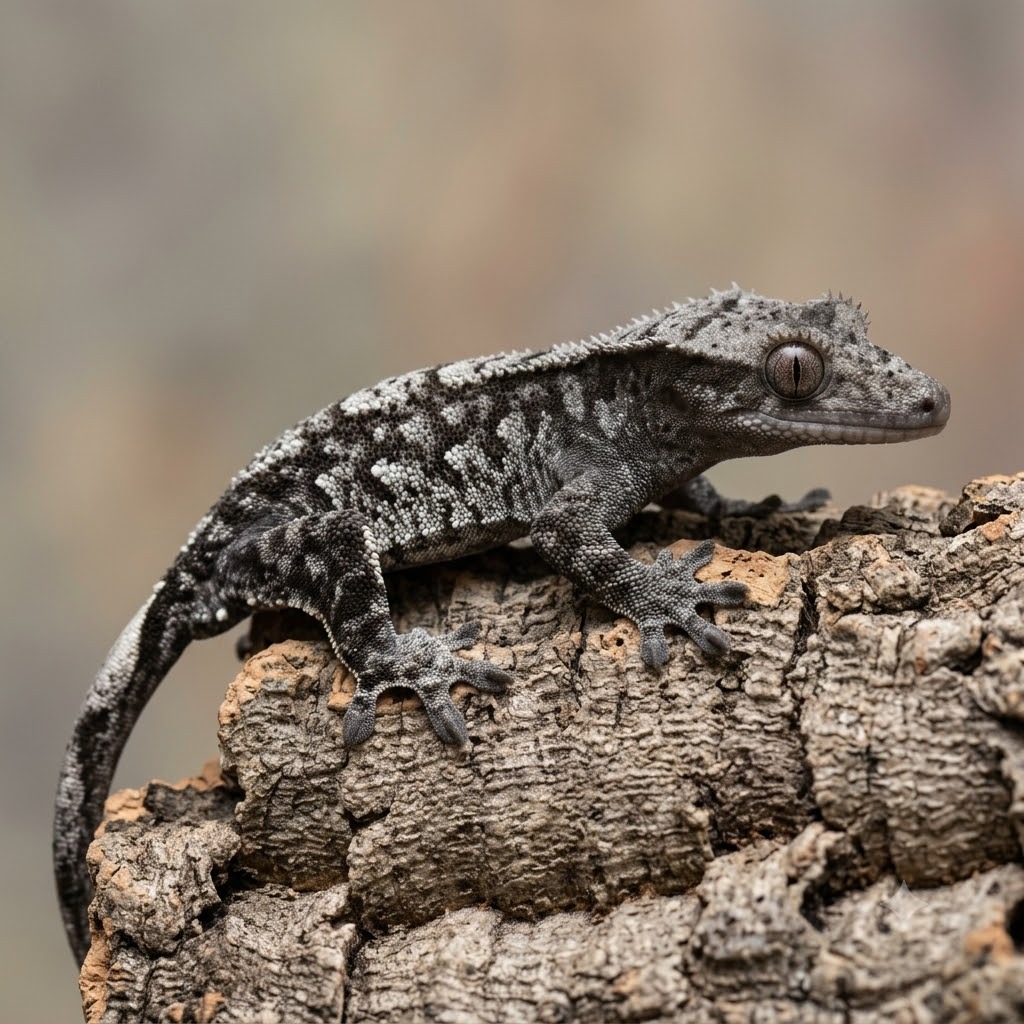
The Axanthic Crested Gecko is a colour morph of the crested gecko (Correlophus ciliatus), the same New Caledonian species kept by reptile hobbyists worldwide. "Axanthic" describes a reduction of yellow and red pigment, which pushes the gecko toward a cooler black, white, and grey look. It is notable for being one of the few crested gecko traits that follows a simple, predictable pattern of inheritance rather than line breeding.
What it is
A normal or wild-type crested gecko usually carries warm tones - yellows, oranges, buffs, and reds - layered into its base colour and pattern. An axanthic animal has much of that warm pigment removed, so the remaining colours read as greyscale: charcoal, slate, cream, and white. Pattern elements such as flames, dashes, or a dalmatian spread can still be present; they simply appear in muted, desaturated tones instead of bright colour.
The genetics
Axanthic is inherited as a simple recessive trait. This is unusual for crested geckos, where most named "morphs" are actually line-bred traits (structure, pinstripe, dalmatian, colour intensity) that are selected for over generations rather than switched on by a single gene. Axanthic is one of the genuine exceptions: a gecko needs two copies of the axanthic gene to show the look. Animals with one copy are visually normal "hets" (heterozygous carriers) that can pass the trait to offspring without displaying it themselves.
Appearance
Expect a gecko dominated by cool tones - dark grey to near-black offset by white, silver, and cream. Because the trait removes warm pigment rather than adding a new colour, the underlying pattern still shows through in monochrome. As with most crested geckos, appearance shifts with age and with "firing" (geckos darken when active or at night and pale when resting), so the same animal can look markedly lighter or darker within a day. Hatchlings often start plainer and develop more contrast as they mature, and some individuals may show faint warm hints that vary between lines.
How it is bred
Because axanthic is recessive, a visual axanthic must inherit the gene from both parents. Pairing two visual axanthics yields all visual axanthic babies; pairing a visual to a het produces roughly half visual, half het; pairing two hets produces about one in four visual, with the rest carrying or clear. This differs from dominant or incomplete-dominant traits, where a single copy is enough to show. For line-bred traits, by contrast, breeders simply select the best-looking animals over many generations to intensify a look. Axanthic is often stacked in combos - paired with structure, dalmatian, or specific base colours - to create desaturated versions of popular pattern types.
Cost and availability
Axanthic is less common than everyday crested gecko lines, so clean, high-contrast examples usually sit above baseline pet pricing, and proven breeders or striking combo animals command more. Hets (carriers) are cheaper because they do not display the trait. Availability has grown as the gene has spread through the hobby, but supply is still narrower than for standard morphs.
Health and ethics
Axanthic carries no known welfare problem of its own - it is a pigment trait, not a structural or lethal one, so an axanthic gecko is as robust as any healthy crested gecko. This is unlike a few crested gecko lines that do raise welfare questions (for example the Lilly White super form associated with lethality). When choosing an animal, favour reputable breeders who keep clear lineage records, and see a qualified reptile (herp) veterinarian for any health concern.
Care
Care is exactly the same as for any standard crested gecko - the morph changes looks only, not needs. Crested geckos want a cool, well-ventilated arboreal setup with height to climb, good humidity, gentle temperatures, and a suitable diet. This profile is educational and not a full husbandry guide; follow current crested gecko care from reputable sources and a herp vet.
Axanthic Crested Gecko - frequently asked questions
Is axanthic really recessive when most crested morphs are not?
Yes. Most crested gecko "morphs" are line-bred traits selected over generations, but axanthic is one of the few that behaves as a true simple recessive gene, needing two copies to show.
Will an axanthic gecko always look black and white?
Broadly, yes - it trends greyscale because warm pigment is reduced. Exact contrast varies by line, age, and firing state, and some individuals keep faint warm hints.