White and Yellow Leopard Gecko
The White and Yellow (often shortened to W&Y or W/Y) is a color and pattern morph of the leopard gecko prized for its brighter yellow pigment and pale, washed-out flanks.
Updated: September 2026
Species guide: Leopard Gecko · All leopard gecko morphs
 AI illustration
 Overview
The White and Yellow (often shortened to W&Y or W/Y) is a color and pattern morph of the leopard gecko prized for its brighter yellow pigment and pale, washed-out flanks. It appeared in the hobby in the early 2010s and became popular as a base gene to layer into other projects. It is a morph of the leopard gecko (Eublepharis macularius).
What it is
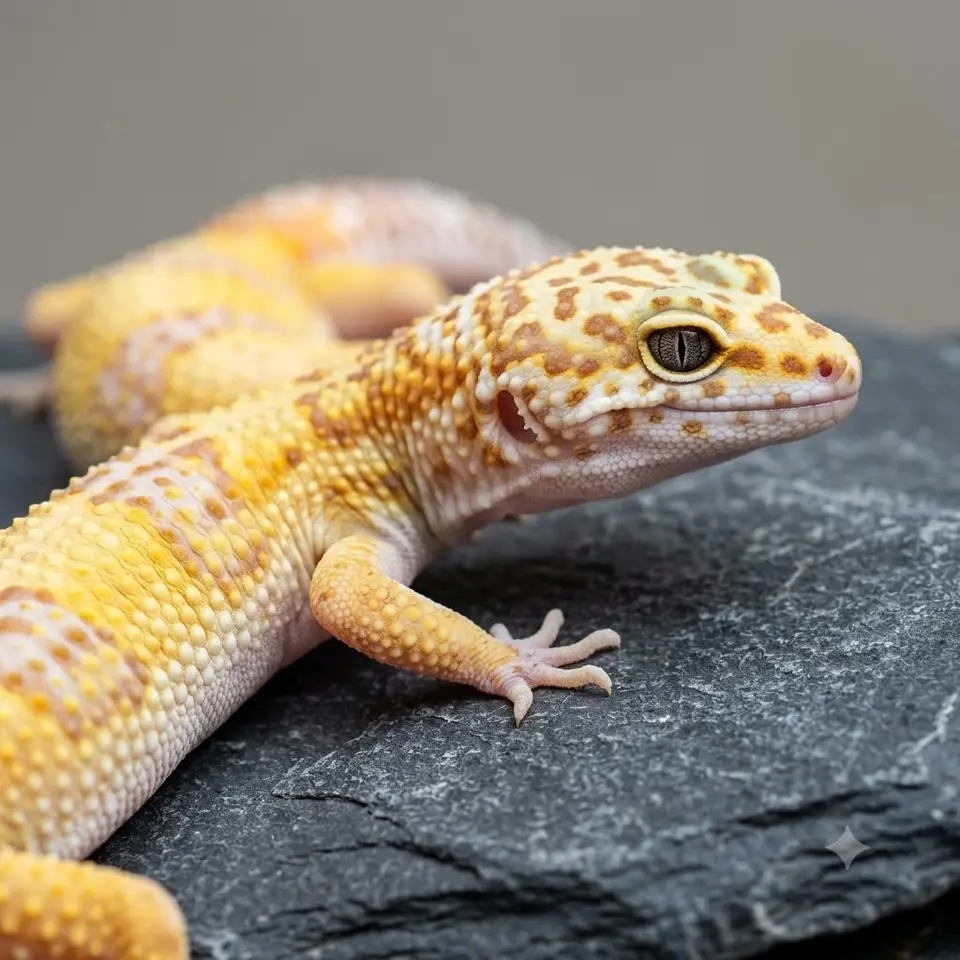
White and Yellow is a visual trait that intensifies the yellow tones on the back and head while lightening the sides of the body toward a clean white or cream. Compared with a normal wild-type leopard gecko, which shows muddy tan-yellow ground color with heavy dark banding and spotting, a White and Yellow tends to look crisper and higher in contrast, with reduced or broken-up dark pattern on the flanks.
The genetics
White and Yellow is inherited as a dominant trait. A single copy of the gene is enough to produce the visible look, so a gecko only needs to inherit it from one parent to show it. There is also a homozygous "super" form, produced when a gecko carries two copies, which typically shows even cleaner, more reduced pattern and stronger color. Because the super looks different from the single-copy form, some breeders describe the trait as incomplete-dominant rather than purely dominant. That super form is viable and healthy, unlike the lethal super forms seen in some other reptile genes. Because it is dominant, there are no hidden "het" carriers - a gecko either visually shows the trait or does not carry it.
Appearance
The back and head carry the yellow pigment, often looking richer and more saturated than on a normal gecko, while the sides fade to pale cream or near-white. Dark markings on the flanks are usually thinner, broken up, or partly cleared, giving a two-tone effect that inspired the name. Eyes are typical of the base morph it is combined with. Like most leopard geckos, hatchlings start out more banded and develop their adult coloration and pattern break-up as they mature.
How it is bred
Because the trait is dominant, breeders only need one White and Yellow parent to pass it on, and roughly half the offspring from a single-copy parent will show it. Pairing two White and Yellow geckos can produce the homozygous super form. In practice the gene is most often stacked with other morphs (such as albino lines, tangerine, or pattern genes) to combine the brighter color and cleaner flanks with those traits.
Cost and availability
White and Yellow is fairly well established and moderately available. Single-gene animals are usually inexpensive to mid-priced, while super forms and multi-gene combos that include it can cost more depending on how many other desirable traits are stacked in.
Health and ethics
The White and Yellow gene has no well-documented welfare problem, though some keepers have reported neurological signs such as head tilting or poor coordination in a few W&Y animals, so it is worth asking breeders about their lines. Its super form is viable rather than lethal, and otherwise the morph needs nothing beyond normal leopard gecko care. As with any animal, choose reputable breeders who keep good records, and see a reptile (herp) veterinarian for any health concerns.
Care
Care is identical to a standard leopard gecko. This is a cosmetic morph, so it changes only how the gecko looks, not what it needs in terms of heat, diet, humidity, or housing. Follow standard leopard gecko husbandry from reputable care sources and consult a herp veterinarian for medical questions.
Everyday gear for reptiles
Links go to Amazon or a partner brand's own store and may earn us a commission at no extra cost to you. As an Amazon Associate we earn from qualifying purchases. An Amazon link leads to a type of gear and you choose the exact product; a card that names a store leads to that partner's own shop.
White and Yellow Leopard Gecko - frequently asked questions
Is the White and Yellow morph dominant or recessive?
It is dominant. One copy of the gene produces the visible trait, and there is also a viable homozygous super form when a gecko carries two copies.
Does the White and Yellow gene cause any health issues?
No well-documented ones. It is a color and pattern trait with no established link to welfare problems, though a few keepers have reported neurological signs in some W&Y animals, and its care is the same as any standard leopard gecko.