Anerythristic Corn Snake
The Anerythristic Corn Snake is a colour morph of the corn snake (Pantherophis guttatus), a hardy North American ratsnake kept widely in the hobby.
🗓️ Last reviewed: September 2026
Overview
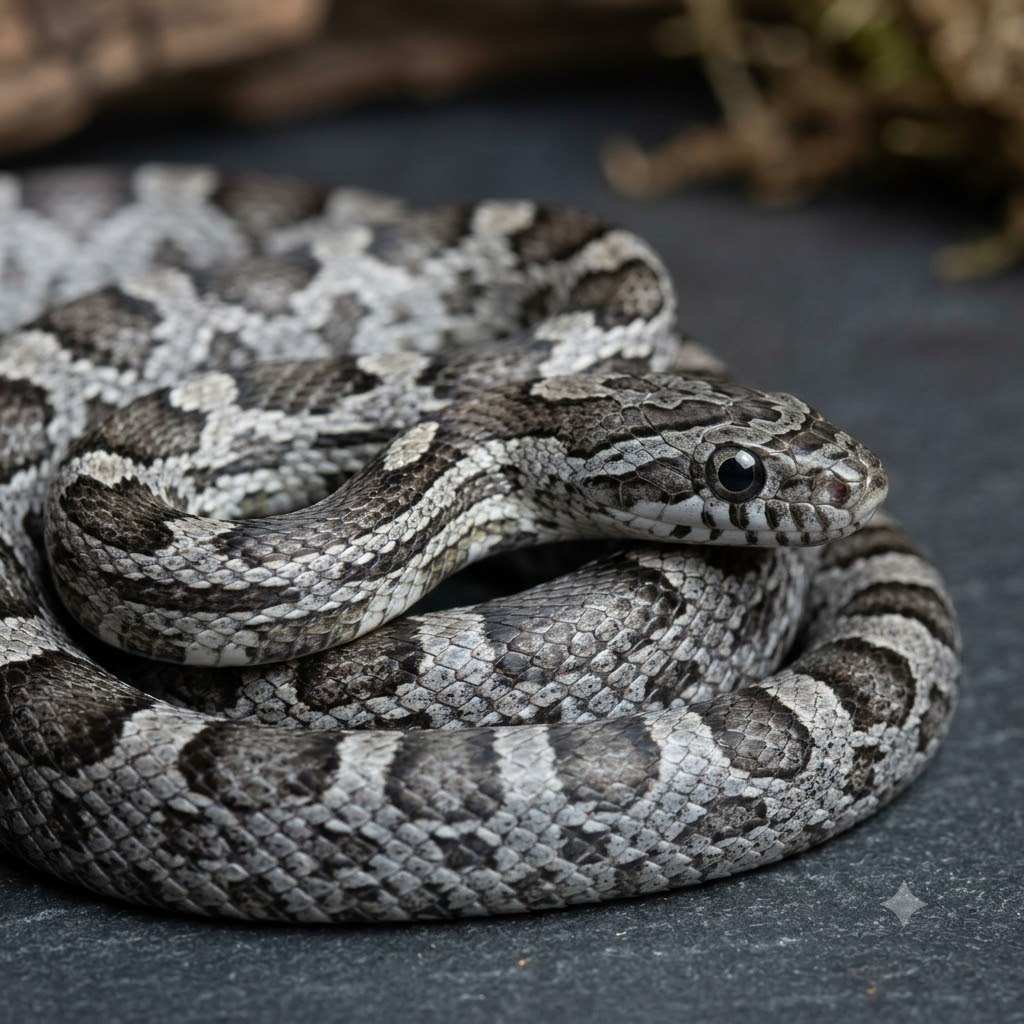
The Anerythristic Corn Snake is a colour morph of the corn snake (Pantherophis guttatus), a hardy North American ratsnake kept widely in the hobby. "Anerythristic" means "without red," and the morph strips away the red and orange pigments that give a wild corn snake its warm tone. What remains is a snake rendered in greys, silvers, and black, sometimes with faint traces of yellow around the neck.
What it is
A normal, wild-type corn snake shows bright orange or red saddles ringed in black over an orange-to-tan background. An anery corn snake keeps the same pattern and body shape but with the red and orange pigment (erythrin) absent. The result is a monochrome-looking animal: charcoal saddles over a grey or silvery ground. It is the classic "black-and-grey" corn snake, the counterpart to the red-and-white amelanistic morph.
The genetics
Anerythrism is a simple recessive trait. A snake must inherit two copies of the anery gene (one from each parent) to look anerythristic. A snake with a single copy is a normal-looking "het" (heterozygous) carrier that can pass the gene on without showing it. Because it is recessive, two visually normal het parents can still produce anery offspring, and pairing two anery snakes yields all anery babies. (Note: this is anerythristic "type A," the common form in the hobby; a separately inherited "type B" also exists, and because the two are different genes, pairing a type A anery with a type B anery produces normal-looking offspring rather than anery babies.)
Appearance
Ground colour ranges from pale silver-grey to a darker slate, with black-bordered grey saddles running down the back and a checkerboard belly. Hatchlings often show sharp, high-contrast grey-on-grey markings. As the snake matures, some individuals develop a diffuse yellow wash, most often on the neck and throat, which can make older adults look slightly warmer than they did as babies. Overall the look stays cool-toned and understated compared with a wild corn snake.
How it is bred
Because anerythrism is recessive, a snake needs two copies to show it. Breeders pair anery-to-anery for all-anery clutches, or anery-to-het (and het-to-het) to produce a mix of visual and carrier offspring. Recessive traits like this differ from dominant or incomplete-dominant genes, which show with just one copy. Anery is also a building block for combo morphs: pairing it with amelanism produces the well-known "snow" corn snake, and stacking it with other genes creates further combinations. Combos simply require the animal to carry the right pair of genes for each recessive trait involved.
Cost and availability
Anerythristic is one of the oldest and most established corn snake morphs, so it is common and inexpensive. Single-gene anery hatchlings are among the more budget-friendly morphs available, while anery-based combos or particularly clean, high-contrast examples can cost somewhat more. Availability is strong year-round from hobbyist breeders.
Health and ethics
Anerythrism is a pigment trait only and carries no known health problem beyond the normal care needs of the species. It is not linked to any lethal gene or physical defect. As with any snake, choose reputable breeders who keep clear genetic records, and see a qualified reptile (herp) vet for health concerns.
Care
Care is identical to a standard corn snake - the morph changes appearance only, not the animal's needs. Corn snakes are a hardy, beginner-friendly species. For specific housing, heating, and feeding guidance, follow care information from reputable breeders and a herp vet.
Anerythristic Corn Snake - frequently asked questions
Will an anery corn snake stay grey its whole life?
Mostly, yes, but many develop a faint yellow tint on the neck and sides with age, so an adult can look a little warmer than it did as a hatchling.
What do you get by crossing anery with amelanistic?
Combining anerythristic and amelanistic (both recessive) produces the "snow" corn snake, a white-and-pink animal with both red and black pigment removed.