Spider Ball Python
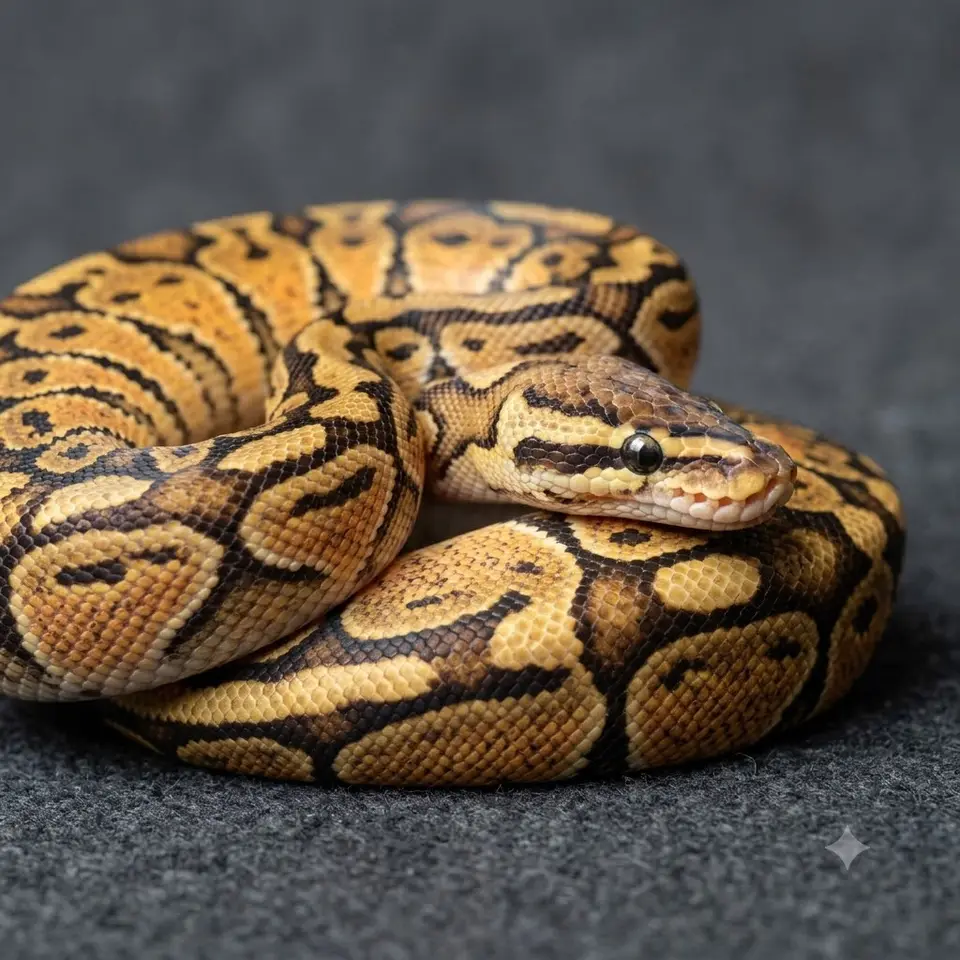
The Spider Ball Python is one of the hobby's most recognizable pattern morphs, known for its thin, web-like dark markings over a bright golden-tan background.
Last reviewed: July 2026
Species guide: Ball Python · All ball python morphs
 AI illustration
 Overview
The Spider Ball Python is one of the hobby's most recognizable pattern morphs, known for its thin, web-like dark markings over a bright golden-tan background. It is prized for the clean, high-contrast look it brings to combo morphs, but it is also strongly associated with a neurological condition and is therefore one of the most debated morphs in the hobby. It is a colour and pattern morph of the ball python (Python regius).
What it is
Spider is a single-gene pattern mutation. Compared with a normal or wild-type ball python, it dramatically reduces the amount of black pigment and thins out the dark banding into fine, spider-web-like lines. The result is a snake that looks lighter, brighter, and more open in pattern, with reduced dark "alien head" markings along the sides. The change is purely cosmetic in terms of colour and pattern - it does not create a different animal in any other visible way.
The genetics
Spider is inherited as a dominant trait, meaning a single copy of the gene produces the full visual Spider look. Breeders often loosely call many ball python genes "co-dom," but Spider does not behave that way, and importantly there is no viable super form: attempts to produce a "super Spider" (two copies) do not yield a living, healthy super animal, so Spider is worked with only as a single-copy trait. Because one copy is enough to show, roughly half the offspring from a Spider paired with a normal will be Spider. Spider is also one of the most heavily used "combo" genes, layered with other morphs to create designer looks such as Bumblebee (Spider plus Pastel) and many others.
Appearance
The base colour is a warm golden-tan to light brown, noticeably brighter than a normal ball python. The signature feature is the pattern: the dark pigment is broken into thin, connected, web-like lines rather than solid bands, which is where the name comes from. Many Spiders show a lighter, cleaner dorsal area and reduced dark side markings. The eyes are typical for a ball python. As the animal ages, some Spiders can "brown out" or darken slightly, but the thin web pattern remains the defining trait throughout life.
How it is bred
Because Spider is dominant, only one parent needs to carry and show the gene to pass it on. A Spider paired with a normal ball python is expected to produce a mix of Spider and normal offspring, with about half showing the Spider look. There is no hidden "het" form to track as with recessive morphs, and there is no super form to aim for, so breeders never pair two Spiders in hope of a super. In practice Spider is most often combined with other single-gene morphs to stack patterns and colours into designer combos.
Cost and availability
Spider is a long-established and widely available morph, so single-gene Spiders and common Spider combos tend to sit at the lower to middle end of the market rather than being rare or expensive. Newer or more complex combos that include Spider can cost more simply because of the extra genes stacked in, not because Spider itself is scarce.
Health and ethics
This morph carries a well-documented welfare concern that should be stated plainly. Spider is linked to a neurological condition commonly called the "Spider wobble," which can range from a mild, occasional head tilt to more pronounced head-shaking, corkscrewing, and difficulty striking accurately at food. The severity varies between individuals and can be worse under stress, but current understanding is that the wobble is inseparable from the Spider gene itself - every Spider carries some degree of it, even if very mild. Because of this, many keepers and breeders choose to avoid producing Spider on ethical grounds, and some reptile shows and organizations restrict or ban it. If you keep a Spider, feeding in a calm, low-stress way and monitoring for worsening symptoms matters, and any animal that struggles to eat or shows severe neurological signs should be seen by a reptile (herp) veterinarian. Whatever your view, buy only from reputable breeders who are honest about the condition, and consult a herp vet for any health concern. This is educational information, not breeding or veterinary advice.
Care
Aside from the wobble consideration noted above, day-to-day care for a Spider Ball Python is identical to that of a standard ball python - the morph changes appearance, not the animal's core husbandry needs for heating, humidity, enclosure size, and feeding. Follow a trusted, up-to-date ball python care resource for the base species, and see a qualified reptile (herp) veterinarian for any health questions rather than treating this profile as a full husbandry guide.
Everyday gear for reptiles
Links go to Amazon or a partner brand's own store and may earn us a commission at no extra cost to you. As an Amazon Associate we earn from qualifying purchases. An Amazon link leads to a type of gear and you choose the exact product; a card that names a store leads to that partner's own shop.
Spider Ball Python - frequently asked questions
Do all Spider Ball Pythons wobble?
Current understanding in the hobby is that the wobble is tied to the Spider gene itself, so every Spider carries some degree of it. The severity varies widely, from barely noticeable to significant, and can look worse when the animal is stressed.
Is there a super Spider?
No. There is no viable super form of Spider. Because two copies do not produce a healthy super animal, Spider is worked with only as a single-copy dominant trait and two Spiders are not paired to make a super.
Is a Spider hard to care for compared with a normal ball python?
The everyday care is the same as any ball python. The main difference is the neurological wobble, which can affect feeding accuracy in some individuals, so a calm feeding setup and monitoring for worsening symptoms are worthwhile.