Red Crested Gecko
The Red is a colour morph of the crested gecko (Correlophus ciliatus), a small arboreal gecko from New Caledonia.
🗓️ Last reviewed: September 2026
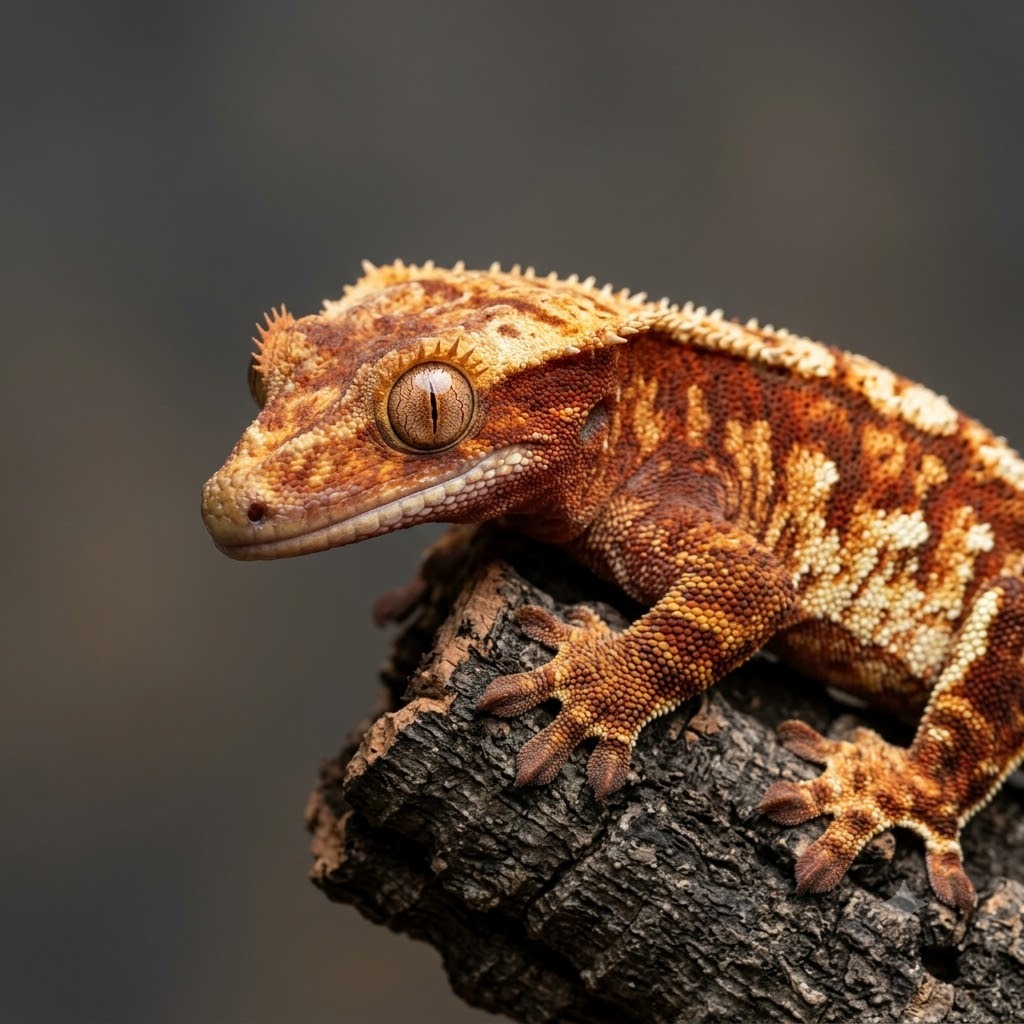
Overview
The Red is a colour morph of the crested gecko (Correlophus ciliatus), a small arboreal gecko from New Caledonia. It is not a distinct species or a single "gene" - it is a line-bred colour trait in which breeders have selected for a deep, saturated red base over many generations. Because the colour is built up gradually, individuals labelled "Red" vary widely in how intense and clean their colour is.
What it is
A wild-type crested gecko is usually a muted brown, tan, olive or buff, often with a lot of "fired down" (dull) colouring at rest. A Red crested gecko is one selectively bred so that the base colour shifts toward a rich red - ranging from brick and rust tones to bright, almost cherry reds in the best examples. The red may cover the whole body, or appear as a red base carrying other patterns (such as harlequin, tiger or dalmatian markings) laid on top.
The genetics
Red is a polygenic, line-bred trait. That means the colour is controlled by many genes acting together and shaped by selective breeding, not by a single dominant or recessive switch that is simply "on" or "off." There are no true "hets" for a line-bred colour the way there are for a simple recessive morph. Instead, breeders pair the reddest, cleanest animals together and keep selecting the best offspring, concentrating the trait over successive generations. Because of this, two Red geckos can produce babies that range from strongly red to fairly plain, and colour intensity is not guaranteed to pass on fully.
Appearance
At its best, a Red shows a warm, even red base with good saturation and minimal muddy brown. Depending on the line it may be a solid "full red," a red animal with cream or white pattern (harlequin/flame), or a red base under spotting. Crested geckos also "fire up" and "fire down" - colour looks more intense when the animal is active or warm, and duller when cool or resting - so the same gecko can look noticeably different across a day. Colour also changes with age: hatchlings and juveniles often look dull or brown, and the true red typically develops and deepens as the gecko matures.
How it is bred
It helps to compare the main inheritance styles. A recessive morph needs two copies of a gene, so an animal can carry it hidden (het) and only show it when paired correctly. A dominant or incomplete-dominant morph shows from a single copy. Red is neither of these - it is line-bred, meaning breeders simply select the best-coloured animals over many generations and pair them to concentrate the look. Line-bred colours are also stacked with true genetic morphs and patterns (for example a red base combined with a dalmatian or harlequin pattern) to create combos, but the red component itself comes from selective breeding, not a single switchable gene.
Cost and availability
Crested geckos are one of the most widely kept reptiles, so plain animals are common and inexpensive. Reds sit above baseline: a muddy or lightly red animal is fairly affordable, while clean, high-saturation "full red" or well-patterned red lines command higher prices. Exact cost depends on colour quality, pattern, structure (like crest and head shape) and the reputation of the line rather than on any single gene being present.
Health and ethics
Red is a colour trait only and carries no known health or welfare problem beyond normal crested gecko care - unlike some morphs (for example the Lilly White complex, where the "super" form is lethal). Because "Red" is a marketing label for colour rather than a defined gene, quality varies a lot, so judge the actual animal, not the name. Choose reputable, health-focused breeders who are open about their lines, and see a qualified reptile (herp) vet for any health concerns.
Care
Care is identical to a standard crested gecko - the morph changes only how the animal looks, not what it needs. Crested geckos are hardy, arboreal, and do not require special handling because they are Red. For full husbandry (enclosure, temperature, humidity, diet), follow current crested gecko care from reputable breeders and a herp vet.
Red Crested Gecko - frequently asked questions
Is Red a recessive or dominant morph?
Neither. It is a polygenic, line-bred colour trait, so it is concentrated by selectively breeding the reddest animals together rather than being switched on by a single gene.
Will two Red geckos always produce red babies?
Not necessarily. Because the colour is polygenic and line-bred, offspring can range from strongly red to fairly plain, and the red often deepens only as the gecko matures.
Does the Red morph need special care?
No. Care is exactly the same as any crested gecko - the trait affects appearance only.