Big-Eyed Tree Frog
The Big-Eyed Tree Frog (Leptopelis vermiculatus) is a striking arboreal frog from the cool montane forests of Tanzania, named for the huge, protruding eyes that dominate its face.
Updated: October 2026
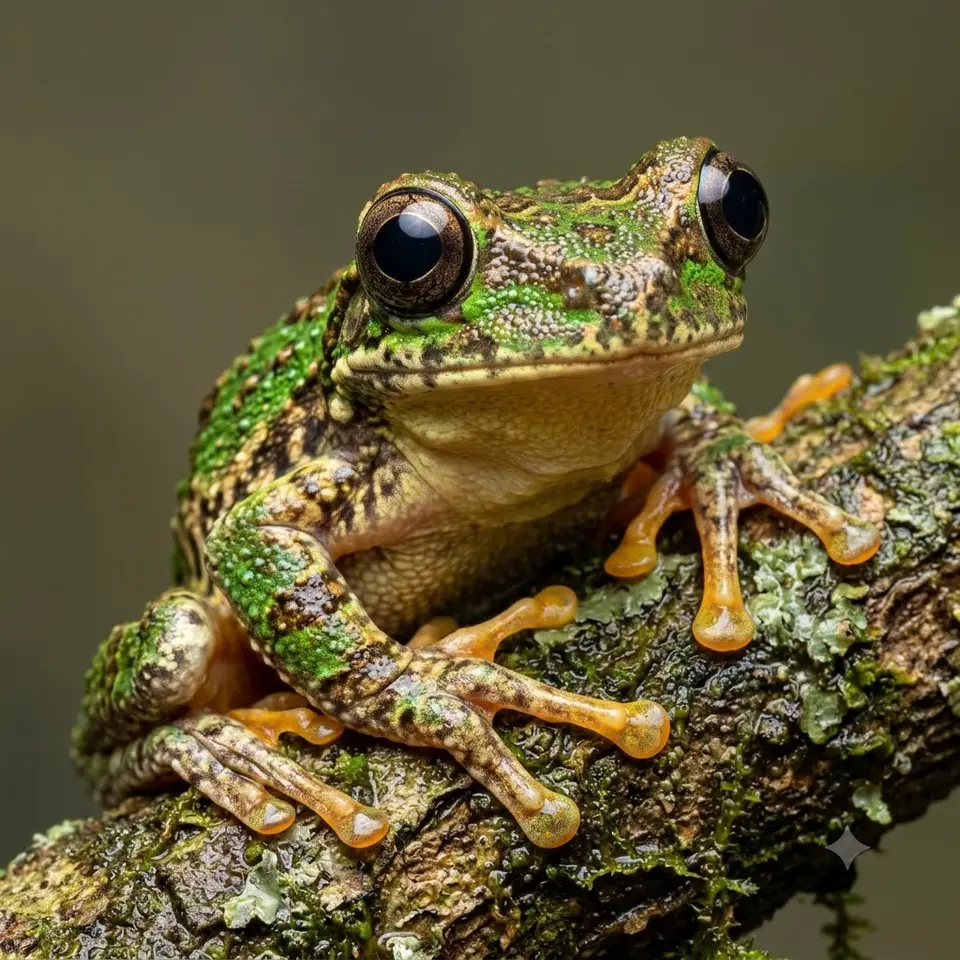 AI illustration
 Wash your hands after handling. The FDA notes that reptiles and amphibians can carry Salmonella and show no signs of illness, so the animal, its enclosure and everything in it can spread the germs: wash your hands with soap and water straight after touching any of them. The agency says children younger than 5, pregnant women, the elderly and people with weakened immune systems should not handle reptiles or amphibians. Source: FDA, Salmonella and pet reptiles and amphibians.
Overview
The Big-Eyed Tree Frog (Leptopelis vermiculatus) is a striking arboreal frog from the cool montane forests of Tanzania, named for the huge, protruding eyes that dominate its face. Juveniles are a brilliant lime green, while many adults shift to a mottled brown or grey with worm-like "vermiculated" markings. It is a rewarding display animal for an intermediate keeper, but almost every specimen in the US trade is wild-caught, which makes sourcing the single most important decision you will make.
Natural History
This species lives in the Eastern Arc Mountains of Tanzania, including the Usambara and Udzungwa ranges, in submontane and montane rainforest between roughly 900 and 1800 meters. These are cool, wet, high-elevation habitats, not steamy lowland jungle, and that detail drives almost every husbandry choice. Frogs spend the day hidden on leaves and branches and become active at night, sitting and waiting for prey. Captive breeding is uncommon and difficult, so most animals for sale are imported adults collected from the wild.
Appearance
Females reach roughly 3.3 inches (8.5 cm); males are much smaller at about 1.5 to 2 inches (4 to 5 cm). The defining feature is the pair of oversized, forward-set eyes with coppery to bronze irises. Coloration is variable, sex-linked, and age-dependent: young frogs and some adult males are vivid green, sometimes with a thin pale stripe, while mature females and many adult males turn tan, brown, or greyish with dark, net-like blotches and marks behind the eyes. Some individuals keep more green into adulthood. The skin is smooth and the toes carry adhesive pads for climbing.
Temperament & Handling
This is a look-don't-touch animal, and that is an honest statement, not a disclaimer. Amphibian skin is permeable and readily absorbs oils, salts, soaps, and lotions from human hands, so routine handling stresses and can genuinely harm the frog. Handle only when you must move it for cleaning or a vet visit, and then only with freshly rinsed, wet, powder-free hands or clean wet gloves. These frogs are calm but can make sudden, long jumps when startled, so work low over a soft surface. There is no reptile-style "taming" here; enjoy it as a display animal.
Enclosure
Because this is an arboreal species, height matters more than floor space. A single adult does well in a vertically oriented terrarium of at least 18 x 18 x 24 inches (45 x 45 x 60 cm); a pair or trio needs more. Furnish it densely with sturdy branches, cork bark, and broad-leaved live or artificial plants (pothos and bromeliads work well) so the frog can climb and hide off the ground. Use a moisture-retentive substrate such as coconut fiber or a bioactive soil mix topped with leaf litter and sphagnum moss, and provide a shallow, easily exited water dish filled with dechlorinated water. A screen or partial-screen top helps with airflow while misting keeps humidity up.
Heating, Lighting, Humidity
This frog is easy to overheat, which is the most common fatal mistake. Aim for a daytime range of about 68 to 75 F (20 to 24 C) with a meaningful nighttime drop into the low 60s F (around 16 to 18 C). Many US homes are too warm in summer, so plan for cooling, not heating. Keep humidity high at 70 to 90 percent through daily misting, verified with a hygrometer, but pair it with ventilation to avoid stagnant, moldy air. A low-output UVB bulb and a natural day/night cycle are beneficial though debated; a simple LED plant light plus supplemented feeders is an acceptable minimum. Avoid bright, hot basking lamps.
Diet
The Big-Eyed Tree Frog is an insectivore. Offer appropriately sized live prey such as crickets, dubia roaches, and the occasional hornworm or black soldier fly larva; prey should be no wider than the space between the frog's eyes. Feed adults every two to three days and growing juveniles daily to every other day, adjusting to keep a healthy, not bloated, body. Dust feeders with a calcium plus D3 supplement at most feedings and a multivitamin about once a week. Gut-load insects for a day or two before offering them. Feeding at dusk matches the frog's nocturnal rhythm.
Health & Lifespan
5-10 years. Reported lifespans vary widely, and real-world spans are shortened by the stress of wild collection, so a healthy, well-established captive can reach the upper end with good care while many imports fall short. Wild-caught imports frequently arrive dehydrated, thin, and carrying internal parasites, so a fecal check and quarantine with an experienced exotics or amphibian vet are strongly advised early on. Chronic problems usually trace to husbandry: heat stress from temperatures that are too high, metabolic bone disease from poor calcium and D3, skin infections from stagnant or dirty conditions, and dehydration from low humidity. This species is not dangerously toxic like a cane toad, but its permeable skin still means clean water and clean hands are non-negotiable.
Pros & Cons
Pros:
- Beautiful, unusual eyes and shifting juvenile-to-adult coloration.
- Modest footprint; one adult fits a compact vertical terrarium.
- Calm, quiet nocturnal display animal.
- Straightforward insect diet.
Cons:
- Almost always wild-caught, raising ethics and parasite risks.
- Needs cool temperatures many homes struggle to maintain.
- Not a handling pet at all.
- Imports can arrive already stressed or sick.
Everyday gear for amphibians
Links go to Amazon or a partner brand's own store and may earn us a commission at no extra cost to you. As an Amazon Associate we earn from qualifying purchases. An Amazon link leads to a type of gear and you choose the exact product; a card that names a store leads to that partner's own shop.
Big-Eyed Tree Frog - frequently asked questions
Why are its eyes so big?
It is a nocturnal, arboreal ambush hunter, and large eyes gather more light for spotting prey and navigating branches in the dark. The eyes are simply the most eye-catching part of an animal built for low-light forest life.
Can I hold my Big-Eyed Tree Frog?
Keep handling to the rare, necessary minimum. Their skin absorbs whatever is on your hands, and they jump unpredictably when alarmed, so treat this as a display species and use clean, wet hands only when a move is unavoidable.
Are captive-bred ones available?
Rarely. Captive breeding is uncommon and difficult, so most animals are wild-caught imports. If you can find a captive-bred frog, pay the premium; otherwise buy from a seller who quarantines and can confirm the animal is feeding, and budget for a vet fecal exam.
Why does the color keep changing?
Coloration is age- and sex-linked. Juveniles are bright green, and while some adult males stay green, females and many males transition to brown or grey with dark vermiculated markings. Mild shifts with mood, temperature, and light are normal.
Test yourself: guess the amphibian
Three clues from our quiz bank, each about another of our amphibians. Can you name them?
Clue 1.This stocky, burrowing amphibian is one of the largest land-dwelling salamanders, marked with yellowish bars or blotches on dark skin.
It's the Tiger Salamander - read the full profile →
Clue 2.Famous for its permanent smile and frilly pink gill stalks, this underwater creature is a popular exotic pet and a marvel of regeneration.
It's the Axolotl - read the full profile →
Clue 3.A common aquarium amphibian only a couple of inches long, it has four webbed feet and is often kept underwater rather than in a terrarium.
It's the African Dwarf Frog - read the full profile →