Chubby Frog (Asian Painted Frog)
The Chubby Frog (Kaloula pulchra) is a small, round-bodied burrowing frog from Southeast Asia, also sold as the Asian painted frog, banded bullfrog, or bubble frog.
Updated: July 2026
 AI illustration
 Wash your hands after handling. The FDA notes that reptiles and amphibians can carry Salmonella and show no signs of illness, so the animal, its enclosure and everything in it can spread the germs: wash your hands with soap and water straight after touching any of them. The agency says children younger than 5, pregnant women, the elderly and people with weakened immune systems should not handle reptiles or amphibians. Source: FDA, Salmonella and pet reptiles and amphibians.
Overview
The Chubby Frog (Kaloula pulchra) is a small, round-bodied burrowing frog from Southeast Asia, also sold as the Asian painted frog, banded bullfrog, or bubble frog. It spends most of its life underground, surfacing at night and after rain to feed on small insects. Hardy, long-lived, and undemanding, it is a genuinely easy amphibian to keep, though it is a look-don't-touch pet and most animals in the trade are still wild-caught.
Natural History
Kaloula pulchra ranges across much of Southeast Asia, from India and southern China through Thailand, Vietnam, and the Malay Peninsula, and it has been introduced to parts of Indonesia and the Philippines. It is a narrow-mouthed frog (family Microhylidae) adapted to a fossorial life, using hardened tubercles on its hind feet to dig backward into soft soil. In the wild it emerges after monsoon rains to breed explosively in temporary pools, and its diet is built around ants and termites. It is common and not threatened, which is part of why so many are collected for export.
Appearance
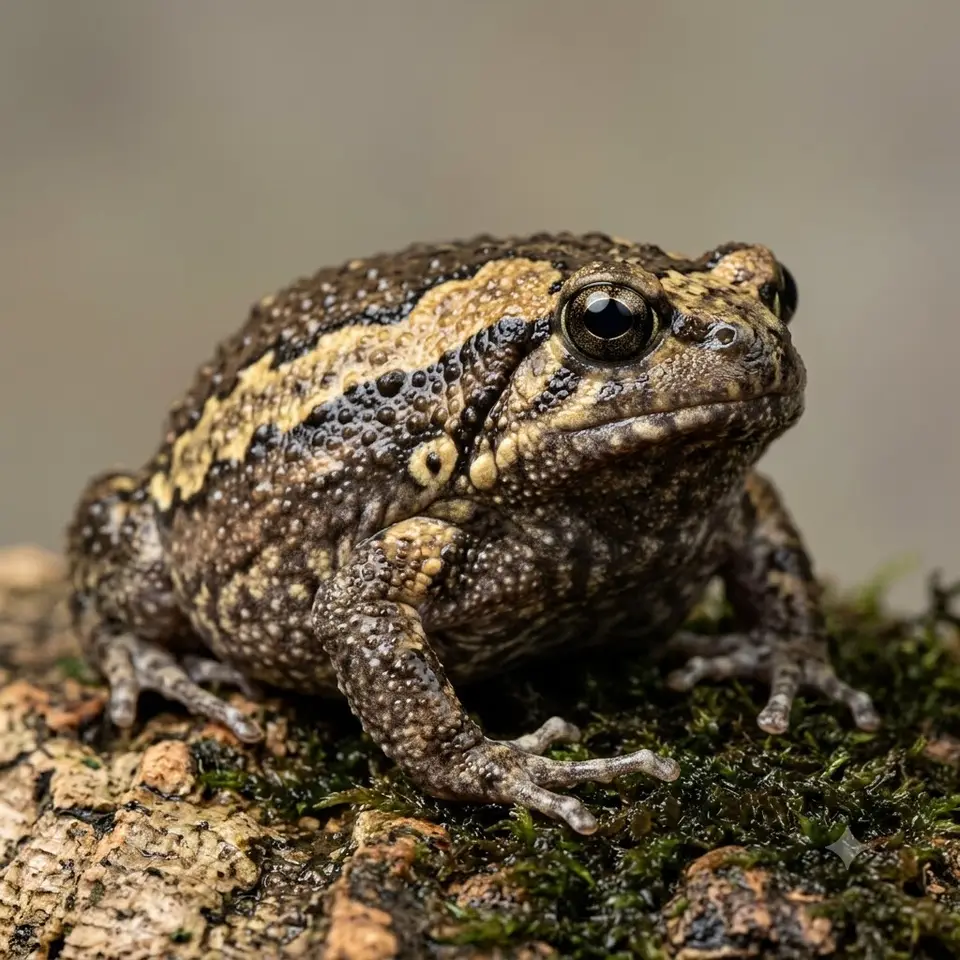
Adults reach roughly 2.5-3 in (6-8 cm), with females larger and rounder than males. The body is squat and balloon-shaped, especially after a meal or when the frog puffs up defensively. Coloration is a rich chocolate to reddish brown on top, with a pair of broad cream, tan, or coppery bands running down each side from the eyes to the hips. The belly is pale and mottled. The head is small with a blunt, narrow snout, giving the frog its comically top-heavy look.
Temperament & Handling
This is a display animal, not a hands-on pet. Chubby frogs are shy, nocturnal, and stay buried most of the day, so much of your interaction is watching them surface at night. When threatened they inflate their bodies and secrete a sticky, glue-like mucus that gums up predators and can irritate human skin and eyes. That secretion, plus the frog's permeable skin, is the main reason handling should be avoided. Only pick one up when truly necessary (a vet visit or enclosure move), with clean, wet, powder-free gloves or freshly rinsed wet hands, and wash thoroughly afterward. It is not dangerously toxic like a cane toad, but it is not something to touch casually.
Enclosure
A single adult does well in a 10-20 gallon (roughly 40-75 L) terrarium; floor space matters more than height because these frogs sit and dig rather than climb. Provide at least 3-4 in (8-10 cm) of loose, moist, burrowable substrate such as coconut fiber, a coco-fiber and soil mix, or sphagnum-topped topsoil so the frog can bury itself completely. Avoid gravel, bark chips, and sand, which cause impaction if swallowed. Include a shallow, dechlorinated water dish the frog can sit in without risk of drowning, plus a hide or two and some sturdy plants or leaf litter for cover. Keep a secure lid; they can be surprising climbers on glass when motivated.
Heating, Lighting, Humidity
- Temperature: 75-82°F (24-28°C) daytime, with a mild drop to 68-75°F (20-24°C) at night. A low-wattage heat source on one side is fine if the room runs cool; avoid hot spots.
- Humidity: 60-80%, maintained by misting and a moist substrate. The bedding should be damp but never waterlogged.
- Lighting: No special UVB is required for this nocturnal burrower, though a low-output UVB and a natural day/night cycle do no harm and can support long-term health. Keep lighting dim.
Diet
Chubby frogs are insectivores with small mouths, so prey size matters. Offer appropriately sized crickets, small dubia roaches, black soldier fly larvae, and the occasional waxworm as a treat. In the wild they specialize in ants and termites, so many small prey items suit them better than a few large ones. Feed juveniles every 1-2 days and adults 2-3 times per week, adjusting to keep the body rounded but not bloated. Dust prey with a calcium supplement (with D3 if no UVB is provided) at most feedings and a multivitamin roughly once a week. Always keep clean, dechlorinated water available.
Health & Lifespan
8-10 years.
Well-kept chubby frogs are hardy and commonly live close to a decade, and well-cared-for individuals can reach 10 years or a little more. The most common problems are husbandry-related: impaction from swallowing loose gravel or sand, obesity from overfeeding, metabolic bone disease from poor calcium and vitamin support, and skin or fungal infections from stale, dirty, or overly wet substrate. Wild-caught imports often arrive stressed, dehydrated, and carrying internal parasites, so a captive-bred animal or a fecal check with an exotics vet is worthwhile. Because their skin absorbs whatever it touches, use only dechlorinated water and keep the enclosure clean.
Pros & Cons
Pros:
- Small footprint and low daily maintenance.
- Hardy and long-lived when kept correctly.
- Inexpensive and widely available.
- No demanding lighting or heating needs.
Cons:
- Look-don't-touch; secretes irritating mucus and should not be handled.
- Spends most of the day buried out of sight.
- Most stock is wild-caught, raising ethics and parasite concerns.
- Nocturnal, so activity is limited to evenings.
Everyday gear for amphibians
Links go to Amazon or a partner brand's own store and may earn us a commission at no extra cost to you. As an Amazon Associate we earn from qualifying purchases. An Amazon link leads to a type of gear and you choose the exact product; a card that names a store leads to that partner's own shop.
Chubby Frog (Asian Painted Frog) - frequently asked questions
Why is it called a chubby frog?
The round, balloon-like body, which puffs up even more when the frog is startled or full, earns it the names chubby frog and bubble frog. It is also sold as the Asian painted frog and banded bullfrog.
Can I handle my chubby frog?
Best not to. Their skin is permeable and they secrete a sticky, irritating mucus when stressed. Handle only when necessary, with clean wet gloves or rinsed wet hands, and wash up afterward. It is a watching pet, not a holding pet.
Should I buy captive-bred or wild-caught?
Captive-bred if you can find one, since most in the trade are wild-caught imports that arrive stressed and often parasitized. Ask the seller about origin, and if you get a wild-caught frog, plan on a vet fecal exam and a careful quarantine.
Are chubby frogs toxic?
Not seriously. Their defensive mucus can irritate skin and eyes and is unpleasant if it reaches your mouth, but it is nowhere near the danger of a cane toad. Wash your hands after any contact and keep them away from other pets that might try to bite one.
Test yourself: guess the amphibian
Three clues from our quiz bank, each about another of our amphibians. Can you name them?
Clue 1.With horn-like skin flaps over its eyes, this burrowing creature mimics a fallen leaf to ambush prey on the forest floor.
It's the Pacman Frog (Horned Frog) - read the full profile →
Clue 2.This tiny fully aquatic amphibian spends its whole life underwater, surfacing only to gulp air, and is a popular tank companion for small fish.
It's the African Dwarf Frog - read the full profile →
Clue 3.This plump, placid green tree frog from Australia has loose folds of skin and a famously calm, docile temperament for a pet amphibian.
It's the White's Tree Frog - read the full profile →