Clown Tree Frog
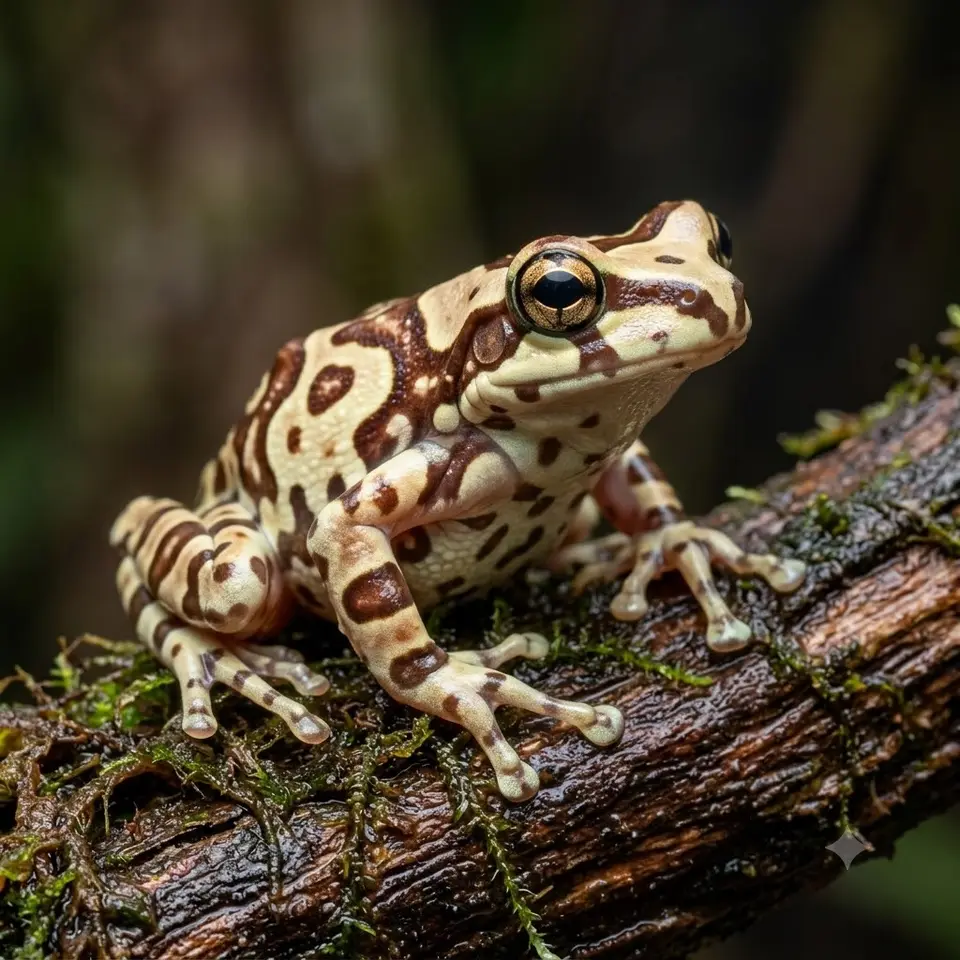
The Clown Tree Frog (Dendropsophus leucophyllatus) is a small, brightly patterned arboreal frog from the Amazon basin, prized for the bold cream-and-brown "harlequin" markings that give it its name.
Updated: July 2026
 AI illustration
 Wash your hands after handling. The FDA notes that reptiles and amphibians can carry Salmonella and show no signs of illness, so the animal, its enclosure and everything in it can spread the germs: wash your hands with soap and water straight after touching any of them. The agency says children younger than 5, pregnant women, the elderly and people with weakened immune systems should not handle reptiles or amphibians. Source: FDA, Salmonella and pet reptiles and amphibians.
Overview
The Clown Tree Frog (Dendropsophus leucophyllatus) is a small, brightly patterned arboreal frog from the Amazon basin, prized for the bold cream-and-brown "harlequin" markings that give it its name. It is an active nocturnal climber that does best in a planted vertical enclosure and, like most tree frogs, is a display animal rather than a handling pet. Small size and modest heating needs make it approachable, but its delicate skin and steady humidity needs reward keepers who prepare properly.
Natural History
The clown tree frog belongs to Dendropsophus, a genus of small South American tree frogs. It ranges across the Amazon basin - Brazil, Peru, Colombia, Ecuador, and the Guianas - in humid lowland rainforest near slow water, ponds, and flooded margins. The common name is applied loosely in the pet trade to several closely related species in the leucophyllatus group, so wild-caught animals are sometimes sold under uncertain names. They are strongly nocturnal, resting against leaves by day and becoming active to hunt and call after dark.
Appearance
A small frog: adults reach roughly 1-1.5 in (2.5-4 cm), with females larger than males - males are about 1.1 in (30 mm) and females about 1.5 in (38 mm). The signature look is a tan-to-reddish-brown back broken by irregular cream or pale-yellow blotches edged in darker pigment, and the pattern varies a lot between individuals. Hidden surfaces of the thighs can flash orange or yellow in motion. Toe pads are expanded into climbing discs, and the eyes are large and forward-set, typical of a night hunter.
Temperament & Handling
This is a look-don't-touch species, and that is the honest recommendation. Amphibian skin is permeable and readily absorbs oils, salts, soaps, and lotions from human hands, and a frog this small is easily stressed or injured. Restrict contact to what husbandry actually requires, such as moving the frog during a deep clean, and when you must, wet your hands first with dechlorinated water and work quickly. They are not aggressive and do not bite meaningfully; the risk runs the other way, from you to the frog.
Enclosure
Because they climb, give height rather than floor space. A single frog can live in a 12 x 12 x 18 in (30 x 30 x 45 cm) vertical glass terrarium; a small group is more natural and appreciates 18 x 18 x 24 in (45 x 45 x 60 cm) or larger. Furnish it densely with cork bark, branches, and live or sturdy artificial plants (pothos and bromeliads work well) for climbing routes and daytime cover. Use a moisture-holding substrate such as coco fiber or bioactive soil topped with leaf litter and sphagnum moss, add a shallow water dish, and fit a secure lid, as these small frogs are excellent escape artists.
Heating, Lighting, Humidity
- Temperature: 74-80°F (23-27°C) during the day, with a natural drop to around 66-72°F (19-22°C) at night. Ambient room temperature is often enough; use a low-wattage heat source on a thermostat only if your room runs cold. Keep it well below 85°F (29°C), which can be fatal.
- Humidity: 60-80%, maintained by daily misting and a moisture-retentive substrate. Good ventilation prevents stagnant, moldy conditions.
- Lighting: low-level UVB is beneficial for a diurnal-resting arboreal species, and a light cycle of about 12 hours supports live plants. Avoid bright, hot basking bulbs.
Diet
Insectivore. Feed small live prey: pinhead and small crickets, flightless fruit flies, and small roach nymphs, with no item wider than the space between the frog's eyes. Juveniles eat daily or every other day; adults do well every two to three days. Dust prey with calcium plus vitamin D3 at most feedings and a multivitamin about weekly. Use only dechlorinated water in the dish and for misting.
Health & Lifespan
5-8 years.
Most health problems in captivity trace back to husbandry rather than bad luck. Poor humidity or dirty water causes skin infections and "red-leg" bacterial disease. Chronic calcium or D3 shortfalls lead to metabolic bone disease, and oversized prey can cause impaction. Wild-caught animals often arrive carrying parasites and stress, one more reason captive-bred stock is the better choice. Any lethargy, bloating, skin discoloration, or refusal to eat warrants a visit to an exotics or amphibian-experienced vet.
Pros & Cons
Pros: small footprint, striking harlequin pattern, active and interesting after dark, modest heating needs, rewarding in a planted display terrarium.
Cons: delicate and not for handling, easily stressed, needs steady humidity and misting, small live feeders required, and much of the trade is wild-caught with uncertain identity.
Everyday gear for amphibians
Links go to Amazon or a partner brand's own store and may earn us a commission at no extra cost to you. As an Amazon Associate we earn from qualifying purchases. An Amazon link leads to a type of gear and you choose the exact product; a card that names a store leads to that partner's own shop.
Clown Tree Frog - frequently asked questions
Are clown tree frogs good for beginners?
They are a reasonable step-up rather than a true first amphibian. The care is not complicated, but the small size, fragile skin, and humidity control leave little margin for neglect. A beginner who researches first and sets up the enclosure before buying can do well.
Can I handle my clown tree frog?
Best not to. Their skin absorbs whatever is on your hands, and handling stresses them. Treat them as a display animal, and when contact is unavoidable, wet your hands with dechlorinated water first.
Should I buy captive-bred or wild-caught?
Captive-bred, whenever you can find it. Wild-caught clown tree frogs are common in the trade but often arrive stressed, parasitized, and sold under vague names. Captive-bred animals are healthier, better documented, and easier on wild populations.
Are they toxic or dangerous?
No. Clown tree frogs are not dangerously toxic and do not deliver a harmful bite, unlike the notorious cane toad. The main concern is protecting the frog: wash your hands before and after any contact, and keep them away from curious pets and small children.
Test yourself: guess the amphibian
Three clues from our quiz bank, each about another of our amphibians. Can you name them?
Clue 1.This amphibian's larvae sometimes become cannibalistic, growing larger heads to prey on their own kind when food is scarce.
It's the Tiger Salamander - read the full profile →
Clue 2.Famous for its permanent smile and frilly pink gill stalks, this underwater creature is a popular exotic pet and a marvel of regeneration.
It's the Axolotl - read the full profile →
Clue 3.This tiny fully aquatic amphibian spends its whole life underwater, surfacing only to gulp air, and is a popular tank companion for small fish.
It's the African Dwarf Frog - read the full profile →