Paddle-Tail Newt
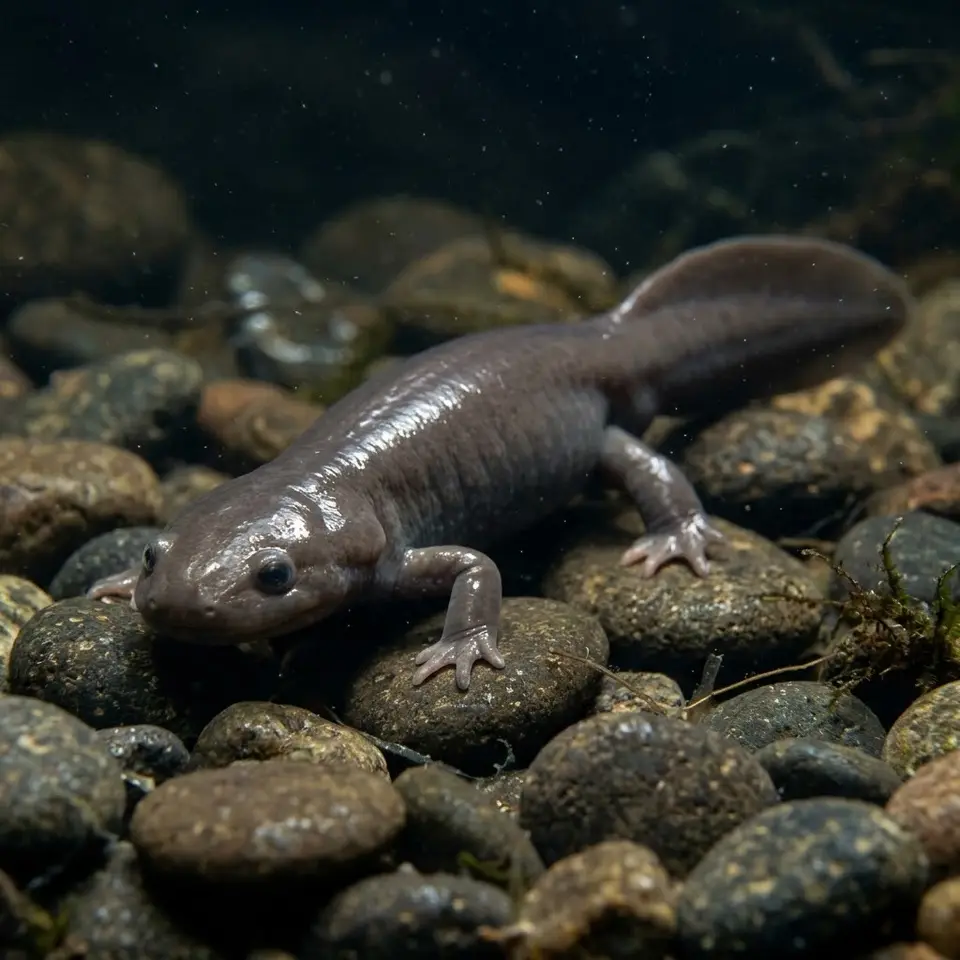
The Paddle-Tail Newt (Pachytriton species) is a stocky, fully aquatic newt from the cold mountain streams of southeastern China, named for its flattened, oar-like tail.
Updated: October 2026
 AI illustration
 Wash your hands after handling. The FDA notes that reptiles and amphibians can carry Salmonella and show no signs of illness, so the animal, its enclosure and everything in it can spread the germs: wash your hands with soap and water straight after touching any of them. The agency says children younger than 5, pregnant women, the elderly and people with weakened immune systems should not handle reptiles or amphibians. Source: FDA, Salmonella and pet reptiles and amphibians.
Overview
The Paddle-Tail Newt (Pachytriton species) is a stocky, fully aquatic newt from the cold mountain streams of southeastern China, named for its flattened, oar-like tail. It is a striking display animal for a cool-water aquarium, but it is demanding in ways beginners underestimate: it needs genuinely cold, clean, well-oxygenated water year round and cannot be kept with its own kind without fighting. Think of it as a look-don't-touch stream fish that happens to breathe air.
Natural History
Paddle-tail newts belong to the genus Pachytriton, most often sold as P. labiatus or P. brevipes in the pet trade. They live in fast, cold, rocky streams in the hills of southeastern China, where the water stays cool and oxygen-rich all year. Unlike many newts, adults almost never leave the water. Historically these were among the cheapest and most common imported newts in the US, and nearly all were wild-caught. Since January 2025, however, the US has listed Pachytriton (one of 36 salamander genera now covered) as injurious under the Lacey Act to slow the spread of the Bsal fungus, which bans importing them into the United States and shipping them between the continental states and Hawaii, Puerto Rico or the territories; the US Fish and Wildlife Service says the listing does not ban transport between states within the continental US, though state laws may. Legitimate animals in the trade today should therefore be captive-bred or long-held pre-ban stock, and any wild-origin history remains both an ethics and a health concern (see the sourcing and legal notes below).
Appearance
Adults reach roughly 12-18 cm (5-7 in). The body is smooth, robust, and slightly flattened, with a broad, paddle-shaped tail built for a life in current. The back is dark brown to olive or slate gray, and the belly is usually pale with orange or reddish blotches that vary between individuals. Skin is smooth and glossy rather than warty. Males and females look similar outside the breeding season.
Temperament & Handling
This is a display animal, not a pet you interact with. Paddle-tail newts secrete a milky, mildly toxic skin secretion that is harmless through the glass but genuinely irritating if it reaches your eyes, mouth, or an open cut. Handle only when you must move the animal, use clean wet hands or a soft net, and wash thoroughly before and after. Never let the water or the newt near your face. They are also aggressive toward each other: two in one tank will bite, chase, and injure. Keep them singly unless you run a large, heavily structured tank and watch closely.
Enclosure
A single adult needs at least a 15-20 gallon (57-76 L) aquarium; bigger is always better for water stability. This is an aquatic setup, essentially a stream tank:
- Full water column, filtered and cycled like a fish tank.
- A gentle-to-moderate flow they can rest against, plus current from the filter return.
- Smooth river rock, slate caves, and driftwood for hides and territory breaks.
- Sand or large smooth gravel too big to swallow (small gravel causes impaction).
- A tight lid: they escape through gaps.
- A shallow land ledge is optional but not required, since they stay submerged.
Heating, Lighting, Humidity
Cold water is the single hardest requirement. Target 60-68°F (16-20°C); brief spikes toward 70°F (21°C) are tolerated, but sustained warmth above the low 70s is dangerous and a common killer, and some keepers report disease problems creeping in above the mid-60s. Most US homes are too warm, so plan for a chiller, a cooling fan across the surface, or a naturally cool room. No heater. Lighting should be low and only for viewing or live plants; these are shade-and-current animals, not baskers. There is no humidity target because they live underwater, but strong filtration, good surface agitation for oxygen, and regular water changes are essential.
Diet
Carnivore. Feed a rotation of earthworms (an excellent staple, cut to size), blackworms, bloodworms, blackworm cubes, and sinking carnivore or newt pellets. Frozen-thawed foods work well. Feed adults every 2-3 days and remove uneaten food promptly, since leftovers foul the cold water fast. Do not overfeed: obesity and poor water quality are both easy to cause.
Health & Lifespan
10-15 years.
Well-kept paddle-tail newts are long-lived, so the main problems are husbandry-driven. Warm water causes stress, loss of appetite, skin issues, and death. Poor filtration leads to bacterial and fungal skin infections and ammonia burns. Any newt of wild origin, including older pre-ban imports, can arrive with parasites and internal damage, so a quarantine period and a check with an exotics or amphibian-experienced vet are worthwhile. Impaction from swallowed gravel is preventable with the right substrate. Any sudden lethargy, floating, or cloudy patches on the skin warrants a water test first.
Pros & Cons
Pros:
- Hardy and long-lived when the water stays cold and clean.
- Fascinating, active aquatic behavior and a handsome paddle-shaped tail.
- Compact footprint for a decade-plus companion animal.
Cons:
- Requires cold water most homes cannot provide without a chiller.
- Aggressive toward its own kind; usually kept alone.
- Toxic skin and not a handling pet.
- Restricted under the Lacey Act (Bsal): import into the US is banned, so legal supply is limited to animals already in the country.
- Wild-origin animals carry parasite and welfare concerns.
Everyday gear for aquatic amphibians
Links go to Amazon or a partner brand's own store and may earn us a commission at no extra cost to you. As an Amazon Associate we earn from qualifying purchases. An Amazon link leads to a type of gear and you choose the exact product; a card that names a store leads to that partner's own shop.
Paddle-Tail Newt - frequently asked questions
Can I keep two paddle-tail newts together?
Usually no. They are territorial and will bite and injure each other. Keep them singly unless you have a large, heavily divided tank and can separate animals at the first sign of aggression.
Are they legal to buy in the US?
Pachytriton is one of the salamander genera restricted under the Lacey Act because of the Bsal fungus, which bans importing them and shipping them to or from Hawaii, Puerto Rico and the territories. Buying and keeping animals already in the country remains possible, and the federal listing does not ban moving them between continental states, but state laws differ - check current federal rules and your state law before purchasing.
Do I really need a chiller?
Often, yes. They need water in the 60-68°F (16-20°C) range, and sustained warmth kills them. If your room stays cool year round you may manage with a surface fan, but many US keepers need an aquarium chiller.
Should I buy captive-bred or wild-caught?
Captive-bred is far better and worth seeking out. New wild-caught imports are now illegal under the Lacey Act, and older wild-caught animals commonly carry parasites and shipping stress. Ask the seller directly about the animal's origin and legal status before buying.
Test yourself: guess the amphibian
Three clues from our quiz bank, each about another of our amphibians. Can you name them?
Clue 1.A common aquarium amphibian only a couple of inches long, it has four webbed feet and is often kept underwater rather than in a terrarium.
It's the African Dwarf Frog - read the full profile →
Clue 2.Despite its name, this semi-aquatic creature has a slightly bumpy skin and bright belly that warns predators of its toxic secretions.
It's the Fire-Bellied Toad - read the full profile →
Clue 3.Famous for its permanent smile and frilly pink gill stalks, this underwater creature is a popular exotic pet and a marvel of regeneration.
It's the Axolotl - read the full profile →