Spanish Ribbed Newt
The Spanish Ribbed Newt (Pleurodeles waltl) is one of Europe's largest and hardiest newts, native to the Iberian Peninsula and Morocco, and a strong first amphibian for a patient keeper.
Updated: October 2026
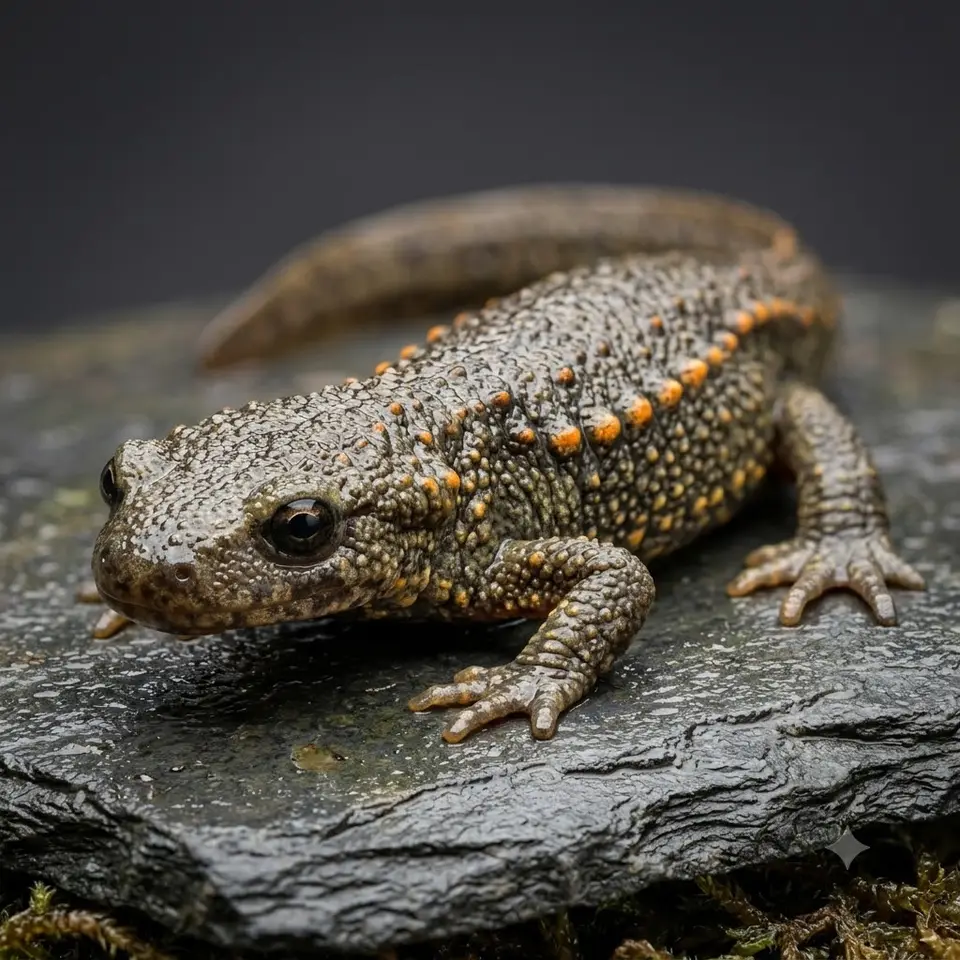 AI illustration
 Wash your hands after handling. The FDA notes that reptiles and amphibians can carry Salmonella and show no signs of illness, so the animal, its enclosure and everything in it can spread the germs: wash your hands with soap and water straight after touching any of them. The agency says children younger than 5, pregnant women, the elderly and people with weakened immune systems should not handle reptiles or amphibians. Source: FDA, Salmonella and pet reptiles and amphibians.
Overview
The Spanish Ribbed Newt (Pleurodeles waltl) is one of Europe's largest and hardiest newts, native to the Iberian Peninsula and Morocco, and a strong first amphibian for a patient keeper. It is famous for a startling defense: when threatened it pushes its sharp rib tips through pores in its sides, turning them into venom-coated spines. Also called the Iberian or sharp-ribbed newt, it is almost fully aquatic, long-lived, and widely captive-bred in the US hobby. That combination of toughness and personality makes it a rewarding display animal for someone who wants to watch rather than touch.
Natural History
Pleurodeles waltl lives in still and slow-moving water across Spain, Portugal, and parts of Morocco, including ponds, ditches, and cisterns. Unlike many newts that migrate to land after breeding, this species stays aquatic year-round wherever water persists, only leaving if its pool dries out. It tolerates cool, poorly oxygenated water that would stress more delicate amphibians. It is one of the most studied amphibians in science and has even been flown into orbit for research, which speaks to its resilience.
Appearance
Adults typically reach 6-12 in (15-30 cm), with females often the larger sex. The body is broad and flattened, gray to olive or dark brown, sometimes with darker mottling, and a paler underside. A row of orange or rust-colored warts runs down each side, marking the pores where the rib tips can emerge. The head is wide and rounded, the eyes small, and the tail is laterally flattened for swimming. Captive lines include leucistic (pale, dark-eyed) morphs.
Temperament & Handling
This is a look-don't-touch animal. Its skin secretes toxins, and its rib-spine defense can pierce skin, so handle only when necessary and never bare-handed for the animal's comfort. Amphibian skin also absorbs oils, soaps, salts, and lotions, so contact is a real health risk to the newt. If you must move one, use a soft aquarium net or wet, clean, dechlorinated hands, and wash thoroughly afterward. They are calm and often bold in the tank, learning to associate keepers with food, which makes them engaging to observe.
Enclosure
A single adult needs a minimum 20 gal (about 75 L) aquarium; a 29-40 gal (110-150 L) tank suits a small group. Keep water depth moderate, roughly 8-14 in (20-35 cm), so they can surface easily to breathe. Provide a tight-fitting lid, because newts climb and can escape. Furnish with smooth rocks, driftwood, caves, and hardy live or silk plants for cover and to break sightlines between animals. A gentle filter keeps water clean without a strong current; over-tank or sponge filters work well. A small floating cork or foam haul-out is optional but appreciated. Use only sand or stones too large to swallow, since gravel causes gut impaction.
Heating, Lighting, Humidity
Spanish Ribbed Newts are a cool-water species and usually need no heater. Aim for 64-72°F (18-22°C), and keep them below about 75°F (24°C), since prolonged warmth stresses them and invites disease. A cool room, or a fan or chiller in summer, is safer than a heated tank. No special UVB is required; standard low ambient lighting on a day-night cycle is enough and reduces algae. Always treat tap water with a dechlorinator that removes chlorine and chloramine before it touches the animals, and do weekly partial water changes to control ammonia and nitrate.
Diet
Carnivore. Staple foods are earthworms and nightcrawlers cut to size, plus frozen or live bloodworms, blackworms, and chopped shrimp. Many individuals also take sinking carnivore or newt pellets, which simplifies feeding. Offer food with feeding tongs or drop it near the animal, since eyesight is poor and they hunt largely by smell and motion. Feed juveniles daily to every other day and adults two to three times a week, removing uneaten food to protect water quality. Avoid feeder fish and mammal meat as regular items.
Health & Lifespan
10-20 years.
With clean cool water, this newt is long-lived and hardy. The most common problems are keeper-caused: bacterial or fungal skin infections and "red leg" from dirty or warm water, gut impaction from swallowed gravel, and stress or refusal to feed when temperatures climb. Bloating, skin ulcers, lethargy, or a floating, off-balance animal all warrant a water-quality check and a call to an exotics or herp veterinarian. Quarantine new arrivals, and never mix newts with fish that may nip them or carry disease.
Pros & Cons
Pros:
- Extremely hardy and beginner-friendly for an amphibian.
- Long-lived, often 15 years or more.
- No heater or UVB usually needed, keeping setup simple.
- Active, bold, and interesting to watch; readily captive-bred.
Cons:
- Toxic skin and rib-spine defense mean no handling.
- Needs cool water; a warm home can require a chiller.
- Escape artist that demands a secure lid.
- Long commitment and steady water-change routine.
- Federally listed as injurious wildlife: imports are banned, so the supply is captive-bred animals already in the country.
Everyday gear for aquatic amphibians
Links go to Amazon or a partner brand's own store and may earn us a commission at no extra cost to you. As an Amazon Associate we earn from qualifying purchases. An Amazon link leads to a type of gear and you choose the exact product; a card that names a store leads to that partner's own shop.
Spanish Ribbed Newt - frequently asked questions
Do they really stab with their ribs?
Yes. When grabbed, the newt arches and forces its sharp rib tips through pores in its sides, and glands coat them with an irritating toxin. It is a last-resort defense against predators and rarely triggered in a calm tank, but it is a strong reason to avoid handling.
Should I buy captive-bred or wild-caught?
Always choose captive-bred. This species breeds freely in captivity, so captive-bred animals are common in the US hobby, healthier, better feeders, and free of the parasites and stress that plague wild-caught stock. Because a federal rule (see below) bans imports, look for a captive breeder or a reptile show, and check your own state's rules before buying across a state line. Buying captive-bred also spares wild populations.
Do they need land or a heater?
Neither in most cases. Spanish Ribbed Newts are essentially fully aquatic and thrive in cool room-temperature water, so a heater is usually unnecessary and often harmful. A small haul-out spot is optional, not required.
Are they legal and safe to keep?
There is an important federal catch. Since 2016 the US Fish and Wildlife Service has listed all Pleurodeles (and 19 other salamander genera) as injurious wildlife under the Lacey Act to slow the spread of the Bsal salamander fungus, which makes it illegal to import them, or to ship them between the continental US and Hawaii, Puerto Rico or the territories, without a federal permit; the Service says the listing does not ban transport between states within the continental US. You can still legally keep and buy them where your state allows, and some states add their own newt and salamander rules, so check both federal and local law before buying. Their toxins are a skin and eye irritant, not deadly to keep, but always wash your hands after any tank work and keep them away from your face.
Test yourself: guess the amphibian
Three clues from our quiz bank, each about another of our amphibians. Can you name them?
Clue 1.Despite its name, this semi-aquatic creature has a slightly bumpy skin and bright belly that warns predators of its toxic secretions.
It's the Fire-Bellied Toad - read the full profile →
Clue 2.A robust North American amphibian named for its bold striped or spotted markings, it spends much of its life hidden underground.
It's the Tiger Salamander - read the full profile →
Clue 3.This plump, placid green tree frog from Australia has loose folds of skin and a famously calm, docile temperament for a pet amphibian.
It's the White's Tree Frog - read the full profile →