Alpine Newt
The Alpine Newt (Ichthyosaura alpestris) is a small, cool-water European newt famous for the vivid blue backs and bright orange bellies males show in the breeding season.
Updated: October 2026
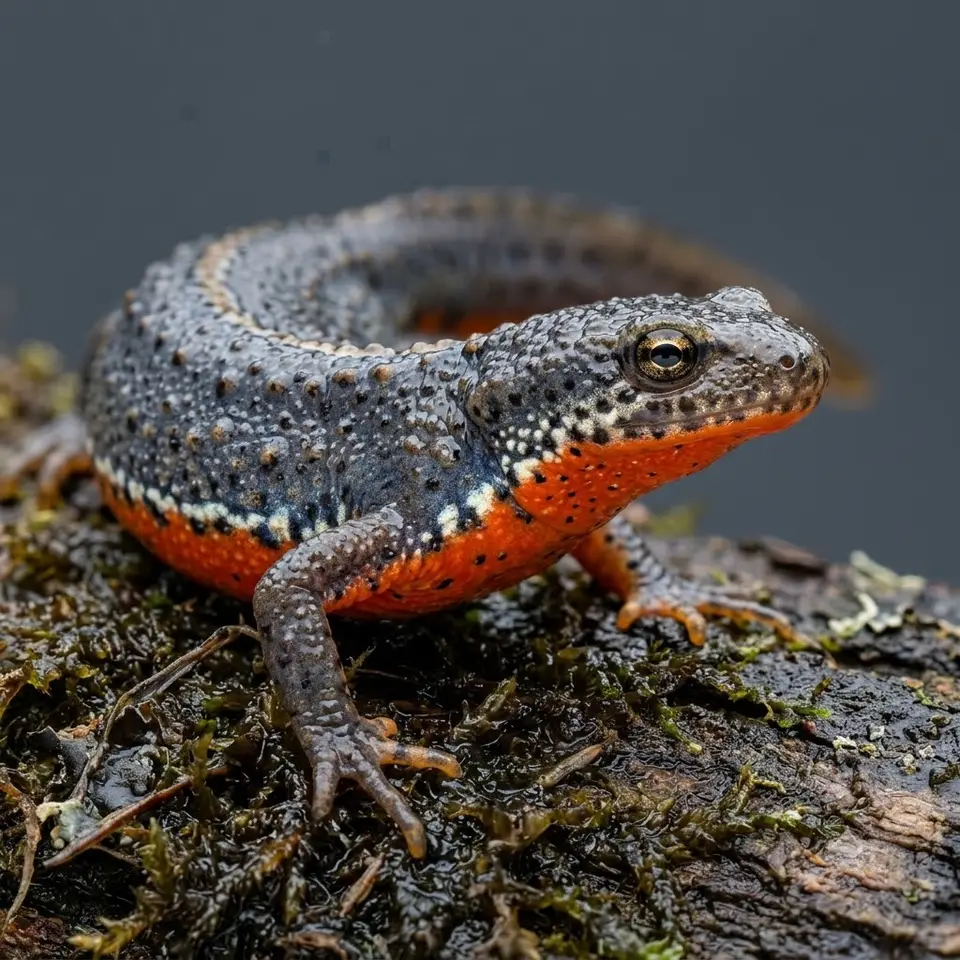 AI illustration
 Wash your hands after handling. The FDA notes that reptiles and amphibians can carry Salmonella and show no signs of illness, so the animal, its enclosure and everything in it can spread the germs: wash your hands with soap and water straight after touching any of them. The agency says children younger than 5, pregnant women, the elderly and people with weakened immune systems should not handle reptiles or amphibians. Source: FDA, Salmonella and pet reptiles and amphibians.
Overview
The Alpine Newt (Ichthyosaura alpestris) is a small, cool-water European newt famous for the vivid blue backs and bright orange bellies males show in the breeding season. It is a hardy, long-lived amphibian that swings between an aquatic breeding phase and a terrestrial land phase, so its care changes across the year. Alpine Newts are display animals rather than pets you interact with, and in the US they carry real legal restrictions worth understanding before you buy. They are best suited to keepers who can guarantee genuinely cool temperatures.
Natural History
Ichthyosaura alpestris is native to central and southern Europe, from lowland ponds up into mountain lakes, which is where the "Alpine" name comes from. In the wild they migrate to still water in spring to breed, then many adults move onto land and shelter under logs, leaf litter, and stones for the rest of the year. Because their range includes high, cold habitats, they are adapted to cool, oxygen-rich water and do poorly in warm rooms. Several subspecies and regional color forms exist, and a few naturalized populations have established in the UK.
Appearance
Adults reach roughly 7-12 cm (about 3-5 inches), with females usually a little larger and heavier-bodied than males. Both sexes have a smooth-to-granular dark gray, brown, or slate back and a solid orange-to-red belly that is typically unmarked. Breeding males are the showpiece: their flanks turn silvery-blue with a black-and-white spotted band, and they develop a low, straight yellow-and-black crest along the back. Outside the breeding season colors mute considerably, and land-phase animals look drab and velvety.
Temperament & Handling
This is a look-don't-touch animal. Alpine Newts have permeable skin that absorbs oils, salts, lotions, and residues from your hands, and like other newts they secrete mild skin toxins that are an irritant if they reach your eyes or mouth. Handle only when you must move the animal, use clean, wet, powder-free gloves or freshly rinsed bare hands, and always wash thoroughly afterward. Never let a child handle one casually. They are not aggressive and will simply try to escape, but every handling event is a stress and a health risk to the newt.
Enclosure
Match the enclosure to the animal's current phase. For the aquatic breeding phase, a planted aquarium of at least 45 x 30 x 30 cm (about 18 x 12 x 12 inches, roughly 10 gallons) for two to three newts works well, filled with cool, dechlorinated water 15-25 cm (6-10 inches) deep, gentle filtration, and floating or rooted plants for cover and egg-laying. Always include an easy exit ramp, cork bark, or a land shelf, because they drown if they cannot surface and rest. For the land phase, provide a moist terrestrial setup with coco fiber or leaf litter, sphagnum moss, hides, and a shallow water dish. A tight-fitting, ventilated lid is essential, since newts climb and escape readily.
Heating, Lighting, Humidity
Cool temperatures are the single most important thing. Aim for 50-68°F (10-20°C) and keep water and air below about 72°F (22°C) at all times; sustained heat is the most common way these newts are killed in captivity. No heater is needed, and in warm homes you may need a fan, a cooler room, or an aquarium chiller in summer. They need no special UVB or bright light; low, ambient room lighting or a dim planted-tank light is fine and helps live plants. Keep the land phase humid but not waterlogged, with a damp substrate and good ventilation.
Diet
Carnivore. In the water they take bloodworms, blackworms, daphnia, chopped earthworms, small pieces of nightcrawler, and thawed frozen invertebrates; on land they take small earthworms, isopods, and appropriately sized insects. Feed juveniles and aquatic adults every one to two days and land-phase adults two to three times a week, offering only what they clear in a few minutes. Remove uneaten food to protect water quality, and dust land feedings lightly with a calcium supplement.
Health & Lifespan
10-15 years. Alpine Newts are long-lived for their size and can exceed this with good care. The biggest killers are heat stress and poor water quality, both preventable. Watch for bloating, skin lesions or fungus, floating, and loss of appetite, and correct temperature and water conditions first. Skin and fungal issues respond best to clean, cool water and an amphibian-experienced exotics vet; avoid guessing with medications. Source captive-bred animals whenever possible, since wild-caught newts are more stressed, more likely to carry parasites, and drain wild populations. Quarantine any new animal.
Pros & Cons
Pros: hardy and long-lived, small space needs, stunning breeding colors, no heating or UVB required, inexpensive to feed. Cons: demand genuinely cool temperatures, cannot be handled, US import rules restrict them, seasonal care changes, mildly toxic skin.
Everyday gear for aquatic amphibians
Links go to Amazon or a partner brand's own store and may earn us a commission at no extra cost to you. As an Amazon Associate we earn from qualifying purchases. An Amazon link leads to a type of gear and you choose the exact product; a card that names a store leads to that partner's own shop.
Alpine Newt - frequently asked questions
Are Alpine Newts legal to keep in the US?
It is complicated. Under the Lacey Act, US Fish and Wildlife listed many salamander and newt genera, including Ichthyosaura, as injurious to slow the spread of the Bsal fungus, which bans import and shipment to or from Hawaii, Puerto Rico and the territories but, the Service says, not transport between continental states. Existing captive-bred stock may be kept in some states, but check current federal and state rules before buying or moving one.
Can I hold my Alpine Newt?
No, treat it as a display animal. Their skin absorbs residues and secretes mild toxins, so handle only to relocate them, using wet clean gloves, and wash up afterward.
Do they need a heater or UVB light?
No to both. They want cool water and air below about 72°F (22°C) and only low ambient light. Your real challenge is keeping them cool in summer, not warm.
Captive-bred or wild-caught?
Captive-bred, always. They are healthier, calmer, and legally safer to obtain, and buying them avoids adding pressure to wild populations already threatened by disease.
Test yourself: guess the amphibian
Three clues from our quiz bank, each about another of our amphibians. Can you name them?
Clue 1.When threatened, this small green amphibian arches its back to flash a vivid red-and-black warning pattern on its underside.
It's the Fire-Bellied Toad - read the full profile →
Clue 2.Native to the rivers of central Africa, this little webbed-footed swimmer lacks a tongue and tiny teeth, sweeping food into its mouth with its hands.
It's the African Dwarf Frog - read the full profile →
Clue 3.This amphibian's larvae sometimes become cannibalistic, growing larger heads to prey on their own kind when food is scarce.
It's the Tiger Salamander - read the full profile →