Chinese Fire-Belly Newt
The Chinese Fire-Belly Newt (Cynops orientalis) is a small, cool-water aquatic salamander whose glossy black body hides a vivid orange-red belly that warns predators it is toxic.
Updated: October 2026
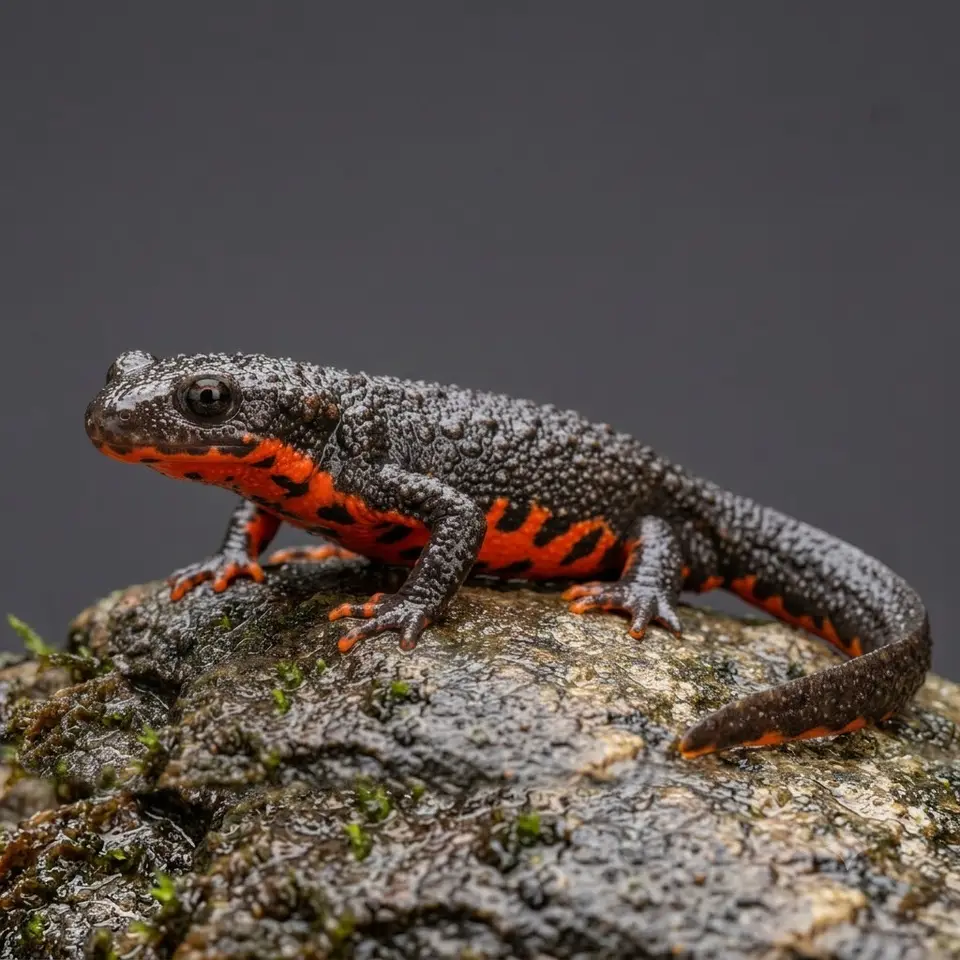 AI illustration
 Wash your hands after handling. The FDA notes that reptiles and amphibians can carry Salmonella and show no signs of illness, so the animal, its enclosure and everything in it can spread the germs: wash your hands with soap and water straight after touching any of them. The agency says children younger than 5, pregnant women, the elderly and people with weakened immune systems should not handle reptiles or amphibians. Source: FDA, Salmonella and pet reptiles and amphibians.
Overview
The Chinese Fire-Belly Newt (Cynops orientalis) is a small, cool-water aquatic salamander whose glossy black body hides a vivid orange-red belly that warns predators it is toxic. It is one of the most affordable and long-lived amphibians in the hobby, but it is a display animal rather than a pet you interact with. Adults stay under 4 inches and can live well past a decade with cool, clean water and a patient keeper.
Natural History
Native to central and eastern China, where it lives in slow ponds, ditches, rice paddies, and quiet stream margins. It spends most of the year in the water, coming onto land mainly during cooler, drier spells. Wild populations have declined from over-collection for the pet trade, so sourcing matters (see below).
Appearance
Adults reach roughly 3-4 inches (7-10 cm), with females slightly larger and rounder than males. The back and sides are dark brown to black, with skin that is relatively smooth and glossy rather than heavily granular. The belly is bright orange to red, broken with irregular black blotches - a unique fingerprint on each animal. Breeding males show a swollen cloaca and a smoother tail.
Temperament & Handling
This is a look-don't-touch species, and we mean it. Fire-belly newts secrete tetrodotoxin-related compounds through their skin as a defense; the toxin is not dangerous through casual contact but is harmful if it reaches your eyes, mouth, or an open cut. Handle only when you must move the animal - with clean, wet hands or a soft net - and wash thoroughly afterward. Never handle around your face, and keep them away from children and other pets. Their skin also absorbs oils, soap residue, and lotions, so dry or dirty hands can hurt them as much as the toxin can hurt you.
Enclosure
A single newt needs at least a 10-gallon (38 L) aquarium; 15-20 gallons suits a small group and gives more stable water. Setup should be mostly aquatic with easy land access:
- Water depth of about 4-8 inches (10-20 cm), shallow enough that the newt can reach the surface without effort.
- A land area or floating platform (cork bark, a sloped rock, or a planted ledge) so it can climb out.
- A tight-fitting, fully escape-proof lid. These newts are determined climbers and will find any gap.
- Fine sand or large smooth river stones as substrate - avoid gravel small enough to swallow (impaction risk).
- Live or silk plants, driftwood, and caves for cover; they are shy and stress without hiding spots.
- A gentle filter (sponge or low-flow) - they dislike strong current. Dechlorinate all water.
Heating, Lighting, Humidity
Coolness is the single most important requirement. Aim for 60-68 F (16-20 C); sustained temperatures above 72 F (22 C) cause stress, illness, and death. No heater is needed - most homes are too warm, so keep the tank in the coolest room and use a fan or chiller in summer if needed. No special lighting is required; a low ambient LED for viewing and plants is plenty, and UVB is not considered necessary. Because they are aquatic, tank humidity is a non-issue - focus on clean, cool water with regular partial changes.
Diet
Carnivore. Offer a rotation of bloodworms, blackworms, chopped earthworms, daphnia, brine shrimp, and small amounts of sinking newt or carnivore pellets once they learn to accept them. Feed adults every 2-3 days and juveniles daily, giving only what is eaten in a few minutes. Earthworms are an excellent staple. Remove uneaten food to protect water quality. Occasional calcium dusting on land-taken feedings is a reasonable insurance policy.
Health & Lifespan
10-20 years. Most health problems trace back to warm water and poor water quality. Watch for skin fungus or bacterial infections (fuzzy patches, redness, lethargy), bloating, and floating or listing - often signs of infection or overfeeding. Quarantine new arrivals, since wild-caught animals frequently carry parasites and arrive dehydrated or starved. Keep water cool and clean, and find a vet who treats amphibians before you need one.
Pros & Cons
Pros:
- Small, inexpensive, and very long-lived for the price.
- No heating or UVB gear required - simpler than most exotics.
- Striking coloration and interesting semi-aquatic behavior.
Cons:
- Toxic skin; strictly hands-off and unsafe around kids or pets.
- Needs genuinely cool water, which is hard in warm climates.
- Many on the market are wild-caught with poor survival odds.
Everyday gear for aquatic amphibians
Links go to Amazon or a partner brand's own store and may earn us a commission at no extra cost to you. As an Amazon Associate we earn from qualifying purchases. An Amazon link leads to a type of gear and you choose the exact product; a card that names a store leads to that partner's own shop.
Chinese Fire-Belly Newt - frequently asked questions
Are they legal to keep in the US?
It varies. Under the Lacey Act, US Fish and Wildlife listed many salamanders, including Cynops, as injurious in 2016 to slow the Bsal fungus. This bans import, so animals should already be within the country; the listing does not ban moving them between continental states, but states may add their own rules. Check current federal and local law before buying.
Captive-bred or wild-caught?
Choose captive-bred whenever possible. Fire-belly newts are cheap largely because most are wild-caught, which drains wild populations and produces stressed, parasitized animals with high death rates. Captive-bred stock is healthier and more ethical, even at a higher price.
Can I house them with fish?
Not recommended. Fish nip newt limbs, compete for food, and prefer warmer water. A cool, species-only tank is safest.
Do they really need cool water?
Yes. This is the mistake that kills most fire-belly newts. They are temperate animals; anything warmer than the low 70s F stresses them and invites fatal infections.
Test yourself: guess the amphibian
Three clues from our quiz bank, each about another of our amphibians. Can you name them?
Clue 1.When threatened, this small green amphibian arches its back to flash a vivid red-and-black warning pattern on its underside.
It's the Fire-Bellied Toad - read the full profile →
Clue 2.Named after a naturalist, this chubby green climber has sticky toe pads and can change shade from green to brownish.
It's the White's Tree Frog - read the full profile →
Clue 3.A common aquarium amphibian only a couple of inches long, it has four webbed feet and is often kept underwater rather than in a terrarium.
It's the African Dwarf Frog - read the full profile →