Cane Toad
The Cane Toad (Rhinella marina, formerly Bufo marinus) is one of the largest toads on earth and among the most toxic amphibians you can legally keep, secreting a potent milky poison from glands behind its eyes.
Updated: July 2026
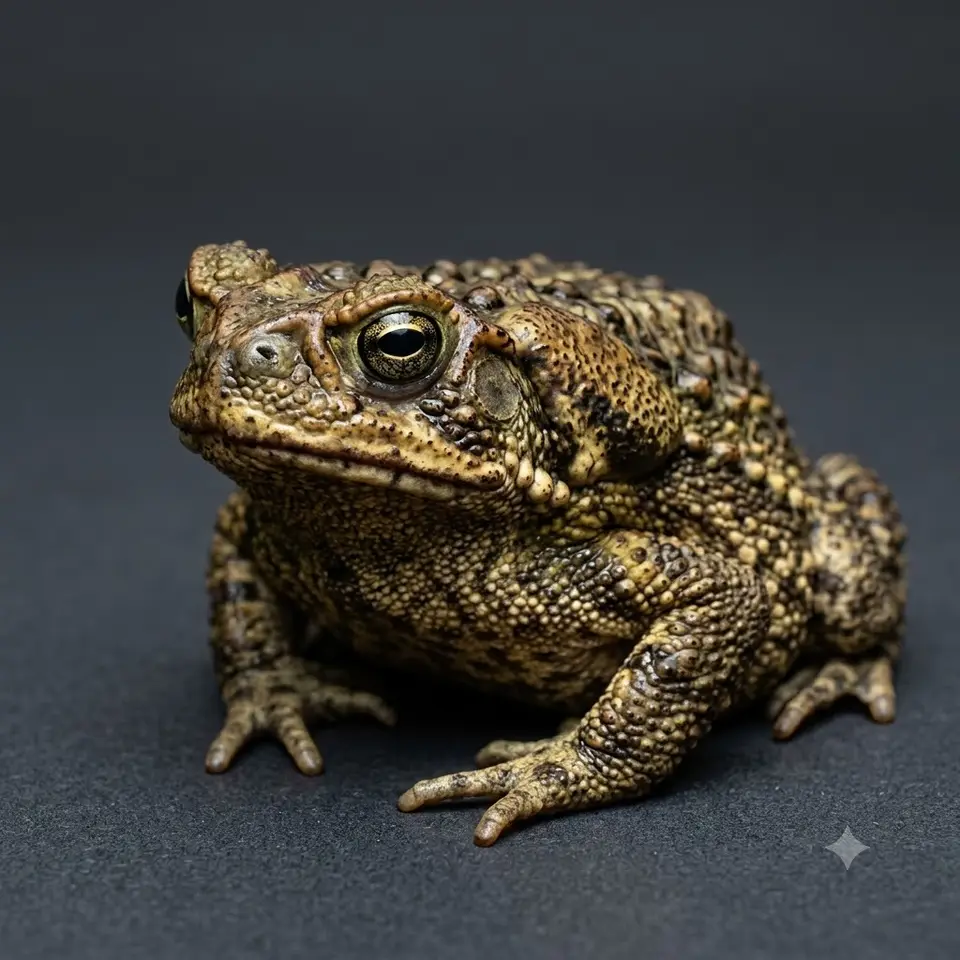 AI illustration
 Wash your hands after handling. The FDA notes that reptiles and amphibians can carry Salmonella and show no signs of illness, so the animal, its enclosure and everything in it can spread the germs: wash your hands with soap and water straight after touching any of them. The agency says children younger than 5, pregnant women, the elderly and people with weakened immune systems should not handle reptiles or amphibians. Source: FDA, Salmonella and pet reptiles and amphibians.
Overview
The Cane Toad (Rhinella marina, formerly Bufo marinus) is one of the largest toads on earth and among the most toxic amphibians you can legally keep, secreting a potent milky poison from glands behind its eyes. Native to Central and South America, it is a hardy, long-lived, ground-dwelling toad that is easy to feed but demanding on safety and legality. This is a look-do-not-touch animal with real risks to children and other pets. Before buying one, confirm it is legal where you live, because it is banned or restricted in several US states.
Natural History
Rhinella marina ranges naturally from southern Texas and Mexico through Central America into the Amazon basin, where it lives in a wide variety of humid lowland habitats. Prized historically as a pest-control agent for sugar cane fields, it was introduced to Australia, Hawaii, Florida, the Caribbean, and elsewhere, becoming one of the world's most damaging invasive species. Its adaptability, huge appetite, and toxic defense that kills native predators are exactly what make it a problem in the wild and a hardy captive.
Appearance
Adults are typically 4-6 inches (10-15 cm) long, with large females occasionally reaching 8-9 inches (20-23 cm) and over 2 pounds. The body is heavy and warty, colored in shades of tan, brown, olive, or reddish-brown with a paler belly. The most important feature is the pair of large, swollen parotoid glands sloping back from behind each eye. These glands are the toxin reservoir and the reason this toad is handled with such caution.
Temperament & Handling
Cane Toads are calm, slow, and undemanding, but they are not a handling pet. Their parotoid and skin secretions contain bufotoxins that can cause burning eyes, mouth irritation, vomiting, and, in dogs and cats, seizures or death. Treat this as a strictly look-do-not-touch species. If you must move one, wear nitrile gloves, support the whole body, never touch your face, and wash thoroughly afterward. Keep the enclosure sealed and out of reach of children and other pets at all times.
Enclosure
One adult needs a minimum footprint of about 36 x 18 inches (a 40-gallon breeder or larger), and bigger is better for a toad this size. Floor space matters far more than height. Provide 3-4 inches (8-10 cm) of moist, burrow-friendly substrate such as coconut fiber, organic topsoil, or a soil and sphagnum mix. Add sturdy hides and a large, shallow water dish the toad can sit in but not drown in; use dechlorinated water and change it daily, since toads soak and defecate in it. A secure, escape-proof lid is essential.
Heating, Lighting, Humidity
Keep daytime temperatures around 75-85°F (24-29°C) with a slight nighttime drop to roughly 68-75°F (20-24°C). Use a low-wattage overhead heat source on a thermostat rather than a hot basking bulb. These are nocturnal toads and do not require intense UVB, though a low-level UVB tube is a reasonable option to support long-term bone health. Maintain humidity around 50-70% by misting and by keeping the substrate lightly damp but never waterlogged.
Diet
Cane Toads are opportunistic carnivores with enormous appetites. Feed a varied diet of appropriately sized insects: crickets, dubia roaches, earthworms, and the occasional hornworm. Adults can take the rare pinkie mouse, but sparingly. Dust feeders with calcium plus vitamin D3 and use a multivitamin about once a week. Feed juveniles daily and adults 2-3 times per week. Obesity is the single most common mistake; if the toad looks bloated or lumpy, cut back.
Health & Lifespan
10-15 years. Cane Toads are long-lived and hardy but suffer predictably from poor husbandry. The most common problems are obesity from overfeeding, impaction from swallowing loose or coarse substrate, metabolic bone disease from missing calcium, and skin infections from dirty or overly wet conditions. Clean the water daily and spot-clean waste promptly, since these toads foul their enclosures quickly. Locate an exotics or reptile-and-amphibian veterinarian before you need one, because general practices rarely treat toads.
Pros & Cons
Pros:
- Extremely hardy and forgiving of beginner mistakes.
- Long lifespan of well over a decade.
- Simple, cheap diet and easy feeding response.
- Large, calm, and interesting to observe.
Cons:
- Genuinely toxic; a real hazard to kids, dogs, and cats.
- Never a handling pet.
- Illegal or restricted in several US states and an invasive species.
- Messy; fouls water and substrate fast.
Everyday gear for amphibians
Links go to Amazon or a partner brand's own store and may earn us a commission at no extra cost to you. As an Amazon Associate we earn from qualifying purchases. An Amazon link leads to a type of gear and you choose the exact product; a card that names a store leads to that partner's own shop.
Cane Toad - frequently asked questions
Are Cane Toads poisonous to touch?
The toxin must get into eyes, mouth, or broken skin to harm you, so a brief accidental touch is usually just an irritant if you wash immediately. The danger is far greater for dogs, cats, and small children, so keep the toad secured and treat any contact seriously.
Is it legal to keep a Cane Toad in the US?
It depends entirely on your state. Because it is a notorious invasive species, several states ban or restrict private ownership, and rules can change. Confirm with your state wildlife agency before acquiring one, and never release a captive toad outdoors.
Should I buy captive-bred or wild-caught?
Choose captive-bred whenever possible. Wild-caught toads are more likely to carry parasites and stress, and given the species' invasive history, supporting responsible captive breeding is the more ethical route.
Can I keep two together?
You can house compatible adults together in a large enough enclosure, but it is optional and adds cleaning load. Only keep similarly sized toads, feed carefully so no one nips a tank mate, and never mix them with other species.
Test yourself: guess the amphibian
Three clues from our quiz bank, each about another of our amphibians. Can you name them?
Clue 1.Named after a naturalist, this chubby green climber has sticky toe pads and can change shade from green to brownish.
It's the White's Tree Frog - read the full profile →
Clue 2.With horn-like skin flaps over its eyes, this burrowing creature mimics a fallen leaf to ambush prey on the forest floor.
It's the Pacman Frog (Horned Frog) - read the full profile →
Clue 3.Famous for its permanent smile and frilly pink gill stalks, this underwater creature is a popular exotic pet and a marvel of regeneration.
It's the Axolotl - read the full profile →