Waxy Monkey Frog
The Waxy Monkey Frog (Phyllomedusa sauvagii) is a slow-moving, tree-dwelling South American frog famous for the waxy lipid it wipes across its own skin to survive the dry Gran Chaco heat.
Updated: September 2026
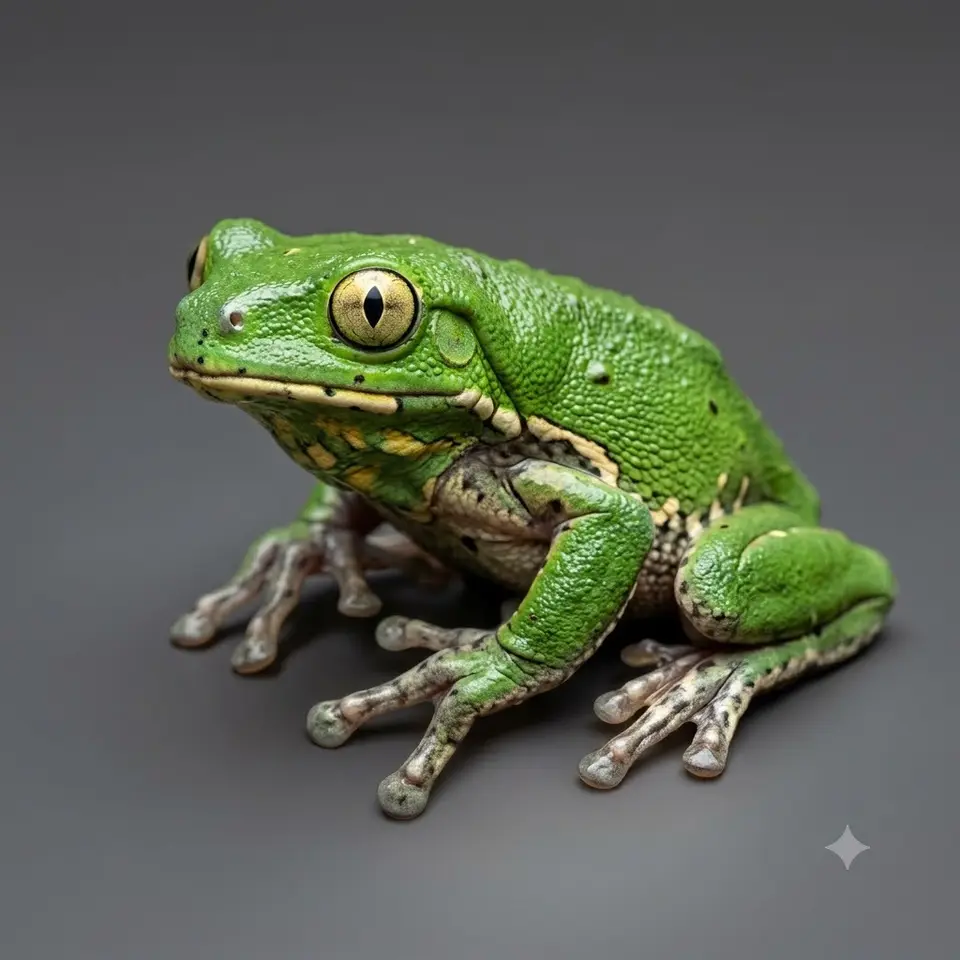 AI illustration
 Wash your hands after handling. The FDA notes that reptiles and amphibians can carry Salmonella and show no signs of illness, so the animal, its enclosure and everything in it can spread the germs: wash your hands with soap and water straight after touching any of them. The agency says children younger than 5, pregnant women, the elderly and people with weakened immune systems should not handle reptiles or amphibians. Source: FDA, Salmonella and pet reptiles and amphibians.
Overview
The Waxy Monkey Frog (Phyllomedusa sauvagii) is a slow-moving, tree-dwelling South American frog famous for the waxy lipid it wipes across its own skin to survive the dry Gran Chaco heat. Unlike most amphibians it tolerates warmth, basks under light, and climbs hand-over-hand like a tiny primate rather than hopping. It is a striking display animal but a demanding one, needing higher temperatures, UVB, and careful ventilation that trip up keepers used to standard rainforest frogs.
Natural History
Phyllomedusa sauvagii is native to the Gran Chaco, a hot, seasonally dry scrubland spanning Argentina, Paraguay, Bolivia, and Brazil. To cope with an environment that would desiccate an ordinary frog, it secretes a waxy substance from glands and deliberately spreads it over its body with its limbs, sealing in moisture. It also excretes uric acid rather than watery urine, a reptile-like adaptation that conserves water. These frogs are arboreal; they perch and bask openly in the sun by day, often in a water-saving state of torpor, but become active and hunt after dusk, making them crepuscular and nocturnal feeders.
Appearance
Adults reach roughly 5-8 cm (2-3 in), with females larger than males. The body is pale to leafy green above with a creamy white belly, often marked with small white spots edged in dark pigment along the flanks and legs. The eyes are large with vertical pupils and a silvery-grey iris. Their most distinctive feature is the grasping, opposable-looking hands and feet that let them grip branches and walk deliberately rather than leap.
Temperament & Handling
This is a look-don't-touch animal. Their skin absorbs substances readily, and the secretions they produce contain potent peptides that can irritate your eyes, nose, or mouth if transferred by hand. Handling also strips the protective waxy coating and stresses the frog. Limit contact to necessary moves, and when you must handle one, wear clean powder-free gloves or use freshly washed, dechlorinated-wet hands, then wash thoroughly afterward. They are calm and slow rather than skittish, which makes them excellent to observe.
Enclosure
Minimum: 45 x 45 x 60 cm (18 x 18 x 24 in) tall for one adult; taller is better since they climb. Provide:
- Sturdy branches, cork bark, and broad-leaved live or artificial plants for climbing and perching.
- A shallow water dish large enough to soak in but easy to climb out of.
- Substrate that holds some moisture without staying soggy: coco fiber, or a bioactive mix with drainage.
- Cross-ventilation. Stagnant, over-humid air causes skin and respiratory problems in this species.
Single-house them or keep only compatible same-species groups; never mix with animals small enough to be eaten.
Heating, Lighting, Humidity
- Temperature: 80-90 F (27-32 C) daytime with a warmer basking zone, dropping to about 68-74 F (20-23 C) at night.
- UVB: Yes. As a basking frog it benefits from a low-percentage UVB tube for calcium metabolism; a screen between the tube and the frog softens the output, so mount the tube over a screen rather than inside the enclosure and use a low output.
- Humidity: Moderate, around 50-70 percent, achieved with a nighttime misting rather than constant saturation. Let the enclosure dry out somewhat between mistings.
Diet
Insectivore. Feed appropriately sized crickets, dubia roaches, and other gut-loaded feeder insects, with the occasional hornworm or silkworm for variety. Feed juveniles most days and adults every 2-3 days, adjusting to keep a healthy but not bloated body. Dust prey with a calcium plus D3 supplement at most feedings and a multivitamin roughly weekly. Because they hunt at dusk and after dark, offer food in the evening.
Health & Lifespan
8-12 years.
Common health problems trace back to husbandry. Metabolic bone disease results from insufficient calcium or UVB. Poor ventilation and chronic over-misting lead to skin infections and bloating. Dehydration is a real risk if humidity, hydration, and the water dish are neglected, since this species walks a fine moisture line. Obesity from overfeeding shortens lifespan. Prioritize captive-bred animals: wild-caught Waxy Monkey Frogs are still traded, often arrive stressed and parasitized, and pressure wild populations. A captive-bred frog from a reputable breeder is healthier and more ethical. Locate an exotics or herp vet before problems arise.
Pros & Cons
Pros: calm and slow, fascinating waxing and climbing behavior, striking appearance, sits out in the open by day so it is easy to view, long-lived for a frog.
Cons: demanding humidity and ventilation balance, needs UVB and warmth unlike most frogs, not handleable, wild-caught animals are common and problematic, skin secretions can irritate.
Everyday gear for amphibians
Links go to Amazon or a partner brand's own store and may earn us a commission at no extra cost to you. As an Amazon Associate we earn from qualifying purchases. An Amazon link leads to a type of gear and you choose the exact product; a card that names a store leads to that partner's own shop.
Waxy Monkey Frog - frequently asked questions
Why is it called a "waxy monkey" frog?
"Waxy" refers to the lipid secretion it smears over its skin to prevent water loss, and "monkey" describes the way it climbs deliberately hand-over-hand and grips branches rather than hopping.
Can I handle my Waxy Monkey Frog?
Best not to. Their skin absorbs chemicals, handling removes their protective coating, and their secretions can irritate your eyes and mouth. Treat them as a display animal and wash your hands well any time you do touch one.
Are they toxic or dangerous?
Not dangerous to keep, but their skin secretions contain potent bioactive peptides. They will not poison you through casual contact, yet you should never rub your face or eyes after handling, and keep them away from young children and pets.
Captive-bred or wild-caught - does it matter?
It matters a lot. Choose captive-bred whenever possible. Wild-caught individuals are frequently stressed, dehydrated, and carrying parasites, and their collection pressures wild populations.
Test yourself: guess the amphibian
Three clues from our quiz bank, each about another of our amphibians. Can you name them?
Clue 1.This amphibian's larvae sometimes become cannibalistic, growing larger heads to prey on their own kind when food is scarce.
It's the Tiger Salamander - read the full profile →
Clue 2.Despite its name, this semi-aquatic creature has a slightly bumpy skin and bright belly that warns predators of its toxic secretions.
It's the Fire-Bellied Toad - read the full profile →
Clue 3.This stout amphibian of the genus Ceratophrys will try to swallow prey nearly its own size and may wait days for a meal.
It's the Pacman Frog (Horned Frog) - read the full profile →