Surinam Toad
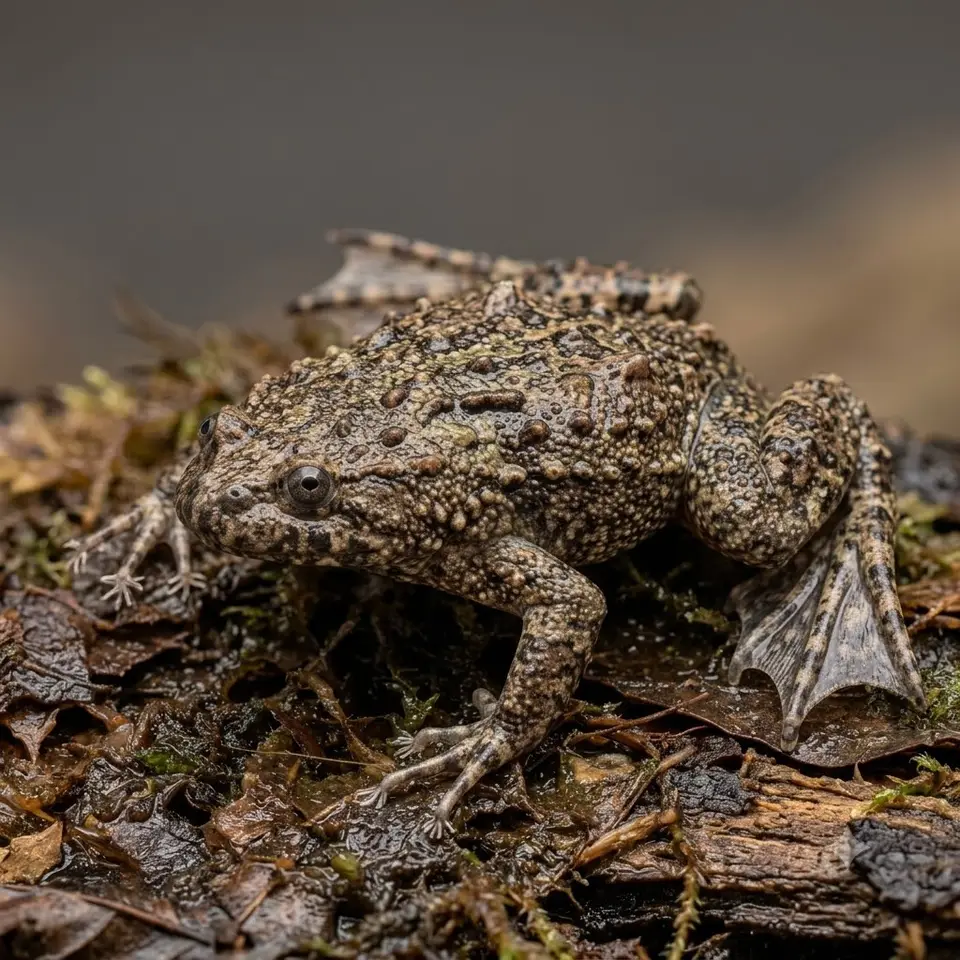
The Surinam Toad (Pipa pipa) is a fully aquatic South American frog famous for its flattened, leaf-shaped body and one of the strangest reproductive strategies in the animal kingdom: females carry developing eggs embedded in the skin of their back until fully formed toadlets emerge.
Updated: October 2026
 AI illustration
 Wash your hands after handling. The FDA notes that reptiles and amphibians can carry Salmonella and show no signs of illness, so the animal, its enclosure and everything in it can spread the germs: wash your hands with soap and water straight after touching any of them. The agency says children younger than 5, pregnant women, the elderly and people with weakened immune systems should not handle reptiles or amphibians. Source: FDA, Salmonella and pet reptiles and amphibians.
Overview
The Surinam Toad (Pipa pipa) is a fully aquatic South American frog famous for its flattened, leaf-shaped body and one of the strangest reproductive strategies in the animal kingdom: females carry developing eggs embedded in the skin of their back until fully formed toadlets emerge. Despite the name it is not a true toad but a member of the tongueless family Pipidae, spending its entire life underwater. This is a display animal for patient keepers, not a beginner amphibian and never a pet to handle.
Natural History
Pipa pipa is native to slow-moving, murky waters of the Amazon basin across Suriname, Brazil, Peru, and neighboring countries. It is a nocturnal, bottom-dwelling ambush predator that relies on camouflage and touch rather than sight. Star-shaped sensory tips on the front toes help it detect prey in dark water. It rarely leaves the water and cannot survive as a terrestrial animal.
Appearance
Adults reach roughly 4-8 in (10-20 cm), with females typically larger and broader than males. The body is extremely flat and angular, mottled brown or gray to blend into leaf litter and mud. The head is triangular, the eyes tiny and lidless, and the front feet end in the distinctive star-tipped "fingers." There is no tongue and no true teeth. Coloration is drab by design, which is part of the appeal for keepers who want something genuinely unusual rather than colorful.
Temperament & Handling
Look, do not touch. The Surinam Toad is a strictly hands-off species. Its skin is permeable and absorbs oils, soaps, and residues from human hands, and handling causes real stress. Move the animal only when unavoidable, and then with a soft aquarium net or wet, clean hands rinsed in dechlorinated water. It is peaceful toward anything too large to eat, but it will swallow tank mates that fit in its mouth, so choose companions with extreme care or keep it alone.
Enclosure
This is an aquatic setup, essentially a fish tank, not a vivarium.
Provide:
- Minimum: a 20-gallon (75 L) long aquarium for one adult; larger is better, and a pair needs 40 gallons (150 L) or more.
- Water depth of at least 12 in (30 cm) so the frog can rest on the bottom and rise to breathe.
- A gentle filter (sponge or baffled internal); Surinam Toads dislike strong current.
- Soft substrate such as fine sand, or bare bottom for easier cleaning.
- Live or silk plants, driftwood, and leaf litter for cover and to reduce stress.
- A secure lid; they can push at gaps.
Heating, Lighting, Humidity
- Water temperature: 75-82 F (24-28 C), maintained with a guarded aquarium heater.
- Water quality: soft, slightly acidic to neutral water; use dechlorinated water, keep ammonia and nitrite at zero, and do regular partial water changes.
- Lighting: low and dim. These are nocturnal fish-tank animals with no UVB requirement; bright light stresses them. A subdued planted-tank light on a timer is plenty.
- Humidity is not a factor since the animal is submerged, but tank cover helps keep water warm and stable.
Diet
Carnivore. In the wild it vacuums prey into its mouth with a sudden gape. In captivity feed earthworms, blackworms, chunks of thawed fish or shrimp, and appropriately sized live feeder fish. Larger adults take bigger pieces of fish or worm. Feed juveniles every couple of days and adults two to three times a week, removing uneaten food to protect water quality. Dust or gut-load prey to maintain calcium intake.
Health & Lifespan
5-8 years.
Well-kept animals sometimes reach 10 or more. Most health problems trace back to water quality, so a cycled tank and steady parameters prevent the majority of issues.
Common concerns:
- Skin infections and "red leg" from poor water conditions.
- Bloat or dropsy, often linked to organ or water-quality problems.
- Ammonia stress from an uncycled or overfed tank.
- Injury from rough handling or sharp decor.
Find an exotics or aquatic-species vet before you need one.
Pros & Cons
Pros: truly unique appearance and behavior, no UVB or misting to manage, quiet and odorless. Cons: demanding water-quality needs, drab coloration, mostly still and inactive, sourcing is largely wild-caught.
Everyday gear for aquatic amphibians
Links go to Amazon or a partner brand's own store and may earn us a commission at no extra cost to you. As an Amazon Associate we earn from qualifying purchases. An Amazon link leads to a type of gear and you choose the exact product; a card that names a store leads to that partner's own shop.
Surinam Toad - frequently asked questions
Is the Surinam Toad toxic?
No. Unlike the cane toad, Pipa pipa has no significant defensive toxin dangerous to people or pets. Its skin is still permeable, so keep hands clean and hands-off, but it is not a poisoning risk.
Can I get a captive-bred one?
Rarely. Most Surinam Toads in the trade are wild-caught, which raises welfare and sustainability concerns. Ask sellers directly about origin, favor established or captive-bred stock when available, and avoid animals that look thin, injured, or freshly imported.
Is it legal to keep?
Generally yes in most of the United States, but exotic-amphibian rules vary by state and city, so confirm local regulations before buying. It is not federally restricted, but always verify your own area.
Do they really carry babies in their backs?
Yes. During breeding, eggs become embedded in the female's back skin, where the young develop in place and emerge weeks later as fully formed toadlets, skipping any free-swimming tadpole stage. It is remarkable to witness but not something to expect casually in a home aquarium.
Test yourself: guess the amphibian
Three clues from our quiz bank, each about another of our amphibians. Can you name them?
Clue 1.This tiny fully aquatic amphibian spends its whole life underwater, surfacing only to gulp air, and is a popular tank companion for small fish.
It's the African Dwarf Frog - read the full profile →
Clue 2.With horn-like skin flaps over its eyes, this burrowing creature mimics a fallen leaf to ambush prey on the forest floor.
It's the Pacman Frog (Horned Frog) - read the full profile →
Clue 3.This aquatic salamander never undergoes metamorphosis, keeping its feathery external gills and living its entire life underwater in its larval form.
It's the Axolotl - read the full profile →