Vietnamese Mossy Frog
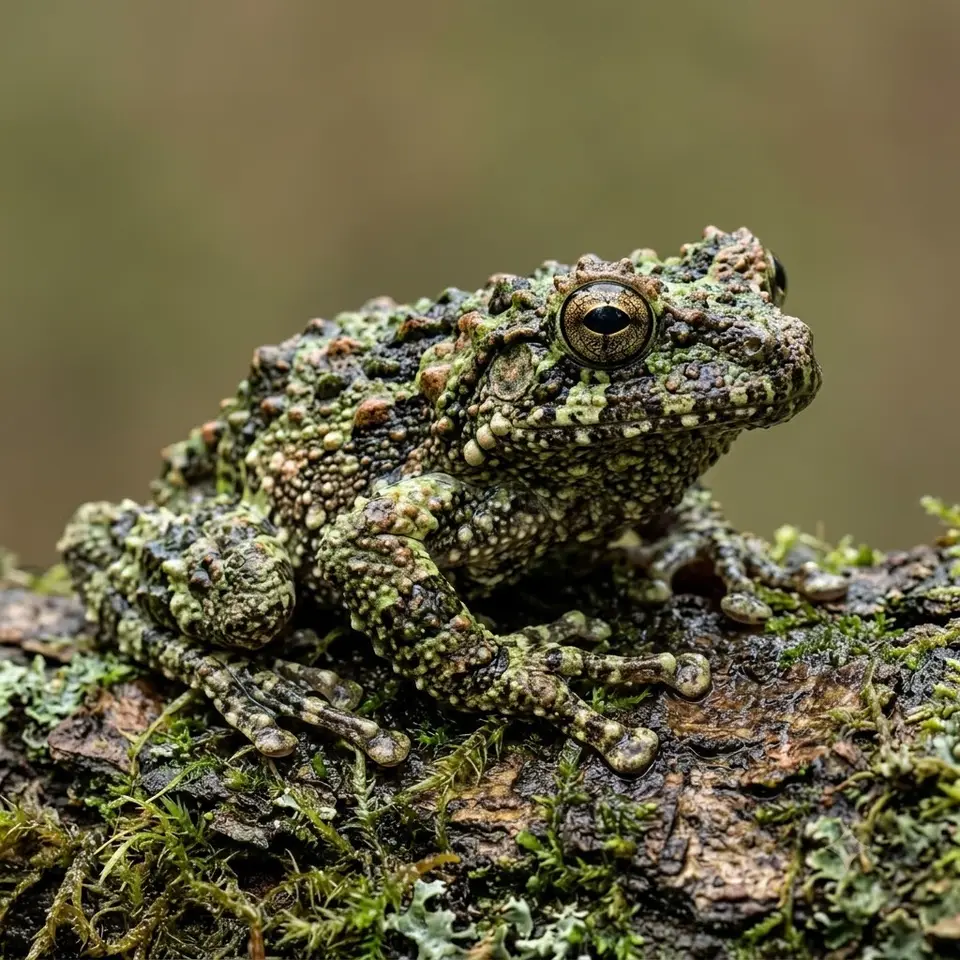
The Vietnamese Mossy Frog (Theloderma corticale) is a small semi-aquatic frog whose bumpy green-and-black skin mimics a clump of living moss so convincingly that it can vanish against a mossy rock in plain sight.
Updated: July 2026
 AI illustration
 Wash your hands after handling. The FDA notes that reptiles and amphibians can carry Salmonella and show no signs of illness, so the animal, its enclosure and everything in it can spread the germs: wash your hands with soap and water straight after touching any of them. The agency says children younger than 5, pregnant women, the elderly and people with weakened immune systems should not handle reptiles or amphibians. Source: FDA, Salmonella and pet reptiles and amphibians.
Overview
The Vietnamese Mossy Frog (Theloderma corticale) is a small semi-aquatic frog whose bumpy green-and-black skin mimics a clump of living moss so convincingly that it can vanish against a mossy rock in plain sight. Native to the cool, humid mountain streams of northern Vietnam, it is a shy, nocturnal display animal rather than a hands-on pet. When threatened it curls into a tight ball and plays dead, relying entirely on camouflage instead of speed or toxins. For keepers who want a striking, low-heat vivarium species, it is one of the most rewarding amphibians available.
Natural History
Theloderma corticale comes from the forested limestone highlands of northern Vietnam, where it lives in and around flooded rock crevices, cave pools, and slow streams. It spends much of its time clinging to wet vertical surfaces just above or at the waterline. Historically most animals in the trade were wild-caught, but the species now breeds readily in captivity, and captive-bred stock is widely available in the US. Always buy captive-bred: they adapt far better, carry fewer parasites, and do not draw down wild populations.
Appearance
Adults reach about 3 to 3.5 inches (8 to 9 cm), with females slightly larger than males. The skin is heavily tubercled and blotched in mottled green, black, and rust, breaking up the body outline like moss and lichen. The belly is often dark with pale spotting. Large toe pads reveal a semi-arboreal, wall-climbing lifestyle. There are few color morphs; the natural pattern is the whole appeal.
Temperament & Handling
This is a look-don't-touch animal. Amphibian skin is highly permeable and absorbs oils, soaps, salts, and lotions directly from human hands, so routine handling is genuinely harmful. Handle only when you must move the frog, and then only with clean, wet, powder-free nitrile gloves or freshly rinsed bare wet hands using dechlorinated water. They are not aggressive and do not bite meaningfully, but they are easily stressed and are excellent escape artists, so keep the lid secure.
Enclosure
Minimum: 18 x 18 x 18 inches (45 x 45 x 45 cm) for a small group, taller if possible since they climb.
Set up a semi-aquatic paludarium:
- A large water section (dechlorinated, gently filtered) making up roughly a third to half of the floor, only a few inches deep.
- Land or rock areas and plenty of vertical cork bark, driftwood, and live plants (pothos, ferns, moss) for climbing and hiding.
- High cover so the frogs feel secure.
Mossy Frogs are social and generally do well in same-species groups, which suits a planted display tank.
Heating, Lighting, Humidity
- Temperature: 60 to 72 F (16 to 22 C). This is a cool-climate species; sustained temperatures above about 75 F (24 C) are stressful and dangerous. In most US homes no heater is needed, and you may need to cool the room in summer.
- Humidity: 80 to 100 percent, maintained by the water feature, daily misting, and a screen-and-glass top that holds moisture.
- Lighting: Low, indirect light or a low-output UVB tube on a day cycle helps live plants and supports the frogs without overheating them.
Diet
Insectivore. Feed appropriately sized live prey: crickets, dubia roaches, black soldier fly larvae, and occasional waxworms as a treat. Prey should be no wider than the space between the frog's eyes. Dust feeders with a calcium plus D3 supplement most feedings and a multivitamin about weekly. Feed adults every 2 to 3 days and juveniles daily; remove uneaten insects so they do not stress or nip the frogs.
Health & Lifespan
8-12 years.
Well-kept Mossy Frogs are hardy and often live a decade or more, sometimes longer. The most common problems are keeper-caused: overheating, poor water quality, and metabolic bone disease from inadequate calcium or UVB. Watch for bloating, lethargy, skin lesions, or refusal to feed, and keep the water clean with regular partial changes and a mild filter. Quarantine new arrivals and find a reptile-and-amphibian vet before you need one, since amphibian illness moves quickly.
Pros & Cons
Pros:
- Stunning natural camouflage and a genuinely unusual display animal.
- Can be kept in same-species groups.
- No supplemental heat needed in most homes; long-lived.
Cons:
- Not for handling; strictly hands-off.
- Needs cool temperatures, which can be hard to maintain in hot climates.
- Semi-aquatic setup requires clean water and steady humidity.
Everyday gear for amphibians
Links go to Amazon or a partner brand's own store and may earn us a commission at no extra cost to you. As an Amazon Associate we earn from qualifying purchases. An Amazon link leads to a type of gear and you choose the exact product; a card that names a store leads to that partner's own shop.
Vietnamese Mossy Frog - frequently asked questions
Why does it look like moss?
The bumpy, blotched green-and-black skin is camouflage that mimics moss and lichen on wet rock. It is the frog's main defense; when startled it curls into a ball and plays dead.
Can I hold my Vietnamese Mossy Frog?
No, not for fun. Their permeable skin absorbs residues from your hands. Handle only to relocate the frog, using clean wet gloves or rinsed wet hands.
Do they need a heater?
Usually not. They prefer 60 to 72 F (16 to 22 C), so most rooms are fine, and the bigger risk is the tank getting too warm in summer.
Wild-caught or captive-bred?
Always choose captive-bred. They are healthier, better adjusted, and buying them avoids pressure on wild populations that were historically over-collected.
Test yourself: guess the amphibian
Three clues from our quiz bank, each about another of our amphibians. Can you name them?
Clue 1.This tiny fully aquatic amphibian spends its whole life underwater, surfacing only to gulp air, and is a popular tank companion for small fish.
It's the African Dwarf Frog - read the full profile →
Clue 2.Named after a naturalist, this chubby green climber has sticky toe pads and can change shade from green to brownish.
It's the White's Tree Frog - read the full profile →
Clue 3.With horn-like skin flaps over its eyes, this burrowing creature mimics a fallen leaf to ambush prey on the forest floor.
It's the Pacman Frog (Horned Frog) - read the full profile →