Motley Corn Snake
Motley is a recessive pattern morph of the corn snake (Pantherophis guttatus), one of the classic pattern mutations in the hobby.
🗓️ Last reviewed: July 2026
Overview
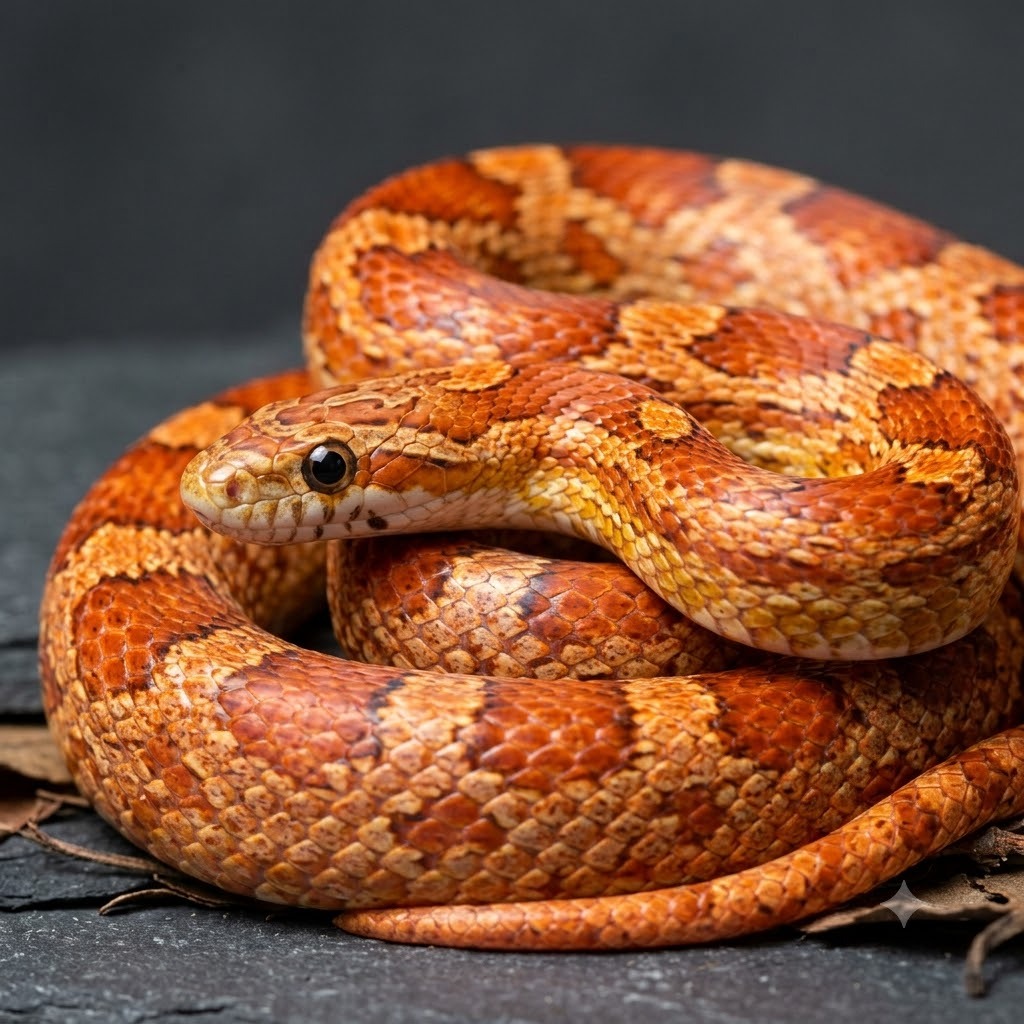
Motley is a recessive pattern morph of the corn snake (Pantherophis guttatus), one of the classic pattern mutations in the hobby. Instead of the usual rows of separate saddles, a Motley shows connected or aligned blotches running down the back and, most tellingly, a clean, unmarked belly. It changes the animal's pattern only, not its temperament, size, or care needs.
What it is
A normal, wild-type corn snake has distinct dorsal saddles or blotches edged in black, plus a checkerboard of dark markings on the pale belly. Motley reorganizes that dorsal pattern - the blotches often merge into chain-like links, stripes, or open "racetrack" shapes down the spine - and erases the belly checkering so the underside looks plain and light. It is a pattern trait, so it can appear on top of almost any color morph.
The genetics
Motley is a simple recessive trait. A snake needs two copies of the Motley gene (one from each parent) to actually look Motley. A snake carrying just one copy is a normal-looking "het" (heterozygous) carrier that can pass the gene on without showing it. Because it is recessive, two ordinary-looking hets bred together can still produce visibly Motley offspring.
Appearance
The signature feature is the belly: crisp and unpatterned, without the dark checkerboard of a normal corn. On the back, the dark saddle borders open up and connect, giving linked, striped, or ladder-like patterns rather than tidy separate blotches. The exact look varies from animal to animal, and Motley is closely related to (and interacts with) the Stripe trait, so pattern can range from broken chains to near-continuous lines. Ground color depends entirely on whatever color morph the snake also carries. As hatchlings grow, colors typically deepen and contrast settles, but the connected dorsal pattern and clear belly stay throughout life.
How it is bred
Because Motley is recessive, it needs two copies to show. Breeders pair two visible Motleys, or a Motley to a het, or two hets, to produce Motley babies - only animals with two copies look the part, while single-copy hets look normal. This differs from dominant and incomplete-dominant traits, which show with a single copy. Motley is very commonly stacked into combos: paired with color morphs (such as amelanistic or anerythristic lines) and with related pattern traits, breeders build multi-gene animals where each recessive still needs its own two copies to appear.
Cost and availability
Motley is a long-established, widely available morph, so plain Motleys and simple Motley combos are among the more affordable corn snakes. Prices rise as more genes are stacked together or when it is combined into newer, rarer designer combinations, but on its own it sits comfortably at the budget-friendly end of the market.
Health and ethics
Motley is a pattern-only trait with no known health defect linked to it - it carries no special welfare problem beyond ordinary corn snake care. As with any snake, choose a reputable breeder who keeps clear genetic records and healthy, well-started animals, and see a qualified reptile (herp) veterinarian for health concerns.
Care
Care is identical to any standard corn snake - the morph changes appearance only, not requirements. Corn snakes are hardy, popular beginner snakes with well-documented needs for enclosure, heating, humidity, and feeding; follow current care guidance from reputable breeders and a herp vet rather than treating a Motley as anything special.
Motley Corn Snake - frequently asked questions
How do I recognize a Motley corn snake?
Check the belly first - a Motley has a clean, unpatterned underside instead of the normal dark checkerboard. On the back, look for blotches that connect into chains, stripes, or open loops rather than staying as separate saddles.
Is Motley the same as Stripe?
They are closely related pattern traits that interact, and both give a clear belly, but they are described separately. Stripe tends toward continuous dorsal lines, while Motley often shows linked or broken chain patterns; the two are frequently combined.
Can two normal-looking corn snakes produce Motley babies?
Yes. Because Motley is recessive, two normal-looking snakes that each carry one hidden copy (hets) can produce visibly Motley offspring when bred together.
Does the Motley gene affect the snake's health or lifespan?
No. It is a pattern-only trait with no associated health issue, so a Motley needs the same care and can be expected to live as long as any typical corn snake.