Palmetto Corn Snake
The Palmetto is a colour morph of the corn snake (Pantherophis guttatus), one of the most popular pet snakes in the world.
🗓️ Last reviewed: July 2026
Overview
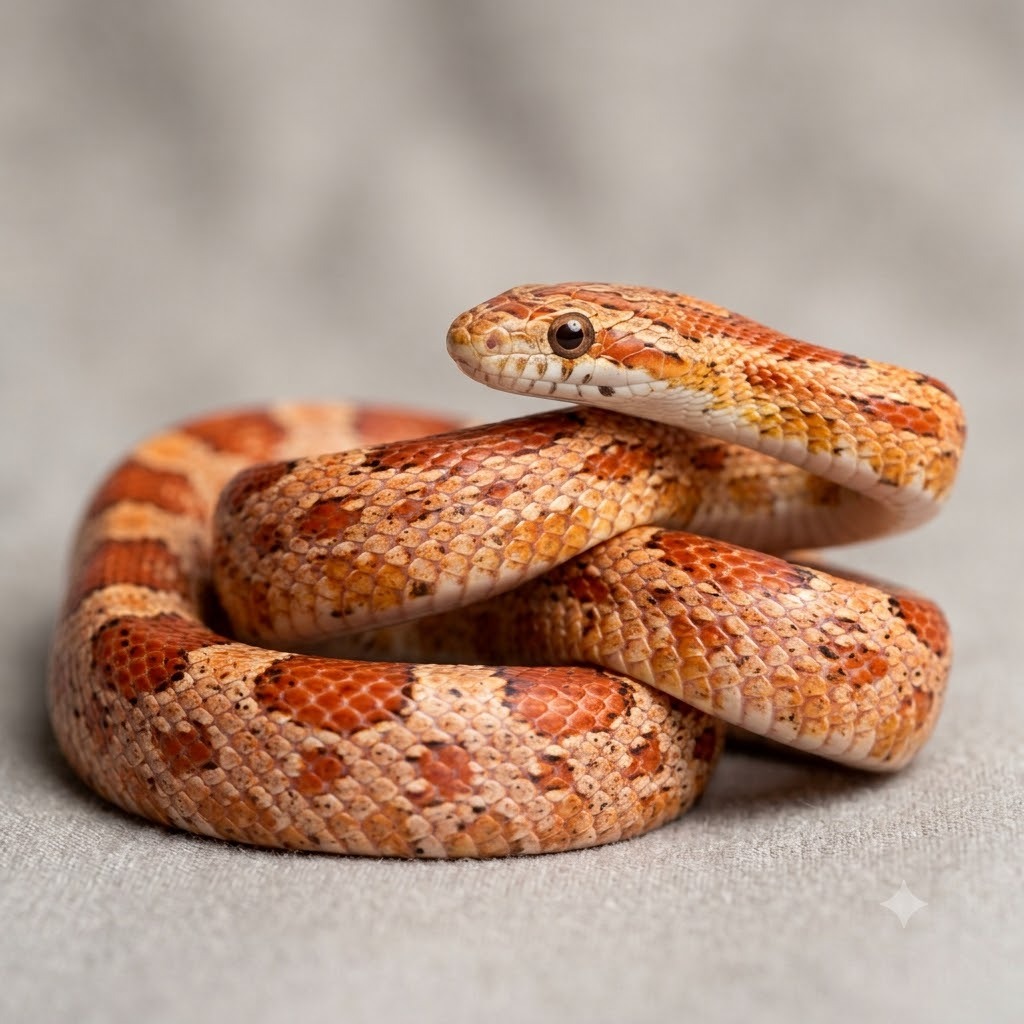
The Palmetto is a colour morph of the corn snake (Pantherophis guttatus), one of the most popular pet snakes in the world. It is prized for its unusual near-white body dusted with small, randomly placed flecks of colour. The look is striking, but the animal is a completely ordinary corn snake in every other way.
What it is
A normal or wild-type corn snake has a patterned body of orange, red, and brown blotches (saddles) edged in black, over a lighter background. A Palmetto looks nothing like that. Instead the snake is mostly clean white, scattered with tiny individual scales or small clusters of scales in colour - often orange, red, or peach - sprinkled unpredictably across the body like confetti. No two Palmettos share exactly the same pattern of flecks.
The genetics
Palmetto is a simple recessive trait. That means a snake only looks Palmetto if it inherits two copies of the gene, one from each parent. A snake carrying just one copy looks like a normal corn snake but is a "het" (heterozygous) carrier that can pass the gene on. This is a true on/off single-gene trait, not a line-bred appearance that is coaxed out over generations.
Appearance
The base colour is a crisp, largely unbroken white. Against that background sit scattered speckles of pigment that can be single coloured scales or little patches, most commonly warm oranges and reds but sometimes paler peach tones. The density and placement of the flecks vary a lot from animal to animal and even along one snake. Hatchlings usually show their speckling from the start, and as the snake grows and sheds the colour can appear a little more defined, though the overall confetti-on-white theme stays the same for life.
How it is bred
Because Palmetto is recessive, a visible Palmetto needs two copies of the gene. The simplest ways to produce them are pairing two visible Palmettos, or pairing a Palmetto with a het carrier, or pairing two hets together (which yields a mix, with only some hatchlings showing the look). Recessive traits like this can also be combined with other corn snake genes over successive generations to stack Palmetto onto other colour and pattern morphs, though each added recessive gene means more carriers and more planning to bring the traits together.
Cost and availability
Palmetto is a more specialised morph than common corn snake types, so it usually costs more than a basic corn snake and is less widely stocked. Visible animals and combos command higher prices than plain hets. Availability has improved over the years as more breeders work with the line, but it is still a step up in price from entry-level corns.
Health and ethics
Palmetto carries no known health problem tied to the gene. It is not a lethal or defect-linked trait, and a Palmetto has the same expected lifespan and hardiness as any other corn snake. The white base is a pattern effect and does not signal any welfare issue. As with any morph, buy from a keeper who is open about the animal's genetics and health history, and take a new or unwell snake to a reptile (herp) vet.
Care
Care is identical to a standard corn snake - the morph changes only how the snake looks, not what it needs. Corn snakes are a hardy, beginner-friendly species. For proper housing, heating, and feeding, follow a current corn snake care guide from a reputable breeder or reptile vet rather than any single online summary.
Palmetto Corn Snake - frequently asked questions
Is the Palmetto a healthy morph?
Yes. The Palmetto gene is not linked to any known defect or lethal condition, so these snakes are as robust as any other corn snake and need the same care.
Why does one Palmetto look so different from another?
The scattered flecks of colour appear randomly, so every Palmetto has its own unique speckling. Even clutchmates from the same parents will not match.
If I breed two normal-looking snakes, can I get Palmettos?
Only if both parents secretly carry the recessive gene (are hets). Two visible normal corns with no Palmetto ancestry cannot produce Palmettos, because the trait needs two copies of the gene to show.