Okeetee Corn Snake
The Okeetee is a prized appearance of the corn snake (Pantherophis guttatus), one of the most popular pet snakes in the world.
🗓️ Last reviewed: July 2026
Overview
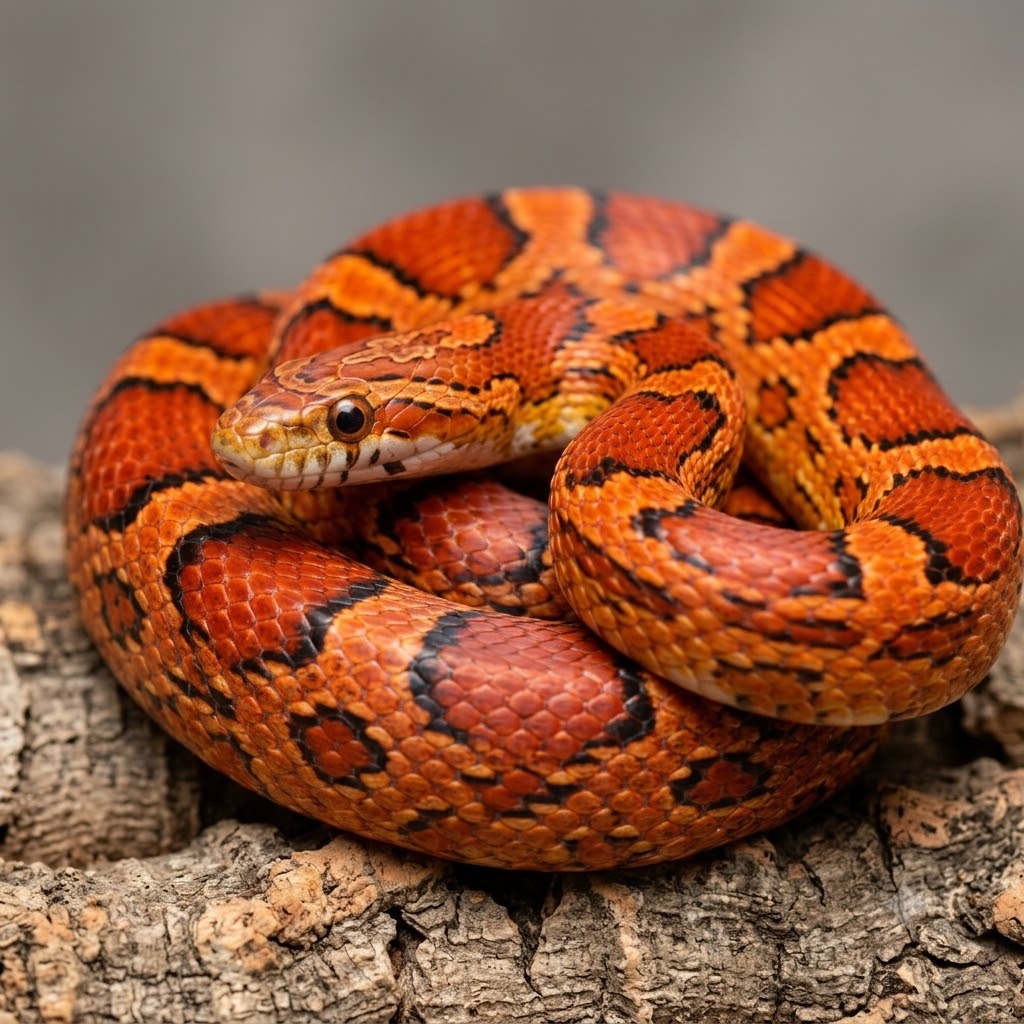
The Okeetee is a prized appearance of the corn snake (Pantherophis guttatus), one of the most popular pet snakes in the world. It is named after a region of South Carolina where wild corn snakes with especially bold colour and pattern were found. Today "Okeetee" usually refers to a selectively line-bred look, prized for its rich orange body and thick, clean black borders.
What it is
Compared with an average wild-type corn snake, an Okeetee shows a brighter, more saturated orange ground colour and dorsal saddles (blotches) that are outlined by unusually thick, dark, well-defined black borders. A normal corn snake also has orange with darker-edged blotches, but the Okeetee pushes those traits to a striking, high-contrast extreme.
The genetics
The Okeetee is a locality and selectively line-bred appearance, not a simple recessive or dominant gene. There is no single "Okeetee gene" that switches on or off. Instead the look comes from polygenic traits (colour intensity and border thickness) that breeders concentrate by choosing the best-looking parents over many generations. Because of this, quality varies, and two Okeetee snakes will not reliably produce a whole clutch of top-grade Okeetee babies the way a single-gene recessive would.
Appearance
The body is a warm, vivid orange, patterned with a row of red-orange saddles down the back and matching blotches along the sides. What sets the Okeetee apart is the border: each saddle is ringed with a thick band of near-black, giving a clean, bold outline and strong contrast. The belly usually carries the classic black-and-white checkerboard. Hatchlings often start duller and more brownish, with colour and contrast deepening as the snake matures over its first year or two.
How it is bred
Recessive morphs need two copies of a gene to show, so a snake can carry one hidden copy (a "het") without looking any different. Dominant and incomplete-dominant morphs show with just one copy. The Okeetee works differently: as a line-bred, polygenic look it is created by selecting the brightest, boldest-bordered animals and pairing them together, then repeating over generations to strengthen the trait. The Okeetee background can also be combined with recessive genes (for example amelanistic or other colour genes) to stack a bold-bordered pattern onto a different colour base.
Cost and availability
Corn snakes are widely available and among the more affordable pet snakes. A well-marked Okeetee typically sits in the low-to-moderate range, a little above a plain wild-type because it reflects deliberate selective breeding, but well below rarer combo morphs. Quality varies a lot, so price often tracks how bright the orange and how thick and clean the black borders are.
Health and ethics
The Okeetee has no special welfare problem tied to its appearance. Because it is line-bred for a colour and pattern look rather than a structural change, it is a hardy, normal corn snake in every way that matters to health. Choose a reputable breeder who keeps clean records and healthy stock, and use a qualified reptile (herp) veterinarian for any health questions.
Care
Care is identical to a standard corn snake; the Okeetee trait changes only how the snake looks, not what it needs. Corn snakes are famously beginner-friendly, but still require a proper enclosure, correct temperatures and hides, fresh water, and appropriately sized feeds. For specific setup and feeding details, follow guidance from reputable breeders and a herp vet.
Okeetee Corn Snake - frequently asked questions
Is Okeetee a recessive morph?
No. It is a locality and selectively line-bred look, not a single recessive or dominant gene. Breeders build it by choosing the brightest, boldest-bordered snakes over many generations.
Will two Okeetees always produce Okeetee babies?
Not guaranteed. Because the look is polygenic, offspring vary in colour intensity and border thickness. Careful pairing improves the odds but does not lock it in like a simple gene would.