Halloween Crested Gecko
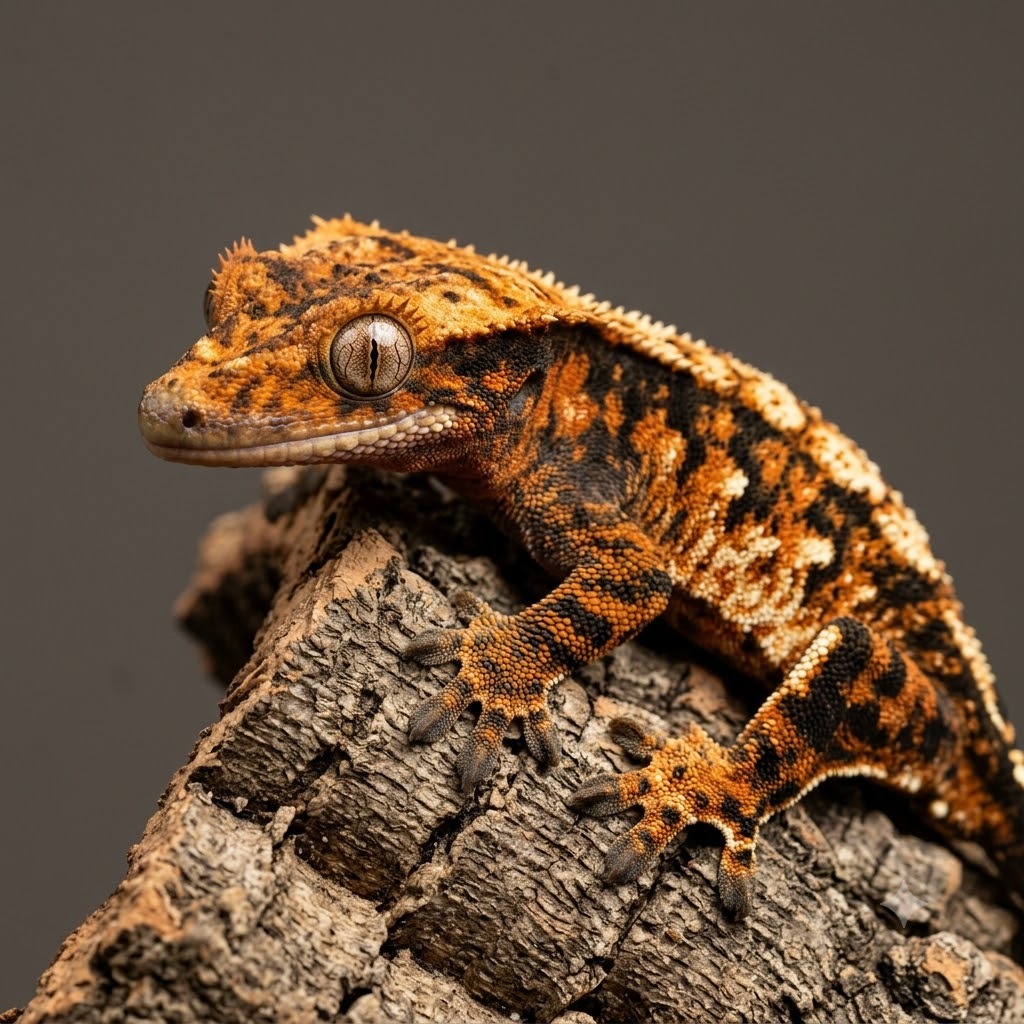
The Halloween is a colour-and-contrast trait in the crested gecko (Correlophus ciliatus), named for its bold black-and-orange palette.
🗓️ Last reviewed: July 2026
Overview
The Halloween is a colour-and-contrast trait in the crested gecko (Correlophus ciliatus), named for its bold black-and-orange palette. It is not a species or a single "gene" but a look that breeders build through selective pairing. Animals sold under this name vary in how strong and clean the contrast is.
What it is
Compared with a typical crested gecko - which is usually a muted brown, tan, olive, or fired-up cream with soft patterning - a Halloween pushes the contrast to an extreme: deep near-black base tones set against bright orange highlights, often with a well-defined pattern. The name is descriptive of the seasonal colour scheme rather than any structural difference from a normal crested gecko.
The genetics
The Halloween is a polygenic, line-bred colour trait. This means the appearance is influenced by many genes acting together plus environment and "firing" (day-to-night colour shift), not by a single dominant or recessive gene you can switch on or off. There is no het to carry and no predictable ratio - you cannot say a pairing yields "25% Halloween." Instead, breeders select the highest-contrast, cleanest black-and-orange animals and pair them over generations to concentrate the look. Outcomes are a spectrum, and clutchmates can differ widely.
Appearance
A strong Halloween shows a dark charcoal-to-black base broken by vivid orange - along the dorsal, on the flanks, around the head, and sometimes in banding or a tiger-like pattern. The best examples keep the black and orange crisp with little muddy brown bleeding between them. Like all crested geckos, colour is not fixed: hatchlings often look plainer, contrast typically develops and intensifies over the first year or two, and the gecko "fires up" darker and more saturated at night or when active, then washes out paler when resting. Because it is line-bred, intensity varies animal to animal.
How it is bred
In plain terms: recessive morphs need two copies of a gene (or a het parent carrying one hidden copy) to show; dominant and incomplete-dominant morphs show with a single copy; and combos stack separate genes together. The Halloween fits none of those tidy categories - it is line-bred, meaning a breeder selects the best-contrast individuals and pairs them repeatedly, keeping the standout offspring each generation to strengthen the trait. Progress is gradual and never guaranteed, and Halloween contrast can be layered onto other traits (such as pattern or structural traits) to refine the overall animal.
Cost and availability
Halloweens are moderately available and priced above plain, low-contrast crested geckos because the look takes selective effort to produce. Exceptional high-contrast, clean examples command the most, while animals with weaker or muddier contrast sit lower. Because the label is subjective and not a defined gene, quality varies a lot between animals wearing the same name - judge the individual gecko, not the term.
Health and ethics
The Halloween is purely a colour trait and carries no known health or welfare problem beyond normal crested gecko needs - there is no lethal super and no structural deficit tied to it. Because it is line-bred and loosely defined, buy on the animal in front of you rather than the label, and choose reputable breeders who keep clear lineage records, prioritise health and vigour over colour alone, and avoid tight inbreeding. For any health concern, see a qualified reptile (herp) veterinarian.
Care
Care is identical to a standard crested gecko - the Halloween trait changes appearance only, not the animal's needs. Provide the same enclosure, temperatures, humidity, and complete crested gecko diet you would give any Correlophus ciliatus. For full husbandry, follow reputable crested gecko care guidance and consult a herp vet with any questions.
Halloween Crested Gecko - frequently asked questions
Is Halloween a recessive or dominant gene?
Neither. It is a polygenic, line-bred colour trait, so there is no het to carry and no fixed offspring ratio. Breeders concentrate the look by pairing the highest-contrast animals over generations.
Will two Halloween parents always produce Halloween babies?
No. Because the trait is polygenic, clutchmates vary and some may show weaker contrast. Selective pairing improves the odds of strong offspring but guarantees nothing.
Does the contrast stay the same as the gecko grows?
Usually not. Hatchlings often look plainer, and contrast typically develops over the first year or two. Colour also shifts daily as the gecko fires up darker at night and pales when resting.
Does the Halloween trait affect the gecko's care or health?
No. It only changes how the gecko looks. Housing, diet, temperature, and humidity are the same as for any crested gecko, and there is no welfare issue tied to the trait.