Flame Crested Gecko
The Flame is one of the most widely kept pattern types of the crested gecko (Correlophus ciliatus).
🗓️ Last reviewed: September 2026
Overview
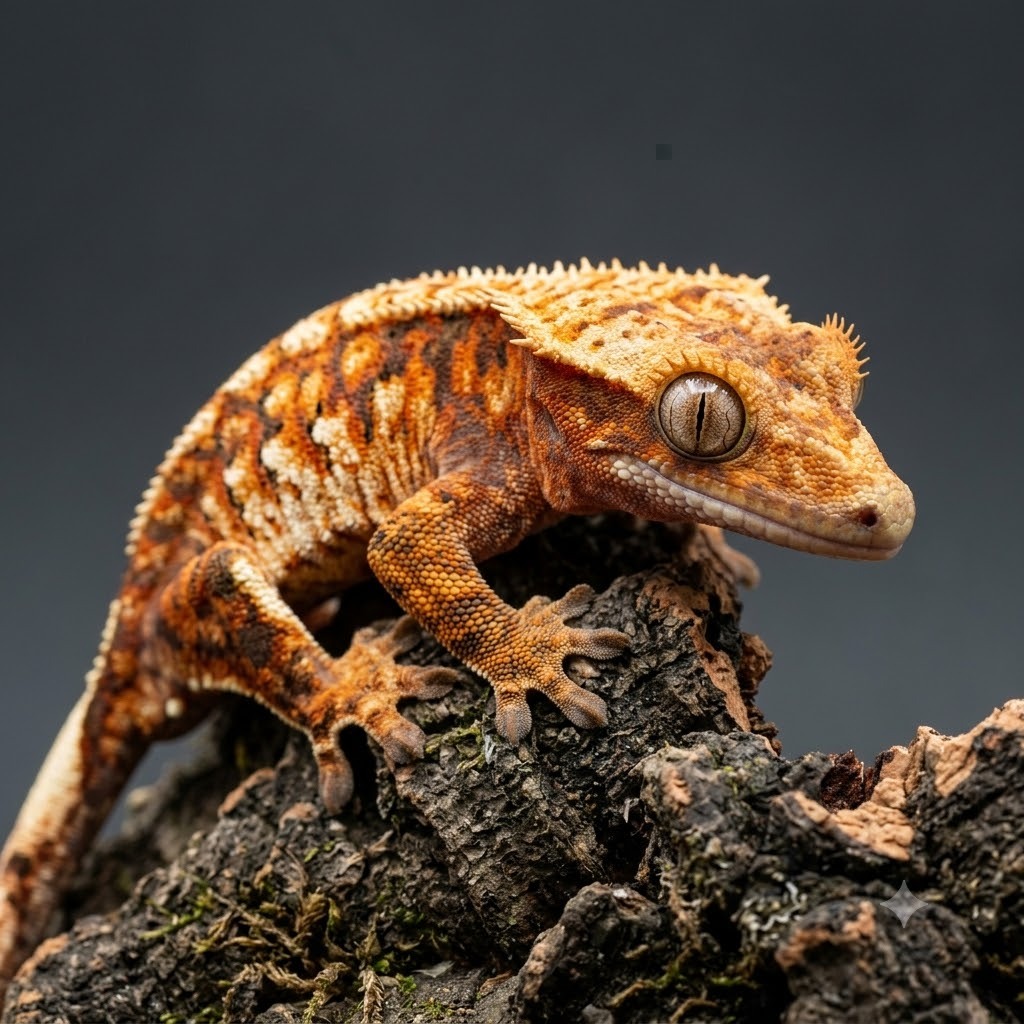
The Flame is one of the most widely kept pattern types of the crested gecko (Correlophus ciliatus). It describes an animal with a coloured base body and a contrasting lighter pattern, usually cream, running along the back and often the head. Because it is a pattern trait rather than a colour gene, "Flame" is best thought of as a look breeders select for, not a single switch that is turned on or off.
What it is
Compared with a plain or lightly patterned wild-type crested gecko, a Flame shows a clear two-tone effect: a cream or pale dorsum (the strip down the back) set against a darker coloured base body, and often cream along the upper edges of the flanks. The pattern is neat and defined but does not spill heavily down the legs and sides. That heavier, more extensive patterning is what separates the next step up, the Harlequin, from the Flame - a Flame is essentially a patterned gecko a notch below Harlequin.
The genetics
Flame is a polygenic, line-bred trait. That means the look is produced by many genes acting together and by breeders selecting the best-patterned animals over successive generations, rather than by a single recessive, dominant, or incomplete-dominant gene. There is no "het Flame", no super form, and no simple 25 or 50 percent prediction the way there is with true single-gene morphs. Two strong Flames tend to produce good Flame-type babies, but outcomes vary because the trait is a spectrum, not an on/off switch.
Appearance
A typical Flame has a solid coloured base body in shades that can range from olive, tan, and buckskin through to red, orange, and near-chocolate, with cream or pale patterning marking the dorsum and often the head and the fringe of the sides. Crested geckos are famous for "firing up" and "firing down": colours look darker and more saturated when the animal is active or at night, and paler and washed out when it is resting or cool, so the same gecko can look quite different across a day. Baby Flames often start muted and gain contrast and colour as they mature over the first year or so.
How it is bred
In plain terms, single-gene morphs follow set rules: recessive traits need two copies (so hidden carriers, or "hets", matter), while dominant and incomplete-dominant traits show with just one copy. Flame does not work that way. As a line-bred trait it is improved by picking the best-looking parents and breeding them together over many generations to concentrate the pattern. Flame is also a base that other traits stack onto - you will see combinations such as Flame paired with added colour or structural traits, where each element is selected and layered on top of the underlying Flame pattern.
Cost and availability
Flames are among the most common and accessible crested geckos, so plain examples are usually at the affordable, entry-level end of the market. Price climbs with the quality and cleanliness of the pattern, stronger or rarer base colours, and any additional traits stacked on top. Availability is generally very good from hobbyist and specialist breeders.
Health and ethics
The Flame trait carries no known welfare problem - it is purely a matter of pattern and colour, so a Flame needs nothing beyond standard crested gecko care. This is unlike a few crested gecko lines that do carry concerns, such as the Lilly White trait (which has a non-viable "super" form). When choosing any gecko, look for reputable breeders who keep clear lineage records and healthy stock, and see a qualified reptile (herp) vet for any health questions.
Care
Care is identical to any standard crested gecko - the Flame trait changes only how the animal looks, not what it needs. Provide the usual arboreal setup, appropriate temperatures and humidity, and a suitable crested gecko diet. For specifics, rely on reputable breeders and a herp vet rather than general guidance here.
Flame Crested Gecko - frequently asked questions
Is Flame a recessive or dominant morph?
Neither. Flame is a polygenic, line-bred trait, meaning it comes from many genes and selective breeding rather than a single recessive or dominant gene, so there are no hets or fixed percentage odds.
What is the difference between a Flame and a Harlequin?
They are points on the same pattern scale. A Harlequin has heavier patterning that extends further down the sides and legs, while a Flame sits one step below with cleaner, more limited patterning on the back and upper flanks.