Koi Betta
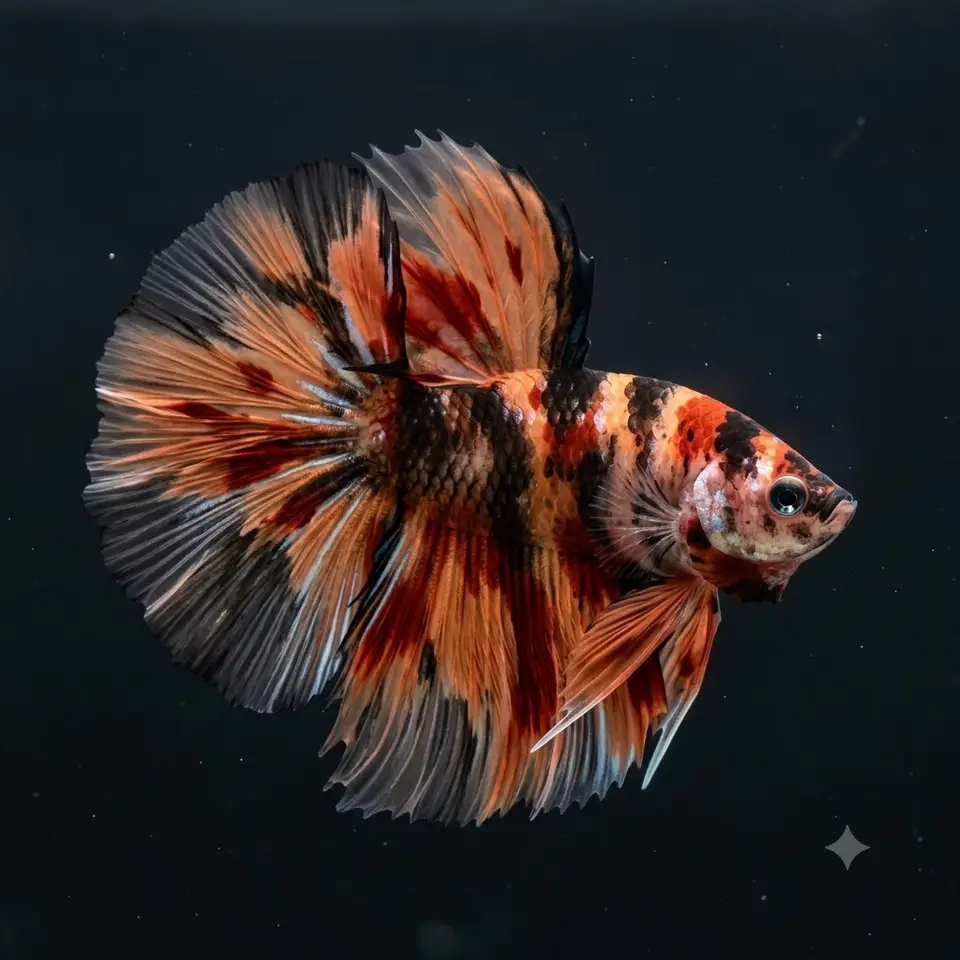
The Koi Betta is a marble-patterned Betta splendens bred to mimic pond koi - irregular patches of orange, red, black, and white on a pale body, usually on a short-finned plakat frame.
Updated: September 2026
Species guide: Betta (Siamese Fighting Fish) · All betta varieties
 AI illustration
 Overview
The Koi Betta is a marble-patterned Betta splendens bred to mimic pond koi - irregular patches of orange, red, black, and white on a pale body, usually on a short-finned plakat frame. The pattern comes from the unstable marble gene, which means the fish you buy can look noticeably different six months later. Care is standard betta care; the variety premium is entirely about that shifting, one-of-a-kind paint job.
Natural History
Betta splendens is a labyrinth fish from the shallow rice paddies and slow ditches of Thailand and Cambodia, able to gulp air at the surface. The koi look is pure aquarium invention: the marble mutation appeared in a US breeding line around the 1970s, and around the 2010s Thai breeders stacked it into red-black-white cellophane combinations sold as "koi." It is a trade name for a color complex, not a separate strain with its own care needs.
Appearance
A Koi Betta is defined by pattern, not fin type - a translucent or white base blotched with red, orange, and black, ideally in crisp koi-like patches. Most are plakats (short, practical fins closer to the wild form); halfmoon koi with full 180-degree tails exist but cost more and carry the usual heavy-finnage baggage. Sub-types are marketing tiers of the same complex: galaxy koi add iridescent blue speckling, nemo koi run hot orange-red-yellow, candy koi mix pastels with steel blue. Adults reach about 2.5-3 in (6-7.5 cm). Because the marble gene is a jumping gene, patches can spread, shrink, or vanish - when buying, insist on a recent photo of the actual fish, and treat the pattern as a starting point rather than a promise.
Temperament & Tankmates
The paint job does not change the temperament: males are territorial and must live one per tank. In 10 gallons (38 L) or more, a male koi can share with snails, small corydoras, or fast schooling rasboras; skip fin-nippers, other bettas, and anything colorful enough to trigger flaring. Plakat-type koi are athletic and often feistier than long-finned lines, and they jump well - a tight lid is not optional. Female sororities look tempting but fail often enough that beginners should not try them.
Tank Size & Setup
5 gallons (19 L) is the sensible minimum for one betta, heated and filtered. Use gentle flow (a baffled sponge filter is ideal), live or silk plants, a cave, and broad leaves near the surface for resting. Dark substrate makes the koi patches glow. Leave an air gap under the lid - bettas breathe at the surface.
Water Parameters
76-82 F (24-28 C) with a heater in almost every US home; koi bettas sold as "hardy" still decline in unheated bowls. pH 6.5-7.5, soft to moderately hard water, ammonia and nitrite at zero, nitrate under 20 ppm, and a 25% weekly water change. Stability matters more than chasing exact numbers.
Diet
A carnivore: quality betta pellets as the staple, 2-4 pellets twice daily, plus frozen or live bloodworms, brine shrimp, and daphnia a few times a week. One fast day weekly helps prevent constipation and bloat. Carotenoid-rich foods deepen the reds and oranges that make the variety worth its price.
Health & Lifespan
3-5 years. The marble gene itself brings quirks: hobbyist reports link marble lines to a higher rate of lumps and tumors, and many koi bettas carry dragonscale genetics, which can slowly grow thick scale over the eye ("diamond eye") and dim vision - check the eyes before buying. Plakat koi dodge most fin problems; halfmoon koi share the long-fin risks of fin rot, tail biting, and snagged rays. Otherwise expect standard betta issues - velvet, ich, and water-quality fin rot - all far less likely with a heated, cycled, well-maintained tank.
Pros & Cons
Pros:
- Genuinely unique pattern - no two koi bettas match
- Marbling makes the fish a slow-motion surprise
- Plakat form means tough, low-maintenance fins
- Care is ordinary, well-documented betta care
Cons:
- The pattern you buy may fade or rearrange
- Premium price - roughly $15-40 in the US, more for show grades
- Dragonscale carriers risk diamond eye
- Same aggression and one-male-per-tank rule as any betta
Everyday gear for aquariums
Links go to Amazon or a partner brand's own store and may earn us a commission at no extra cost to you. As an Amazon Associate we earn from qualifying purchases. An Amazon link leads to a type of gear and you choose the exact product; a card that names a store leads to that partner's own shop.
Koi Betta - frequently asked questions
Will my Koi Betta keep its colors?
No guarantee. The marble gene is a transposable element that switches pigment cells on and off throughout life. Some fish stabilize, others repaint themselves yearly - many keepers consider that half the fun.
Is a Koi Betta harder to keep than a regular betta?
No. Koi is a color pattern, not a care category. A plakat koi is arguably one of the hardier bettas you can buy; only the halfmoon versions add the fragility of heavy finnage.
What is the difference between koi, galaxy, and nemo bettas?
Trade names for the same marble complex. Nemo means dense orange-red-yellow, galaxy adds blue iridescent speckling over the koi base, candy leans pastel. Sellers apply them loosely, so judge the individual fish, not the label.
What should a Koi Betta cost?
Around $15-40 US at stores and online sellers; imported show-grade galaxy koi can run $50-80 plus shipping. Whatever the price, ask for a current photo - stock photos mean little for a marble fish.
Test yourself: guess the fish
Three clues from our quiz bank, each about another of our fish. Can you name them?
Clue 1.Domesticated from a dull carp over a thousand years ago in China, this orange fish is one of the oldest kept pets.
It's the Goldfish - read the full profile →
Clue 2.Diamond-shaped with long flowing dorsal and anal fins, this popular tank fish needs a tall aquarium to accommodate its towering body.
It's the Angelfish - read the full profile →
Clue 3.Some species of this small, brilliantly colored fish lay eggs that survive dried mud until rains return.
It's the Killifish - read the full profile →