Harlequin Rabbit
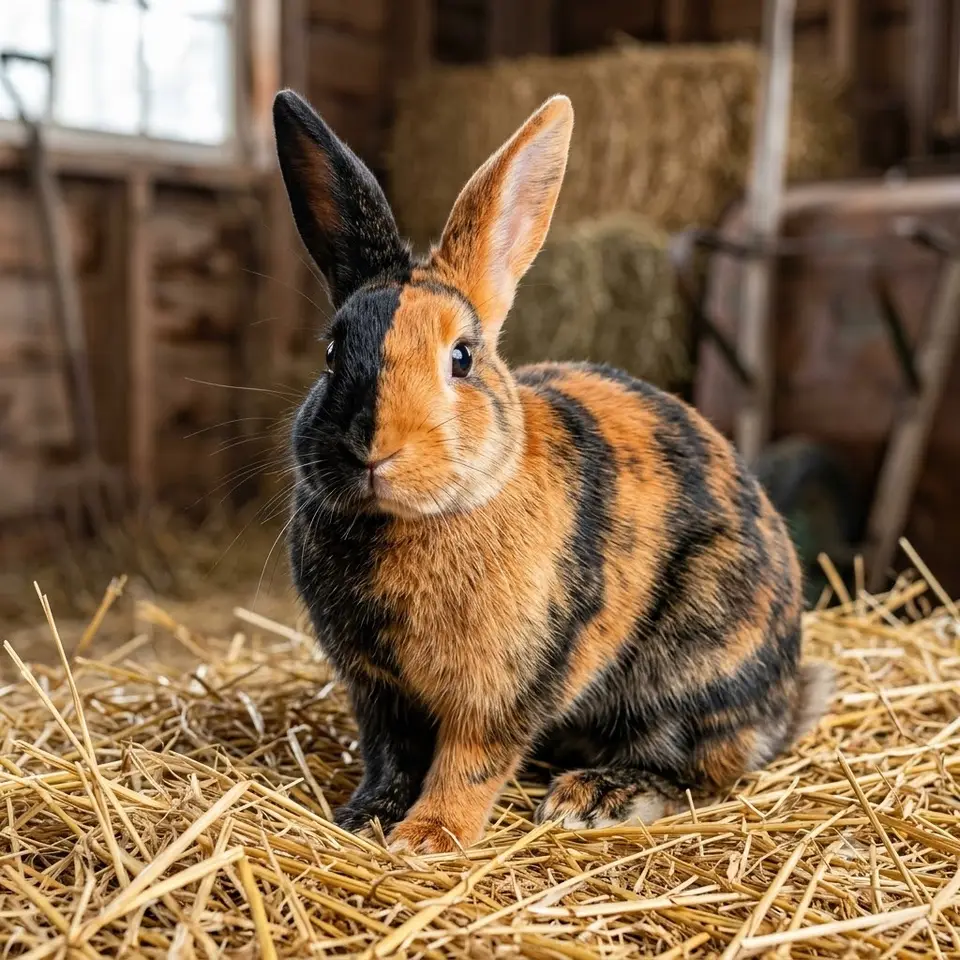
The Harlequin rabbit is named for its split colouring, with bands and halves of contrasting colour (often orange and black) alternating across the face and body like a jester's costume.
Last reviewed: October 2026
Species guide: Rabbit (Domestic) · All rabbit breeds
 AI illustration
 Overview
The Harlequin rabbit is named for its split colouring, with bands and halves of contrasting colour (often orange and black) alternating across the face and body like a jester's costume. A calm, playful medium breed, it's prized for that one-of-a-kind patterning.
A rabbit is a years-long commitment, not a starter pet: rabbits are intelligent, social prey animals (this breed typically lives 5-8 years) that need far more space than a hutch (plus daily free-run time), usually do best bonded with another rabbit, and dislike being picked up. They are not low-effort or ideal for very young children. Consider adopting - rescues are full of rabbits.
History & Origin
Developed in France in the late 19th century, exhibited in Paris in the 1880s; bred specifically for its dramatic alternating colour pattern.
Appearance
2.7-4 kg with the signature harlequin markings - alternating bands/halves of two colours (Japanese: orange+dark; Magpie: white+dark) split across the face and body; short dense coat. Typical size: Medium, 2.7-4 kg. Coat: Short, dense. Average lifespan 5-8 years.
Temperament & Handling
Generally calm, curious and playful - an even-tempered, intelligent medium rabbit often described as friendly and engaging with good socialisation.
Housing
Space for a medium rabbit, daily exercise, hides, unlimited hay, soft flooring. Bond a pair.
Diet
Hay-first (80%+), daily greens, measured pellets, fresh water.
Health & Lifespan
Few breed-specific issues; standard dental, GI, sore-hock and neutering care. 5-8 years.
Grooming
Short coat: occasional brushing, more in moult; nail trims; never bathe. Low maintenance.
Pros & Cons
Pros
- Unique jester-like markings
- Calm, playful, intelligent
- No extreme features: fewer health quirks
- Handsome medium companion
Cons
- Needs space (medium)
- Perfect markings are rare (pet-quality fine)
- Still needs a companion and enrichment
- A multi-year commitment
Best Suited For
- Owners wanting a striking, calm rabbit
- Families with gentle older children
- Show and pet keepers
- Homes with space
Everyday gear for small mammals
Links go to Amazon or a partner brand's own store and may earn us a commission at no extra cost to you. As an Amazon Associate we earn from qualifying purchases. An Amazon link leads to a type of gear and you choose the exact product; a card that names a store leads to that partner's own shop.
Harlequin Rabbit - frequently asked questions
What makes the pattern?
Harlequins carry genes that split the coat into alternating bands and halves of two colours across the face and body - no two are marked alike, and show-perfect markings are rare.
Japanese vs Magpie Harlequin?
Japanese Harlequins pair orange with a dark colour; Magpie Harlequins pair white with a dark colour. Both show the same alternating split pattern.
Are they good-natured?
Generally yes - calm, curious and playful, and without extreme dwarf/lop features they tend to be hardy. Individual temperament still varies.
Test yourself: guess the small mammal
Three clues from our quiz bank, each about another of our small mammals. Can you name them?
Clue 1.These burrowing herbivores are studied by scientists for Alzheimer's because they naturally develop similar brain plaques.
It's the Degu - read the full profile →
Clue 2.Unlike most small cage rodents, this animal is diurnal and its furred tail ends in a small tassel.
It's the Gerbil - read the full profile →
Clue 3.This crepuscular mammal can swivel its eyes for nearly 360-degree vision to watch for predators while feeding.
It's the Rabbit (Domestic) - read the full profile →