Netherland Dwarf Rabbit
The Netherland Dwarf is a compact, big-headed, short-eared pet rabbit of barely a kilo, one of the smallest breeds kept.
Last reviewed: October 2026
Species guide: Rabbit (Domestic) · All rabbit breeds
 AI illustration
 Overview
The Netherland Dwarf is a compact, big-headed, short-eared pet rabbit of barely a kilo, one of the smallest breeds kept. Adorable and hugely popular, but the honest note matters: as a dwarf prey animal it can be skittish and takes patient, gentle handling to become confident.
A rabbit is a decade commitment, not a starter pet: rabbits are intelligent, social prey animals that live 8-12 years, need far more space than a hutch (plus daily free-run time), usually do best bonded with another rabbit, and dislike being picked up. They are not low-effort or ideal for very young children. Consider adopting - rescues are full of rabbits.
History & Origin
Developed in the Netherlands in the early 20th century by crossing small Polish rabbits with wild stock, then refined for its compact 'baby-faced' type. Now one of the most popular pet and show breeds worldwide.
Appearance
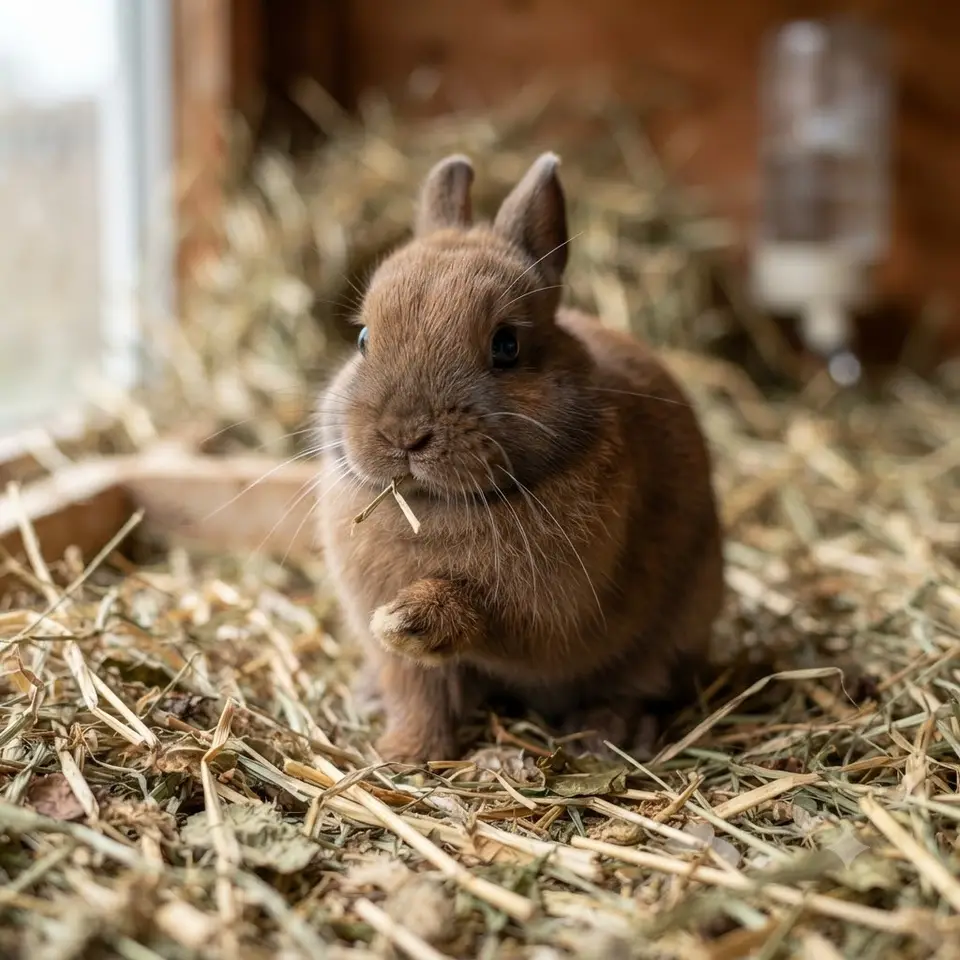
Under 1.1 kg with a round head, short face, tiny upright ears and large eyes; comes in dozens of colours. The dwarf 'compact' shape gives the perpetual-baby look. Typical size: Dwarf, 0.5-1.1 kg. Coat: Short, dense roll-back. Average lifespan 10-12 years.
Temperament & Handling
Energetic and curious but often nervous - dwarf breeds startle easily. With calm, consistent, low-handling interaction many become friendly and confident; rushed or grabby handling makes them defensive.
Housing
Large pen or free-roam space, not a small hutch - even a tiny rabbit needs room to run, plus hides, hay and daily out-of-enclosure exercise. Rabbit-proof any free-run area.
Diet
Unlimited grass hay is 80%+ of the diet, plus a handful of leafy greens and a small measured amount of pellets. Fresh water always. Never a 'muesli' mix (selective feeding causes disease).
Health & Lifespan
Prone to dental issues (short face = misaligned teeth) - watch for drooling or dropped food; also GI stasis if hay intake drops. Neutering prevents disease and aggression. 10-12 year lifespan.
Grooming
Short coat needs only occasional brushing, more during moults. Never bathe a rabbit (it's dangerous); nails need periodic trimming.
Pros & Cons
Pros
- Tiny and space-efficient (relatively)
- Long-lived and characterful
- Huge colour variety
- Popular so easy to find - and to adopt
Cons
- Skittish, dislikes handling
- Dental problems from the short face
- Still needs real space and companionship
- Not a young-child pet
Best Suited For
- Patient, gentle adults and teens
- Owners wanting a small but long-term pet
- Homes able to bond a pair
- People who'll interact on the rabbit's terms
Everyday gear for small mammals
Links go to Amazon or a partner brand's own store and may earn us a commission at no extra cost to you. As an Amazon Associate we earn from qualifying purchases. An Amazon link leads to a type of gear and you choose the exact product; a card that names a store leads to that partner's own shop.
Netherland Dwarf Rabbit - frequently asked questions
Are Netherland Dwarfs good for children?
Not really for young ones: they're delicate, skittish and dislike being held. Calm older children who interact gently can bond with them over time.
Do they need a friend?
Rabbits are social and most are happier neutered and bonded with another rabbit. A lone rabbit needs a great deal of human interaction to compensate.
Why the dental worry?
The short 'dwarf' face can misalign the continuously-growing teeth; unlimited hay wears them naturally, and any drooling or appetite drop is a vet visit.
Test yourself: guess the small mammal
Three clues from our quiz bank, each about another of our small mammals. Can you name them?
Clue 1.Unlike most small cage rodents, this animal is diurnal and its furred tail ends in a small tassel.
It's the Gerbil - read the full profile →
Clue 2.This small, long-tailed rodent is the domesticated form of a common household pest kept as a friendly pet.
It's the Fancy Mouse - read the full profile →
Clue 3.When startled, this small spiny mammal kept as an exotic pet curls into a tight, prickly ball.
It's the African Pygmy Hedgehog - read the full profile →