Rex Rabbit
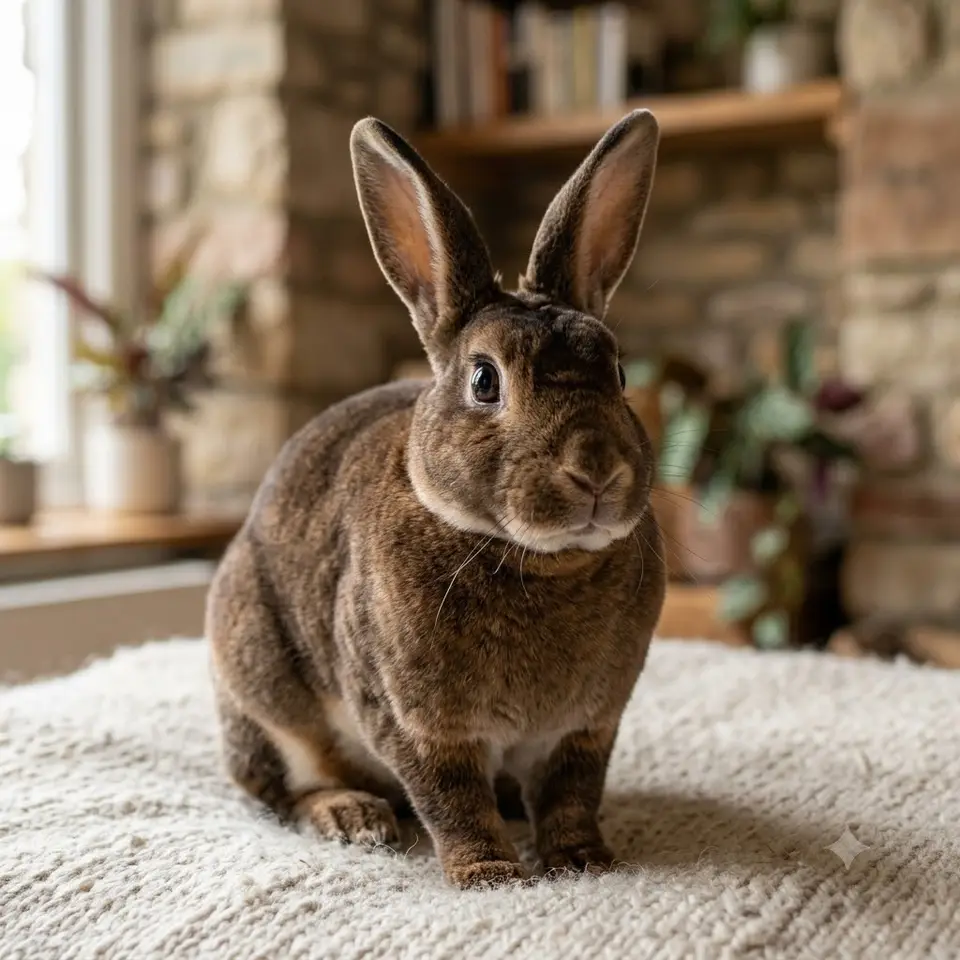
The standard Rex is the full-size version of that famous velvet coat - a calm, dignified medium rabbit whose dense upright plush fur is prized enough to have its own colour classes.
Last reviewed: September 2026
Species guide: Rabbit (Domestic) · All rabbit breeds
 AI illustration
Overview
The standard Rex is the full-size version of that famous velvet coat - a calm, dignified medium rabbit whose dense upright plush fur is prized enough to have its own colour classes. Larger and steadier than the Mini Rex, it's a gentle-giant-ish companion for those with space.
A rabbit is a decade commitment, not a starter pet: rabbits are intelligent, social prey animals that live 8-12 years, need far more space than a hutch (plus daily free-run time), usually do best bonded with another rabbit, and dislike being picked up. They are not low-effort or ideal for very young children. Consider adopting - rescues are full of rabbits.
History & Origin
Originated in France in 1919 from a wild coat mutation, quickly prized for the velvet pelt; the foundation of all Rex-coated breeds including the Mini Rex.
Appearance
3-4.5 kg, well-proportioned with erect ears and the signature short, dense, velvety upright coat in many solid and patterned colours (the 'Castor' brown is classic). Typical size: Medium, 3-4.5 kg. Coat: Plush velvet Rex fur. Average lifespan 5-10 years.
Temperament & Handling
Generally calm, gentle and docile - a steady medium rabbit that many find relaxed and handleable with good socialisation.
Housing
Ample space (it's a medium breed) plus daily exercise, hides, unlimited hay, and soft solid flooring (Rex feet are prone to sore hocks). Bond a pair.
Diet
Hay-based (80%+), daily greens, measured pellets, fresh water; watch weight in the larger frame.
Health & Lifespan
Sore hocks are the Rex-specific risk (less foot fur) - soft flooring is essential; standard dental, GI and neutering care. 5-10 years.
Grooming
Velvet coat needs only gentle hand-smoothing - do NOT over-brush; nail trims; foot checks; never bathe.
Pros & Cons
Pros
- Luxurious full-size velvet coat
- Calm, gentle temperament
- Handsome colour classes
- Steady medium companion
Cons
- Sore hocks without soft flooring
- Needs more space than small breeds
- Shorter lifespan than some dwarfs
- Over-brushing ruins the coat
Best Suited For
- Homes with space and soft flooring
- Owners wanting a calm medium rabbit
- People who love the velvet coat
- Gentle families with older children
Everyday gear for small mammals
Links go to Amazon or a partner brand's own store and may earn us a commission at no extra cost to you. As an Amazon Associate we earn from qualifying purchases. An Amazon link leads to a type of gear and you choose the exact product; a card that names a store leads to that partner's own shop.
Rex Rabbit - frequently asked questions
Rex or Mini Rex?
Same velvet coat, different size: the standard Rex is 3-4.5 kg, the Mini Rex 1.4-2 kg. Choose by the space you have and the size you want.
Do they get sore hocks?
Rex breeds are prone to it because the plush coat leaves less foot padding - always provide soft, solid resting surfaces and check the feet.
How should I groom the coat?
Barely - a gentle hand-smooth keeps it perfect; brushing hard damages the unique upright velvet. Never bathe a rabbit.
Test yourself: guess the small mammal
Three clues from our quiz bank, each about another of our small mammals. Can you name them?
Clue 1.Friendly and curious, this tufted-tailed burrower loves to dig tunnels and rarely bites, making it a great first pet.
It's the Gerbil - read the full profile →
Clue 2.This palm-sized nocturnal hoarder stuffs food into stretchy cheek pouches to carry back to its nest.
It's the Dwarf Hamster - read the full profile →
Clue 3.This gliding marsupial uses the patagium membrane and its tail as a rudder, sailing up to about 50 metres between trees.
It's the Sugar Glider - read the full profile →