Californian Rabbit
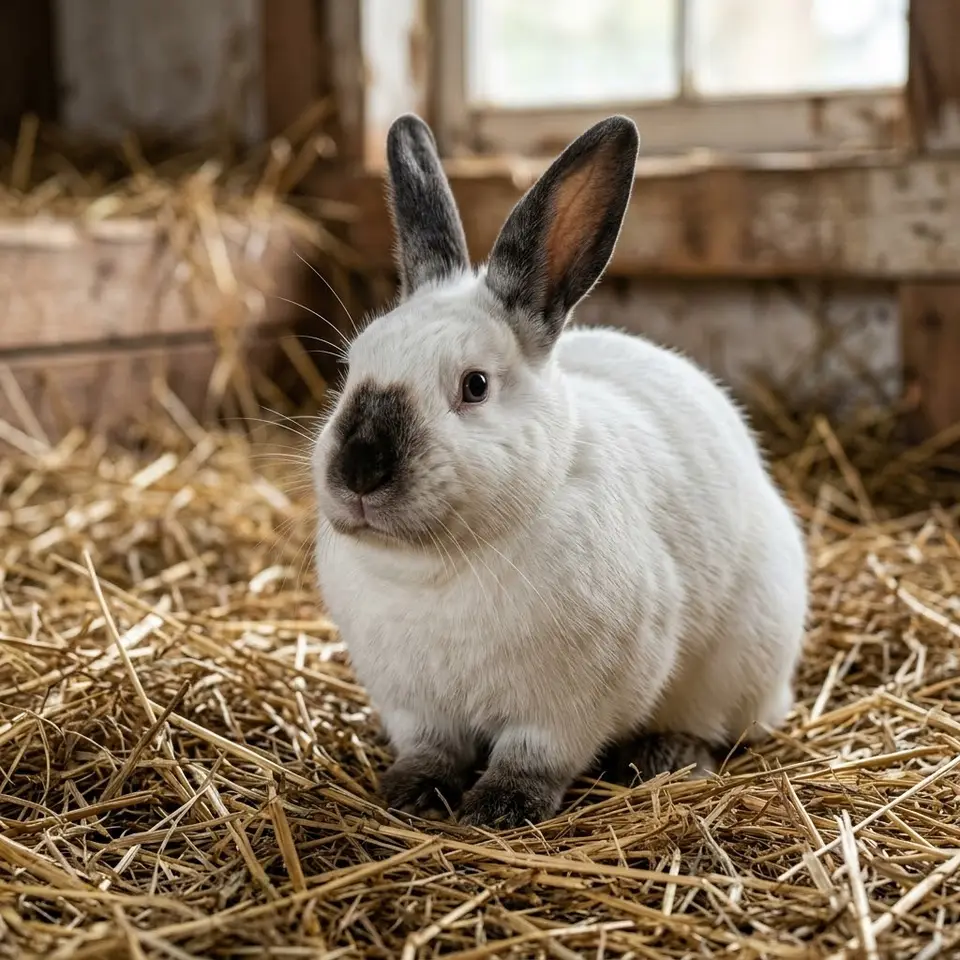
The Californian is a striking Himalayan-patterned rabbit (white with dark 'points' on the ears, nose, feet and tail) originally a commercial breed now kept as a calm, hardy pet and show rabbit.
Last reviewed: October 2026
Species guide: Rabbit (Domestic) · All rabbit breeds
 AI illustration
 Overview
The Californian is a striking Himalayan-patterned rabbit (white with dark 'points' on the ears, nose, feet and tail) originally a commercial breed now kept as a calm, hardy pet and show rabbit. Robust and even-tempered, it's a sturdy medium-large companion for those with space.
A rabbit is a decade commitment, not a starter pet: rabbits are intelligent, social prey animals that live 8-12 years, need far more space than a hutch (plus daily free-run time), usually do best bonded with another rabbit, and dislike being picked up. They are not low-effort or ideal for very young children. Consider adopting - rescues are full of rabbits.
History & Origin
Developed in California in the 1920s from Himalayan, Chinchilla and New Zealand stock for meat and fur; now also a popular show and pet breed for its markings and hardy nature.
Appearance
3.6-4.7 kg, muscular and white-bodied with dark points (ears, nose, feet, tail) from the Himalayan gene; short dense coat. Typical size: Medium-large, 3.6-4.7 kg. Coat: Short, dense. Average lifespan 5-10 years.
Temperament & Handling
Generally calm, docile and hardy - a steady, low-drama rabbit that many find easy-going and handleable with good socialisation.
Housing
Space for a medium-large rabbit, daily exercise, hides, unlimited hay; soft solid flooring. Bond a pair.
Diet
Hay-first (80%+), daily greens, measured pellets sized to the frame, fresh water.
Health & Lifespan
Hardy with few breed-specific issues; standard dental, GI, sore-hock and neutering care. 5-10 years.
Grooming
Short coat: occasional brushing, more in moult; nail trims; never bathe. Low maintenance.
Pros & Cons
Pros
- Striking Himalayan point markings
- Calm, hardy temperament
- Robust with few breed issues
- Sturdy medium-large size
Cons
- Needs space (medium-large)
- Commercial origins: source thoughtfully
- Still needs a companion and enrichment
- A multi-year commitment
Best Suited For
- Homes with space wanting a hardy pet
- Show and pet keepers
- Owners who like the point markings
- Steady families with older children
Everyday gear for small mammals
Links go to Amazon or a partner brand's own store and may earn us a commission at no extra cost to you. As an Amazon Associate we earn from qualifying purchases. An Amazon link leads to a type of gear and you choose the exact product; a card that names a store leads to that partner's own shop.
Californian Rabbit - frequently asked questions
Why the dark points?
The Himalayan gene makes the coat produce dark pigment only in the cooler extremities (ears, nose, feet and tail) on an otherwise white body.
Are they good pets?
Yes - calm, hardy and even-tempered, though larger than dwarf breeds and needing more space. Originally commercial, so choose a breeder or rescue that keeps them as pets.
Do the points change?
They can darken in cold and lighten in warmth, since the pigment is temperature-sensitive - a quirk of the Himalayan gene.
Test yourself: guess the small mammal
Three clues from our quiz bank, each about another of our small mammals. Can you name them?
Clue 1.This small, long-tailed rodent is the domesticated form of a common household pest kept as a friendly pet.
It's the Fancy Mouse - read the full profile →
Clue 2.This gliding marsupial uses the patagium membrane and its tail as a rudder, sailing up to about 50 metres between trees.
It's the Sugar Glider - read the full profile →
Clue 3.Like humans, this stout cavy cannot make its own vitamin C and must get it from food.
It's the Guinea Pig - read the full profile →