English Angora Rabbit
The English Angora is a rabbit so densely coated it can look like a pom-pom with a face, prized for its fibre and its charm.
Last reviewed: October 2026
Species guide: Rabbit (Domestic) · All rabbit breeds
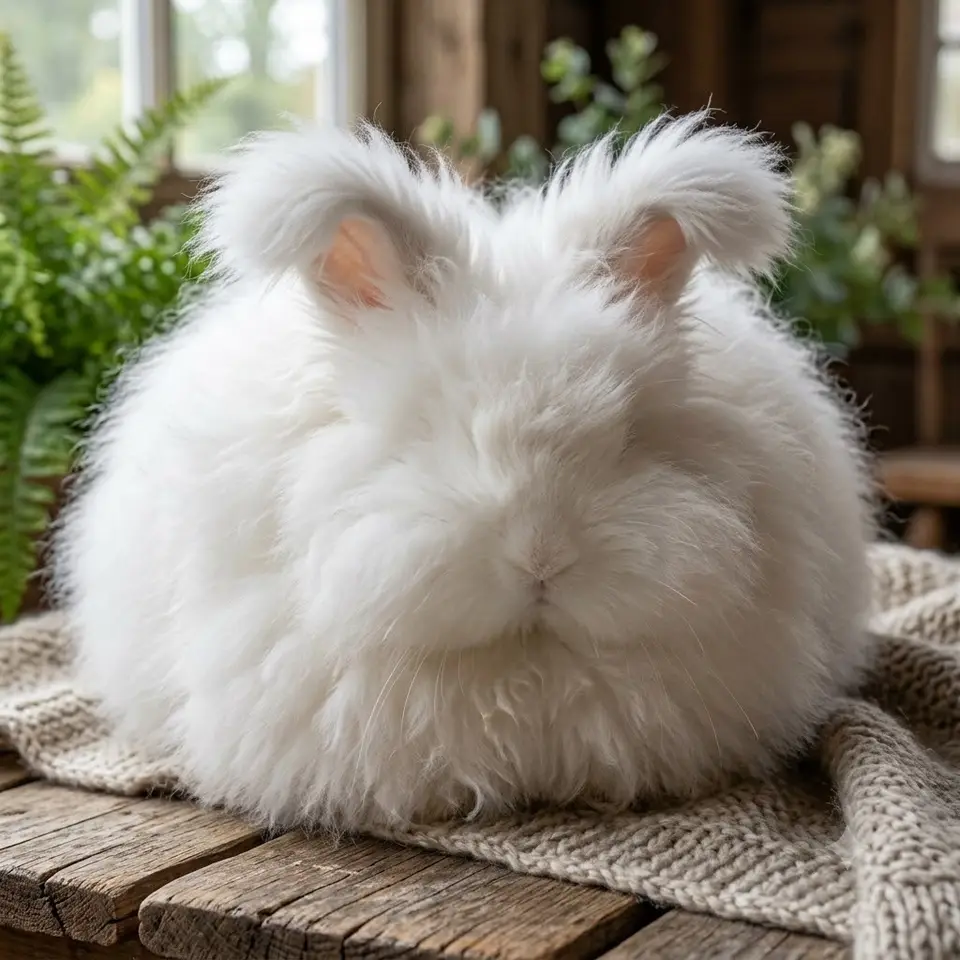 AI illustration
 Overview
The English Angora is a rabbit so densely coated it can look like a pom-pom with a face, prized for its fibre and its charm. It is also one of the highest-maintenance pets in this catalog: that wool demands frequent, non-negotiable grooming, and the honesty note is bigger than the cuteness.
A rabbit is a decade commitment, not a starter pet: rabbits are intelligent, social prey animals that live 8-12 years, need far more space than a hutch (plus daily free-run time), usually do best bonded with another rabbit, and dislike being picked up. They are not low-effort or ideal for very young children. Consider adopting - rescues are full of rabbits.
History & Origin
An ancient wool breed (Angora rabbits date to at least the 18th century, named for Ankara, Turkey), the English being the smallest and most heavily face-furred of the Angora types.
Appearance
2-3.5 kg beneath enormous wool that covers the face and ears too, giving the signature 'no visible rabbit' look; white and many colours. Typical size: Small-medium, 2-3.5 kg. Coat: Very long dense wool - HIGH maintenance. Average lifespan 7-12 years.
Temperament & Handling
Generally docile and calm - a placidity that helps, since it must tolerate a great deal of grooming. Individuals vary; gentle socialisation is key.
Housing
Clean, dry space (wool soils and mats easily), daily exercise, unlimited hay; the coat needs a clean environment. Bond a pair.
Diet
Hay-first and then some - huge hay intake is essential to prevent wool block from ingested fibre; daily greens, measured pellets, constant water.
Health & Lifespan
Wool block (ingested fibre causing GI stasis) is the major risk, plus matting, overheating, and hidden body-condition changes under the wool. Frequent grooming and hay are life-or-death here. 7-12 years.
Grooming
The defining commitment: brushing/blowing the wool most days, clipping every few months, checking skin and rear constantly. This is a demanding coat - do not take one on without the time.
Pros & Cons
Pros
- Extraordinary, unique appearance
- Placid temperament
- Fibre can be harvested (spinning)
- Long-lived
Cons
- Extremely high grooming needs
- Serious wool-block risk
- Overheats and soils easily
- Not a beginner or low-effort pet
Best Suited For
- Experienced, time-rich keepers
- Fibre/spinning enthusiasts
- Homes that can groom daily
- People who fully accept the coat commitment
Everyday gear for small mammals
Links go to Amazon or a partner brand's own store and may earn us a commission at no extra cost to you. As an Amazon Associate we earn from qualifying purchases. An Amazon link leads to a type of gear and you choose the exact product; a card that names a store leads to that partner's own shop.
English Angora Rabbit - frequently asked questions
How much grooming does an Angora need?
A lot - near-daily brushing plus regular clipping. Neglect means painful mats and dangerous wool block. This is the wrong rabbit for a busy or first-time owner.
Can I harvest the wool?
Yes - Angora wool is spun into luxury yarn, gathered by gentle grooming or clipping. Many keep them partly for the fibre.
Do they overheat?
Easily - the dense coat traps heat, so summer clipping and cool housing are essential; monitor closely in warm weather.
Test yourself: guess the small mammal
Three clues from our quiz bank, each about another of our small mammals. Can you name them?
Clue 1.Friendly and curious, this tufted-tailed burrower loves to dig tunnels and rarely bites, making it a great first pet.
It's the Gerbil - read the full profile →
Clue 2.This nocturnal insectivore performs 'self-anointing,' frothing saliva and spreading it over its quills.
It's the African Pygmy Hedgehog - read the full profile →
Clue 3.This crepuscular mammal can swivel its eyes for nearly 360-degree vision to watch for predators while feeding.
It's the Rabbit (Domestic) - read the full profile →