English Lop Rabbit
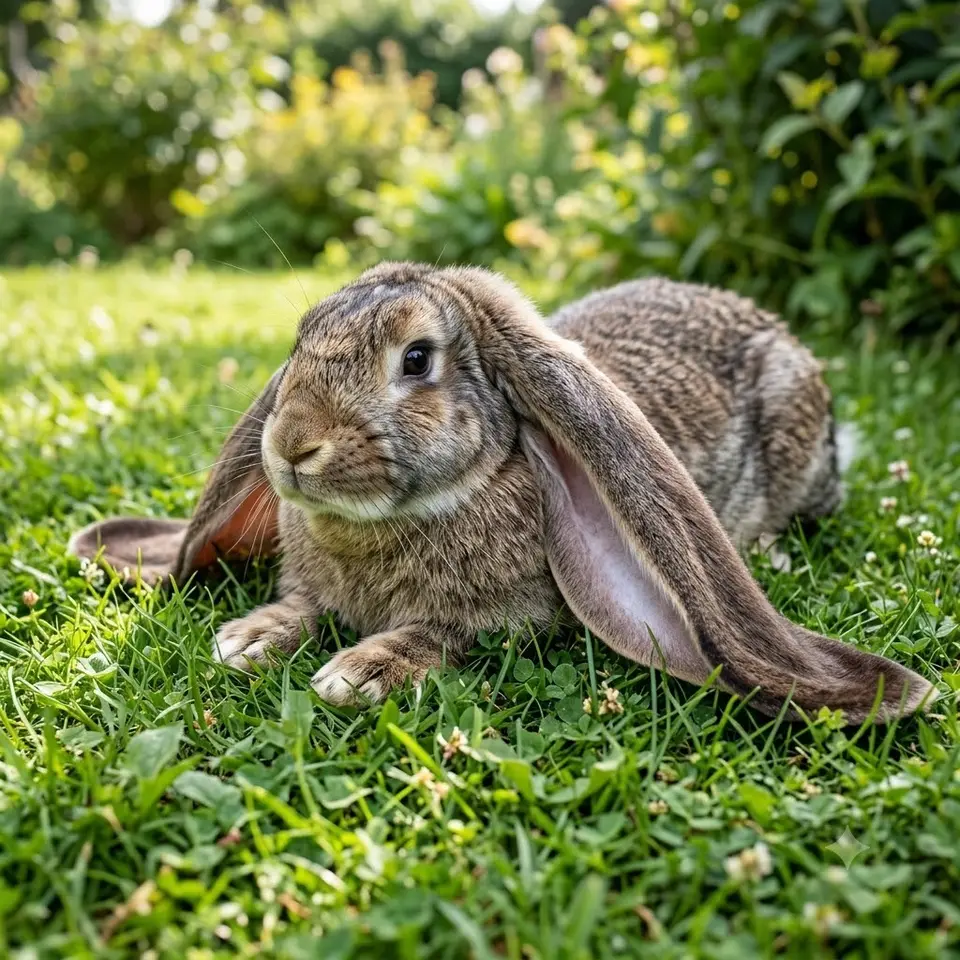
The English Lop has enormous lopped ears that can span over 70 cm tip to tip, trailing beside its head like a spaniel's.
Last reviewed: October 2026
Species guide: Rabbit (Domestic) · All rabbit breeds
 AI illustration
 Overview
The English Lop has enormous lopped ears that can span over 70 cm tip to tip, trailing beside its head like a spaniel's. It's an old, calm, affectionate breed whose spectacular ears are both its glory and a special care responsibility.
A rabbit is a years-long commitment, not a starter pet: rabbits are intelligent, social prey animals (this breed typically lives 5-7 years) that need far more space than a hutch (plus daily free-run time), usually do best bonded with another rabbit, and dislike being picked up. They are not low-effort or ideal for very young children. Consider adopting - rescues are full of rabbits.
History & Origin
One of the oldest lop breeds, developed in 19th-century England (the original fancy rabbit) and the ancestor of the French, Holland and other lops.
Appearance
4.5-5.5 kg+ with the signature vast lopped ears (the longest of any breed), a mandolin-shaped body and short dense coat in many colours. Typical size: Large, 4.5-5.5 kg+. Coat: Short, dense. Average lifespan 5-7 years.
Temperament & Handling
Typically calm, docile and affectionate - a laid-back large rabbit often described as friendly and mellow, tolerant of gentle handling.
Housing
Ample space, and housing designed so the huge ears don't get trodden, caught or soiled; hides, unlimited hay, soft flooring. Bond a pair.
Diet
Hay-based (80%+), daily greens, a larger measured pellet ration, fresh water; watch weight.
Health & Lifespan
The enormous ears need extra care - prone to injury, frostbite, and (dragging) infections/soiling; also large-breed lifespan and sore-hock risks. Ear checks are essential. 5-7 years.
Grooming
Short coat is easy, but the EARS need regular checking and gentle cleaning; keep them clean and injury-free; nail trims; never bathe.
Pros & Cons
Pros
- Spectacular record-length ears
- Calm, affectionate temperament
- Historic, characterful breed
- Often mellow and handleable
Cons
- Ears need special care (injury, frostbite, soiling)
- Large: space and food demands
- Shorter large-breed lifespan
- Ears can drag and get dirty
Best Suited For
- Experienced keepers with space
- Owners charmed by the ears (and their care)
- Adults and careful older children
- Homes that can manage the ear maintenance
Everyday gear for small mammals
Links go to Amazon or a partner brand's own store and may earn us a commission at no extra cost to you. As an Amazon Associate we earn from qualifying purchases. An Amazon link leads to a type of gear and you choose the exact product; a card that names a store leads to that partner's own shop.
English Lop Rabbit - frequently asked questions
How long are the ears?
Record English Lop ears exceed 70 cm tip to tip - the longest of any rabbit breed. They trail beside the head and need protecting from injury and dirt.
Do the ears need special care?
Yes - they can be trodden on, caught, frostbitten in cold, or dragged through mess; keep housing ear-friendly and check and clean them regularly.
Are they good pets?
For experienced keepers with space, yes - they're calm and affectionate. The ear care and large size make them a specialist rather than a beginner choice.
Test yourself: guess the small mammal
Three clues from our quiz bank, each about another of our small mammals. Can you name them?
Clue 1.Curious and quick, this little nocturnal animal navigates largely by smell and whisker-touch, having poor eyesight.
It's the Fancy Mouse - read the full profile →
Clue 2.Used for centuries to bolt rabbits from burrows, this weasel relative sleeps up to 18 hours a day.
It's the Ferret - read the full profile →
Clue 3.Unlike its larger solitary cousin, this tiny pocket-sized rodent can sometimes be kept in same-sex pairs.
It's the Dwarf Hamster - read the full profile →