Holland Lop Rabbit
The Holland Lop is one of the most popular pet rabbits - a small, stocky, floppy-eared charmer with a famously friendly disposition.
Last reviewed: October 2026
Species guide: Rabbit (Domestic) · All rabbit breeds
 AI illustration
 Overview
The Holland Lop is one of the most popular pet rabbits - a small, stocky, floppy-eared charmer with a famously friendly disposition. The lopped ears and compact 'bulldog' build make it a favourite, and its temperament is genuinely among the sweeter dwarf breeds when well socialised.
A rabbit is a decade commitment, not a starter pet: rabbits are intelligent, social prey animals that live 8-12 years, need far more space than a hutch (plus daily free-run time), usually do best bonded with another rabbit, and dislike being picked up. They are not low-effort or ideal for very young children. Consider adopting - rescues are full of rabbits.
History & Origin
Bred in the Netherlands in the 1950s-70s by crossing French Lops with Netherland Dwarfs to create a small lop-eared rabbit, recognised in 1979 and now a global pet staple.
Appearance
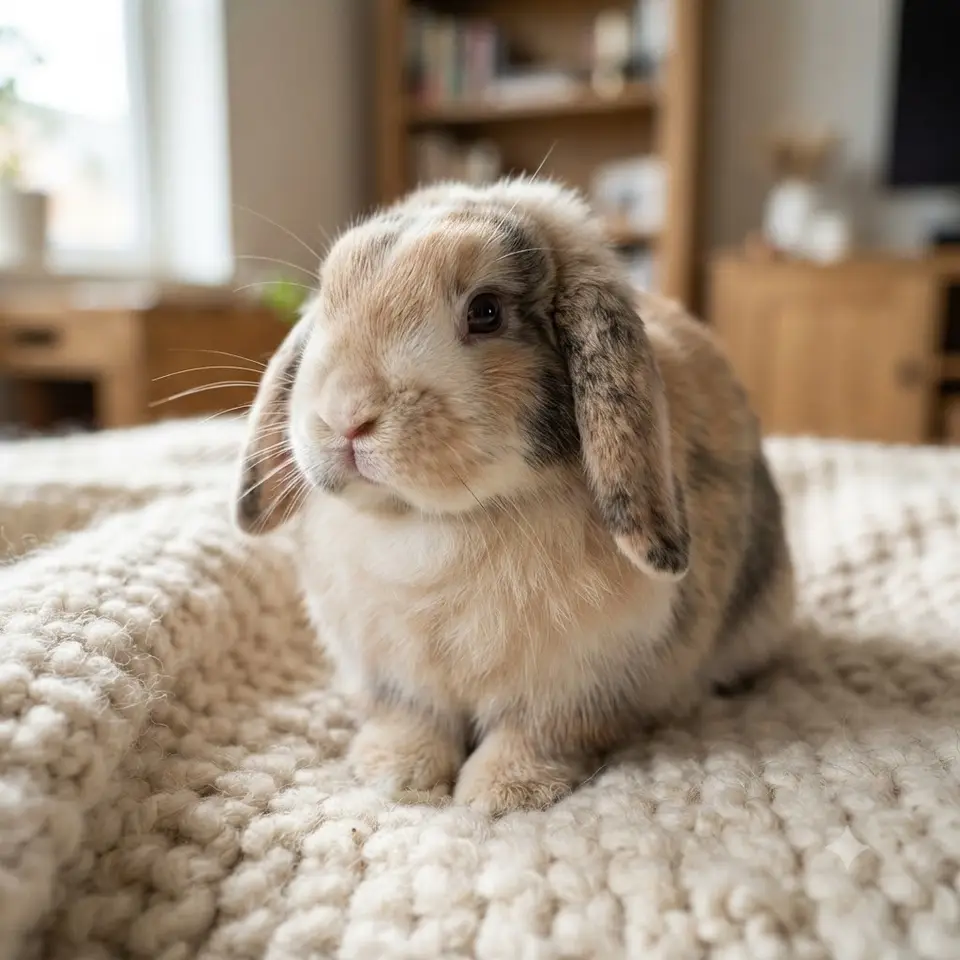
0.9-1.8 kg, short and thickset with a broad head, flat 'muzzle', and the signature lopped ears hanging beside the face. Every colour going. Typical size: Dwarf, 0.9-1.8 kg. Coat: Short, dense. Average lifespan 7-12 years.
Temperament & Handling
Generally friendly, curious and more tolerant of gentle handling than many dwarf breeds - one reason for its popularity. Still an individual: socialisation and calm handling make the difference.
Housing
Space to run plus daily free-time, hides and unlimited hay - a hutch alone is not enough. Bond a pair where possible.
Diet
Hay-first (80%+), leafy greens daily, a small measured pellet ration, constant water. Avoid sugary treats and muesli mixes.
Health & Lifespan
Lop ears can trap wax and predispose to ear infections - check ears; dental and GI-stasis vigilance as all rabbits. Neuter for health and behaviour. 7-12 years.
Grooming
Short coat: occasional brushing, more in moult; nail trims; ear checks for the lopped ears. Never bathe.
Pros & Cons
Pros
- Famously friendly for a dwarf breed
- Adorable lopped ears, compact size
- Great colour range
- One of the most popular pet rabbits: well understood
Cons
- Lop ears prone to infections
- Still needs space, hay and a companion
- Overbred: buy/adopt carefully
- Handling must still be gentle
Best Suited For
- Families with gentle older children
- First-time rabbit keepers (who research first)
- Homes able to give space and time
- Owners wanting a sociable small rabbit
Everyday gear for small mammals
Links go to Amazon or a partner brand's own store and may earn us a commission at no extra cost to you. As an Amazon Associate we earn from qualifying purchases. An Amazon link leads to a type of gear and you choose the exact product; a card that names a store leads to that partner's own shop.
Holland Lop Rabbit - frequently asked questions
Are Holland Lops friendly?
Often yes - they're among the more people-friendly small breeds, especially when handled gently from young. Temperament still varies by individual and socialisation.
Do lop ears cause problems?
They can trap wax and moisture, raising ear-infection risk - check and clean gently as advised by a vet, and watch for head-shaking or scratching.
How big do they get?
Small - typically 1.3-1.8 kg full grown; beware 'teacup' or 'mini' marketing, which is not a real thing and often signals poor breeding.
Test yourself: guess the small mammal
Three clues from our quiz bank, each about another of our small mammals. Can you name them?
Clue 1.A pocket-sized Australian and New Guinean pet that glides on a stretchy flap of skin and bonds intensely with its colony.
It's the Sugar Glider - read the full profile →
Clue 2.This long-eared herbivore re-eats special soft droppings to fully digest its grassy diet.
It's the Rabbit (Domestic) - read the full profile →
Clue 3.This solitary golden rodent is the most common pet of its kind and must be housed alone to avoid deadly fights.
It's the Syrian Hamster - read the full profile →