Dutch Rabbit
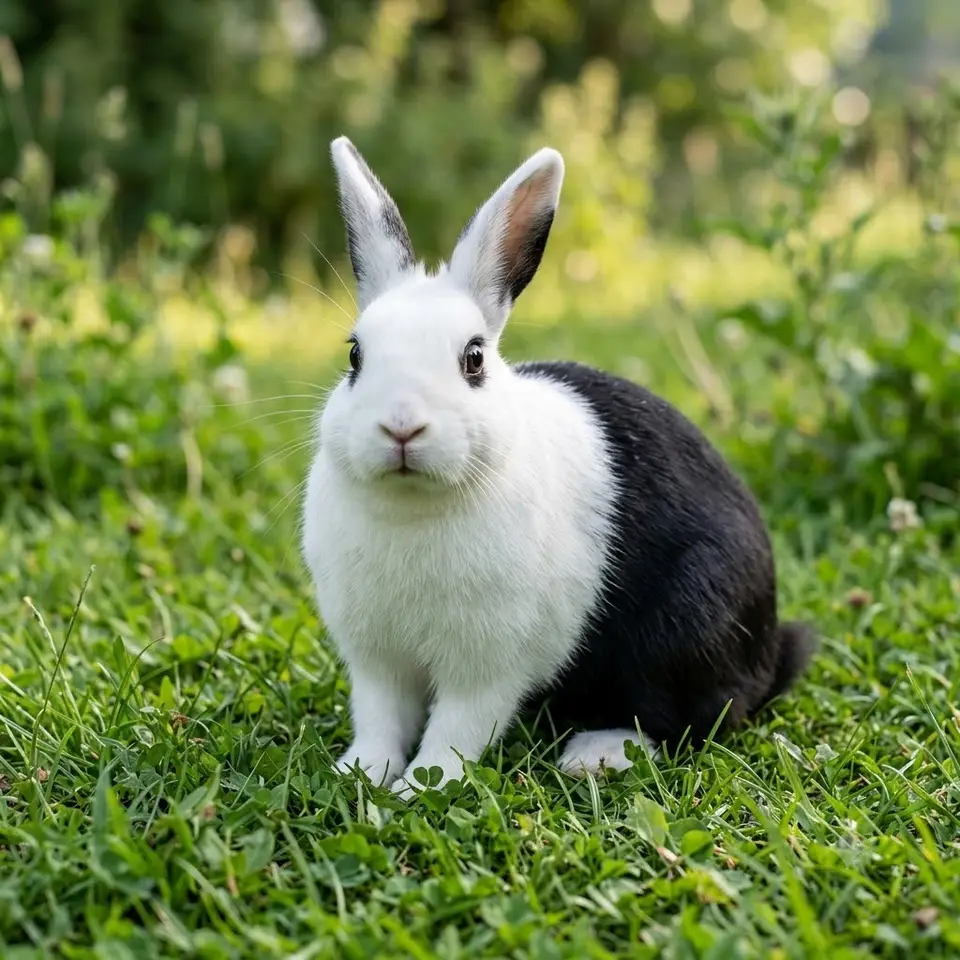
The Dutch rabbit is instantly recognisable by its crisp white saddle and coloured rear, and it is one of the oldest, calmest and most family-friendly domestic breeds.
Last reviewed: October 2026
Species guide: Rabbit (Domestic) · All rabbit breeds
 AI illustration
 Overview
The Dutch rabbit is instantly recognisable by its crisp white saddle and coloured rear, and it is one of the oldest, calmest and most family-friendly domestic breeds. Its steady temperament and striking markings have kept it beloved for over a century.
A rabbit is a decade commitment, not a starter pet: rabbits are intelligent, social prey animals that live 8-12 years, need far more space than a hutch (plus daily free-run time), usually do best bonded with another rabbit, and dislike being picked up. They are not low-effort or ideal for very young children. Consider adopting - rescues are full of rabbits.
History & Origin
One of the oldest domestic breeds, developed in England in the 19th century (from Belgian stock) and once the most popular rabbit before dwarf breeds rose; a foundation breed for many others.
Appearance
1.6-2.5 kg with the signature pattern: white front and blaze, coloured cheeks and hindquarters (black, blue, chocolate, tortoise and more), on a compact glossy body. Typical size: Small-medium, 1.6-2.5 kg. Coat: Short, glossy. Average lifespan 8-12 years.
Temperament & Handling
Calm, even-tempered and people-oriented - one of the classic 'good with families' breeds, tolerating gentle handling better than skittish dwarfs. Genuinely one of the steadier pets.
Housing
Space and daily exercise, hides, unlimited hay; a solid medium rabbit that needs room. Bond a pair.
Diet
Hay-first (80%+), daily greens, measured pellets, fresh water; standard rabbit nutrition.
Health & Lifespan
Fewer breed-specific issues than extreme types (no lop ears, normal face), but dental and GI care and neutering apply to all rabbits. Long-lived 8-12 years.
Grooming
Short glossy coat: occasional brushing, more in moult; nail trims; never bathe. Low maintenance.
Pros & Cons
Pros
- Calm, family-friendly classic
- Striking tuxedo markings
- Fewer breed-specific health issues
- Long-lived and hardy
Cons
- Still needs space and a companion
- Handling must be gentle
- Less 'novelty' than dwarf/lop types
- A decade-long commitment
Best Suited For
- Families with children (supervised, gentle)
- First-time rabbit keepers
- Homes wanting a steady, hardy pet
- Owners who value temperament over novelty
Everyday gear for small mammals
Links go to Amazon or a partner brand's own store and may earn us a commission at no extra cost to you. As an Amazon Associate we earn from qualifying purchases. An Amazon link leads to a type of gear and you choose the exact product; a card that names a store leads to that partner's own shop.
Dutch Rabbit - frequently asked questions
Are Dutch rabbits good beginners' rabbits?
Among the best - calm, hardy and even-tempered, with fewer of the health quirks of extreme dwarf/lop breeds. Still a full decade commitment.
Why the distinctive markings?
The Dutch pattern (white saddle and blaze, coloured rear) is a long-established breed standard and one of the reasons it's so recognisable.
Do they need a friend?
Yes - like all rabbits they're social and usually happiest neutered and bonded with another rabbit, with plenty of human interaction too.
Test yourself: guess the small mammal
Three clues from our quiz bank, each about another of our small mammals. Can you name them?
Clue 1.Far smarter than its reputation, this domesticated brown rodent can learn its name and be litter-trained.
It's the Fancy Rat - read the full profile →
Clue 2.This palm-sized nocturnal hoarder stuffs food into stretchy cheek pouches to carry back to its nest.
It's the Dwarf Hamster - read the full profile →
Clue 3.This solitary golden rodent is the most common pet of its kind and must be housed alone to avoid deadly fights.
It's the Syrian Hamster - read the full profile →