Degu
The degu (Octodon degus) is a diurnal social rodent native to Chile - an unusual pet choice that combines daytime activity (rare in small pets), strong social bonds, and an intelligent curious temperament.
🗓️ Last reviewed: June 2026
Overview
The degu (Octodon degus) is a diurnal social rodent native to Chile - an unusual pet choice that combines daytime activity (rare in small pets), strong social bonds, and an intelligent curious temperament. Degus are increasingly popular but require specific care, particularly a very low-sugar diet to prevent diabetes.
Natural History & Origin
Wild degus inhabit central Chile's open scrubland. They live in extended family groups in elaborate burrow systems. Active during the day (diurnal), eat grasses and shrubs, communicate with a wide vocabulary of vocalisations.
Appearance
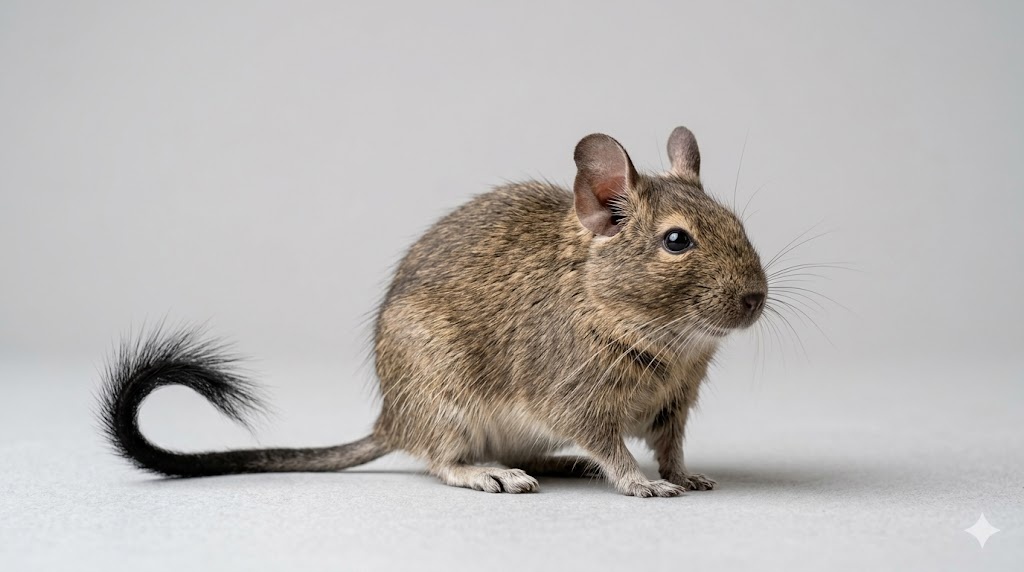
Adults weigh 170-300 g, body length 12-18 cm plus tufted tail.
Coat: agouti (wild), with a tan belly. Genetic colour varieties include blue and "pied" (white markings) but most pet degus are wild-type colour.
Temperament & Handling
Active, social, intelligent. Degus bond closely with their group (degu and human). They are diurnal, so active during human waking hours - unlike most small mammals.
Handle gently and never by the tail - the tail tip can break off and never regrows.
Housing
Minimum enclosure: 1 × 0.5 × 1.5 m tall, larger for more degus. Multi-level wire cages with solid platforms (similar to chinchilla housing).
Provide:
- Wooden chew toys.
- Hideouts.
- Solid wheel (30+ cm - degus need very large wheels).
- Sand bath (chinchilla sand, similar care to chinchillas).
- Heavy ceramic bowls and water bottle.
- Climbing branches.
Diet
Critical: degus are highly prone to diabetes and develop it quickly with sugar.
- Chinchilla pellets (plain, no fruit) as staple.
- Unlimited grass hay (timothy).
- Daily fresh greens - small amount of vegetables; avoid sugary ones.
- No fruit, no sweetened treats, no carrots.
- Limited seeds.
Diabetes in degus is often fatal and is preventable with strict diet control.
Health & Lifespan
6-8 years (some live 10+).
Common concerns:
- Diabetes - extremely common with improper diet; often fatal.
- Dental disease (malocclusion).
- Cataracts.
- Tail injuries.
- Bumblefoot.
Pros & Cons
Pros:
- Diurnal - active when humans are.
- Highly intelligent and social.
- Long-lived for size.
- Bond strongly with humans.
- Engaging to observe.
Cons:
- Must be kept in groups.
- Diabetes risk requires strict diet.
- Large enclosure needed.
- Uncommon - vet expertise variable.
- Tail injury risk.
Best Suited For
- Owners wanting a daytime-active small pet.
- Multi-degu households.
- Adults and older children.
Not suited for households unwilling to keep groups, or those unable to maintain strict diabetes-prevention diet.
🐾 Everyday gear for small mammals
Links go to Amazon or a partner brand's own store and may earn us a commission at no extra cost to you. As an Amazon Associate we earn from qualifying purchases. We link gear types, not sponsors' picks: you choose the exact product.
Degu - frequently asked questions
Why no fruit or carrots?
Degus develop diabetes very quickly on sugary food. Even small amounts of fruit or carrot can trigger the disease.
Are they good for kids?
Older children with supervision. Better than nocturnal alternatives for daytime interaction.
How long do they live?
6-8 years average, up to 10+.
Do they smell?
Mild musky odour; clean cage weekly to manage.
Are they hypoallergenic?
No.
🧠 Test yourself: guess the small mammal
Three clues from our quiz bank, each about another of our small mammals. Can you name them?
Clue 1.Used for centuries to bolt rabbits from burrows, this weasel relative sleeps up to 18 hours a day.
It's the Ferret - read the full profile →
Clue 2.Curious and quick, this little nocturnal animal navigates largely by smell and whisker-touch, having poor eyesight.
It's the Fancy Mouse - read the full profile →
Clue 3.Hunted nearly to extinction for its ultra-soft pelt, this crepuscular South American mammal can leap remarkably high and live up to twenty years.
It's the Chinchilla - read the full profile →
Social Needs
Highly social. Always keep at least same-sex pairs (preferably 3-4 from the same family). Lone degus are depressed and short-lived.
Adult degu introductions are difficult - best with same-litter siblings.