Giant Betta
The Giant Betta is a selectively bred, super-sized Betta splendens that reaches 3.5-5 inches (9-12 cm) - roughly twice the bulk of a standard betta - and needs the tank, food, and filtration budget to match.
Updated: July 2026
Species guide: Betta (Siamese Fighting Fish) · All betta varieties
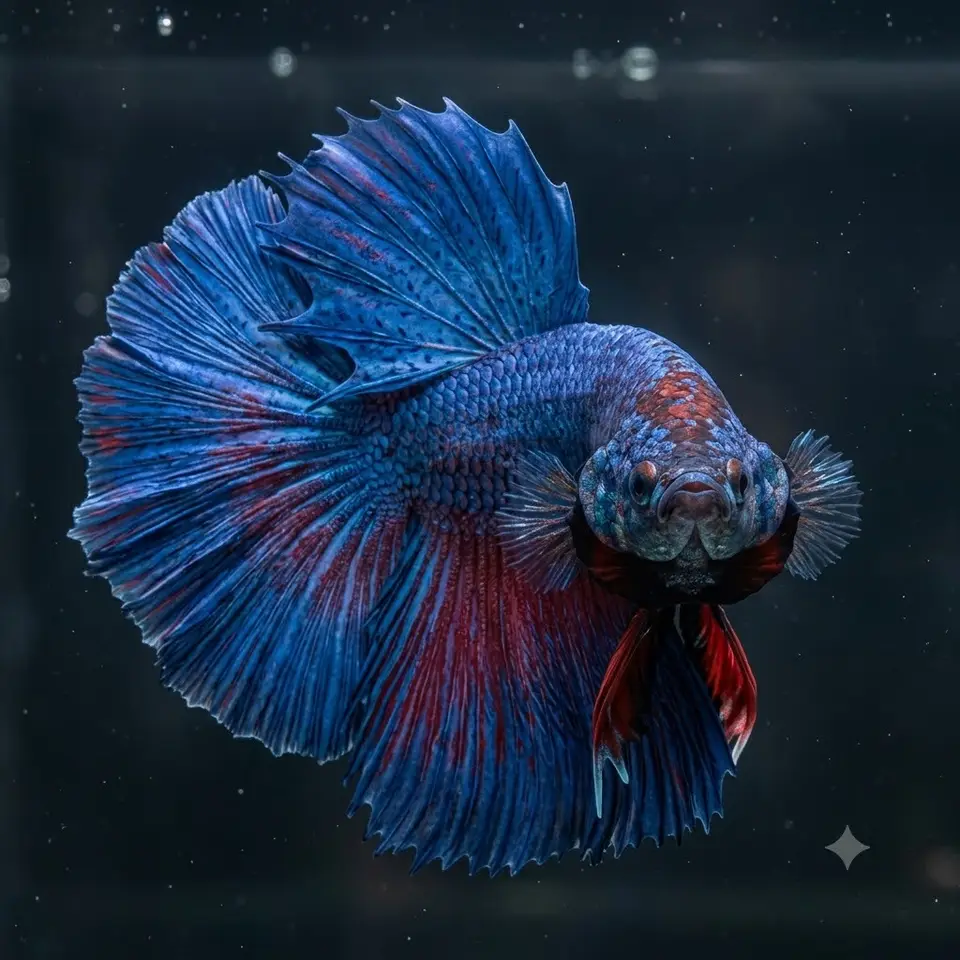 AI illustration
 Overview
The Giant Betta is a selectively bred, super-sized Betta splendens that reaches 3.5-5 inches (9-12 cm) - roughly twice the bulk of a standard betta - and needs the tank, food, and filtration budget to match. It is defined by a size gene complex, not a fin shape, so giants come in plakat, halfmoon, and other fin types. The trade-off for the impressive mass is a shorter lifespan and a real tendency toward obesity, so this is a variety for keepers who enjoy managed feeding, not casual bowl-keeping.
Natural History
Wild Betta splendens comes from the shallow, warm, slow waters of Thailand and the wider Mekong region. The giant line is recent and entirely man-made: around 1999 Thai breeders found an unusually large plakat male and line-bred for body size over successive generations. Size in bettas is polygenic and only partially dominant, which is why crossing a giant to a normal betta produces intermediate "half-giants" - a detail that matters a lot when you buy.
Appearance
A true giant runs 3.5-5 inches (9-12 cm) total, with a noticeably thicker body, broader head, and heavier jaw than a standard 2.5-inch (6 cm) betta. Most giants are plakats (short-finned), because fins do not scale up as reliably as bodies - long-finned halfmoon giants exist but often carry proportionally weaker finnage that tears and gets bitten. Every color and pattern in the betta palette shows up in giants: koi, marble, dragon scale, solid metallics.
Temperament & Tankmates
Same betta rules, bigger enforcer. Males are territorial and must live one per tank; flaring, patrolling, and bubble nests are all normal. The practical difference is mouth size - a giant can and will eat ember tetras, small shrimp, and fry that a standard betta only harasses. In a 15-20 gallon (57-75 L) tank, calm bottom dwellers like kuhli loaches or a small corydoras group usually work; skip anything tiny, nippy, or brightly finned.
Tank Size & Setup
10 gallons (38 L) minimum for one giant - the 5-gallon standard-betta guideline is cramped for this much fish and this much waste. Keep flow gentle (baffled filter), fit a tight lid (they jump), and include broad-leaved plants or a betta hammock near the surface, because the heavy body tires faster and giants rest more than standard bettas. As labyrinth breathers they need easy surface access and warm, humid air above the water, so do not run the lid wide open in a cold room.
Water Parameters
78-82°F (25.5-28°C) on a heater, pH 6.5-7.5, soft to moderately hard water, ammonia and nitrite at zero, nitrate under 20 ppm. A giant produces closer to "small goldfish" waste than "betta" waste, so filter accordingly and do 25-30% weekly water changes. Cool water is the fastest route to the sluggishness and infections this variety is already prone to.
Diet
Carnivore with an outsized appetite and poor self-control. Feed a quality high-protein betta pellet - giants handle larger pellet sizes - plus frozen bloodworms, brine shrimp, and daphnia. Portion discipline is the core giant-specific skill: two small meals a day, only what disappears in about two minutes, and one fast day per week. An overfed giant bloats quickly, and swim bladder trouble follows.
Health & Lifespan
2-4 years. Giants live noticeably shorter lives than the 3-5 years typical of standard bettas - the fast growth and extra mass tax the body. Variety-specific issues: obesity and swim bladder problems from overfeeding, increased susceptibility to bacterial infections in heavily line-bred stock, and, in long-finned giants, torn fins and tail biting because the fins are weak relative to the body. Prevention is unexciting and effective: warm stable water, strict portions, and clean nitrate-low conditions.
Pros & Cons
Pros:
- Genuinely imposing centerpiece fish with real presence
- Full range of betta colors and patterns
- Plakat giants are sturdy and less fin-damage-prone
- Same simple core care as a standard betta
Cons:
- Shorter lifespan than standard bettas
- Obesity and swim bladder issues without portion control
- Needs 10+ gallons and stronger filtration
- Eats small tankmates; pricier ($20-60 from breeders)
Everyday gear for aquariums
Links go to Amazon or a partner brand's own store and may earn us a commission at no extra cost to you. As an Amazon Associate we earn from qualifying purchases. An Amazon link leads to a type of gear and you choose the exact product; a card that names a store leads to that partner's own shop.
Giant Betta - frequently asked questions
Is a King Betta the same as a Giant Betta?
Usually not. Chain-store "kings" are typically large plakats or half-giants topping out around 3 inches (7.5 cm). A true giant from a breeder line reaches 4-5 inches (10-12 cm) - ask the seller for body size and the parents' size before paying giant prices.
Can a Giant Betta live in a 5-gallon tank?
It will survive but not thrive - the waste load and the fish's bulk make 5 gallons (19 L) cramped. Treat 10 gallons (38 L) as the floor and the fish will be more active and easier to keep clean.
Why does my giant just lie around?
Some resting is normal - giants are heavier and less buoyant than standard bettas. Constant lethargy usually means water too cool, overfeeding, or early swim bladder trouble; check the heater and cut portions first.
How fast do giants grow?
Quickly - most reach near-full size by 8-12 months, which is why juveniles need consistent feeding and very clean water. Buy young if you want to watch the growth; buy at 6+ months if you want to confirm you are getting a true giant.
Test yourself: guess the fish
Three clues from our quiz bank, each about another of our fish. Can you name them?
Clue 1.Native to the rice paddies of Southeast Asia, this fish has a special organ that lets it gulp air directly from the surface to survive low-oxygen water.
It's the Betta (Siamese Fighting Fish) - read the full profile →
Clue 2.Popular with aquarists who ship dormant eggs by mail, the males of this fish are far flashier than females.
It's the Killifish - read the full profile →
Clue 3.Nicknamed the 'king of the aquarium,' this round, flat Amazonian cichlid feeds its fry on mucus from its own skin.
It's the Discus - read the full profile →