Doubletail Betta
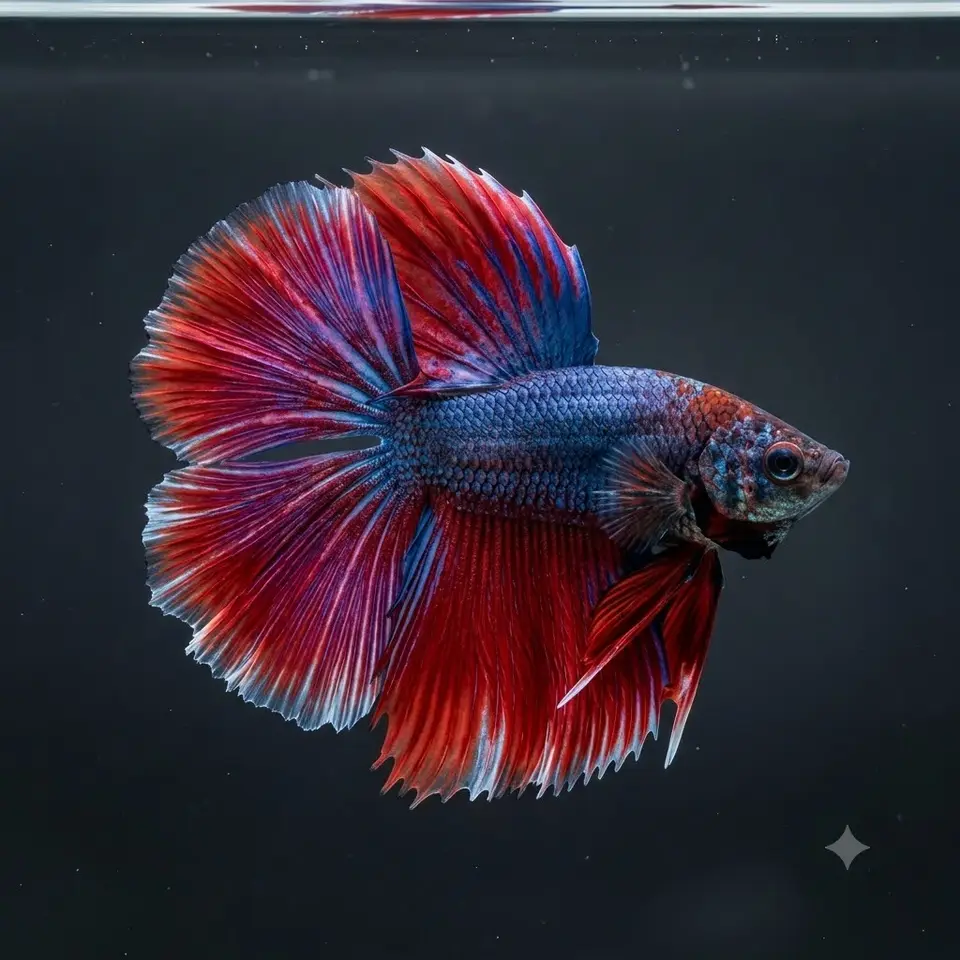
The Doubletail Betta is a Betta splendens variety whose caudal fin is genetically split into two distinct lobes, paired with an oversized dorsal fin that gives the fish a full, almost symmetrical silhouette.
Updated: October 2026
Species guide: Betta (Siamese Fighting Fish) · All betta varieties
 AI illustration
 Overview
The Doubletail Betta is a Betta splendens variety whose caudal fin is genetically split into two distinct lobes, paired with an oversized dorsal fin that gives the fish a full, almost symmetrical silhouette. It is a true genetic mutation rather than a tail-shape grade, so it appears in every color and can stack with other tail types - doubletail halfmoons and doubletail plakats both exist. Care is standard betta care with two honest caveats: heavier finnage and a stockier body that tilt the odds toward fin damage and swim bladder trouble.
Natural History
Wild Betta splendens from the rice paddies and slow ditches of Thailand and the Mekong basin are short-finned and single-tailed. The doubletail mutation appeared in domesticated ornamental lines and is controlled by a recessive gene - both parents must carry it for split-tailed fry to show up. Breeders have since folded the trait into nearly every modern line, which is why you see the double caudal on everything from veiltail-grade pet store fish to show halfmoons.
Appearance
A 2-2.5 in (5-6.5 cm) fish carrying two caudal lobes instead of one; on a good specimen the split runs all the way down to the caudal peduncle and both lobes match in size and spread. The other giveaway is the dorsal: doubletails carry a dorsal fin nearly as broad as the anal fin, a fullness no single-tail variety matches. Bodies run shorter and thicker than standard bettas (a side effect of the gene), and all colors and patterns occur, from solid red and steel blue to koi and marble.
Temperament & Tankmates
Standard betta rules apply: males are territorial and are best kept alone, and two males will fight on sight. In 10 gallons (38 L) or more, snails and amano shrimp usually coexist fine; slow, peaceful bottom dwellers sometimes work, fin-nippers never do. The doubletail deserves extra caution here - all that finnage makes it a slower swimmer than a plakat, so it is even less able to escape harassment, and a torn doubletail is a fin rot case waiting to happen.
Tank Size & Setup
5 gallons (19 L) minimum, heated, filtered, with the flow turned way down - a sponge filter or a baffled hang-on-back is ideal. The heavy dorsal-and-double-caudal package tires the fish, so provide resting spots: broad-leaved plants, a betta hammock, decor reaching near the surface. Skip hard plastic plants and sharp ornaments entirely; if it would snag a nylon stocking, it will shred fins. Use a tight lid, because bettas jump.
Water Parameters
76-82 F (24-28 C) with a heater even in warm rooms, pH 6.5-7.5, ammonia and nitrite at zero, nitrate under 20 ppm, and a 25-30% weekly water change. Warm, clean, still water is most of the job - a large share of "doubletail problems" are simply fin rot from cool or dirty tanks.
Diet
A quality betta pellet is the staple (two to four pellets twice daily) with frozen bloodworms, brine shrimp or daphnia once or twice a week. Feed lean: the shortened doubletail body compresses the internal organs, so this variety bloats and constipates more easily than long-bodied bettas. One fast day per week keeps the gut moving.
Health & Lifespan
3-5 years. Standard betta ailments apply (fin rot, ich, velvet), but two problems are variety-specific. First, swim bladder trouble: the same gene that doubles the tail shortens the spine, and that compressed body plan makes buoyancy issues noticeably more common, so feed lightly and keep water pristine. Second, the finnage itself: the huge dorsal and doubled caudal tear on decor, invite rot, and tempt some fish into stress-driven fin biting. Doubletail plakats sidestep most of this - the short-finned version keeps the look with far less drag.
Pros & Cons
Pros:
- Dramatic, full silhouette no single-tail variety matches
- Uniquely broad dorsal fin
- Comes in every color, and in a hardier plakat form
- Same simple 5-gallon care as any betta
Cons:
- More swim-bladder and bloat trouble than long-bodied types
- Heavy fins tear, rot and get bitten
- Quality full-split fish cost more than veiltails
- Very short-bodied specimens can carry real deformities
Everyday gear for aquariums
Links go to Amazon or a partner brand's own store and may earn us a commission at no extra cost to you. As an Amazon Associate we earn from qualifying purchases. An Amazon link leads to a type of gear and you choose the exact product; a card that names a store leads to that partner's own shop.
Doubletail Betta - frequently asked questions
What actually makes a betta a doubletail?
A recessive gene that splits the caudal fin into two lobes and broadens the dorsal. It is genetics, not a tail-shape grade - a doubletail can be a halfmoon or a plakat at the same time.
How do I pick a good one at the store?
Look for a split that reaches the tail base, evenly matched lobes, and a fish that swims level without obvious effort. Avoid extremely short, humped bodies and fish resting on the bottom - both signal the deformity side of the gene.
Can I breed two doubletails together?
Not recommended. Doubletail x doubletail spawns produce high rates of shortened spines and swim bladder defects. Serious breeders cross a doubletail to a single-tail gene carrier and still get split-tailed fry.
Are doubletails harder to keep than regular bettas?
Slightly. Same tank, heat and food - just lower flow, softer decor, leaner feeding and a closer eye on the fins. A doubletail plakat is barely any extra work at all.
Test yourself: guess the fish
Three clues from our quiz bank, each about another of our fish. Can you name them?
Clue 1.This tooth-carp's name comes from a Dutch word for a creek or ditch where it is often found.
It's the Killifish - read the full profile →
Clue 2.Prized for vivid stripes and patterns, this disc-shaped fish is one of the most colorful freshwater species kept.
It's the Discus - read the full profile →
Clue 3.A laterally compressed cichlid with vertical dark stripes, it forms monogamous pairs and guards its eggs on a flat leaf or surface.
It's the Angelfish - read the full profile →