Why Do Cats Purr?
Most purring happens when a cat is relaxed with a person or cat it knows, but cats also purr while nursing, falling asleep and sometimes when hurt. What a veterinary behaviourist says purring is for, the moments it stops, and how to read it alongside the rest of your cat.
 AI illustration
Please read this first. Purring is ordinary cat behaviour, and most of the time it means nothing is wrong. Cats can also purr when they are injured or unwell, so a purr on its own does not tell you a cat is fine. This article is a reading guide to the behaviour. It is not veterinary advice, and we do not give any. If your cat seems off in any way, purring or not, call your vet.
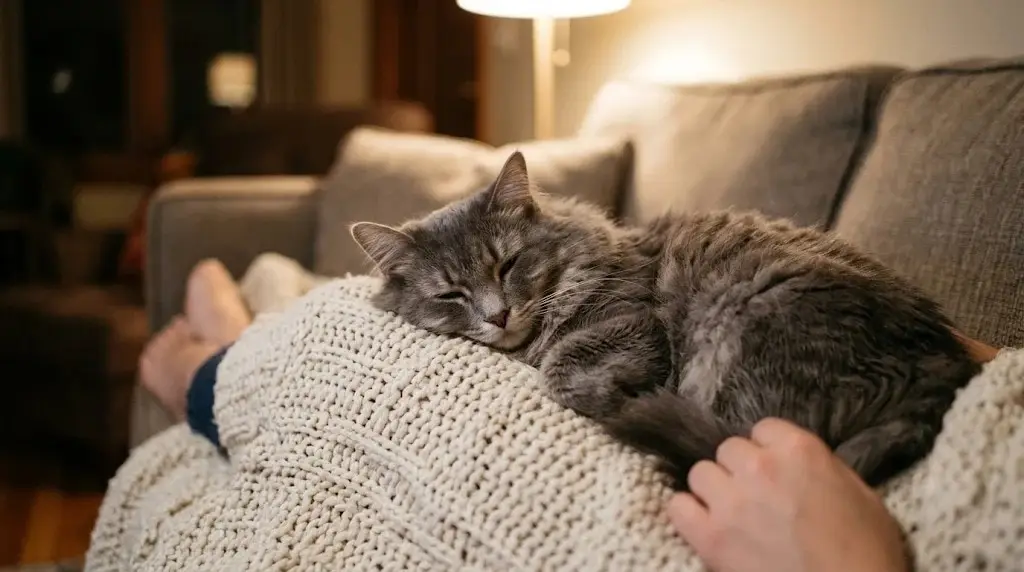
Cats purr mostly when they are relaxed in good company: on a familiar lap, greeting a cat they know, rolling on the floor or dozing somewhere warm. Dr. Barbara Sherman of the Behavioral Medicine Service at the NC State University veterinary hospital explains that cats are thought to purr to keep contact with other cats or with people, and that purring generally goes with friendly cat-human and cat-cat moments. The same piece adds two exceptions worth knowing: mother cats and kittens purr while nursing, and cats can purr when they are in pain.
When cats purr
The NC State article draws on a researcher who recorded free-ranging cats and noted the situations where purring turned up. Put together, they make a short list most owners will recognise:
- With a caretaker present, such as a cat settling on your lap or being stroked.
- Greeting a familiar cat, often with rubbing and rolling.
- In drowsy sleep or just before sleep, in a warm spot the cat knows.
- While nursing, both the mother and the kittens.
- When hurt. Vets see cats purr after an injury, including cats brought in after being hit by a car.
The common thread is contact and familiarity. A purr says “I am here and engaged with you” more reliably than it says “I am happy”.
When purring stops
The same source lists moments when cats do not purr: during aggressive or sexual encounters, while hunting or with prey in sight, and on a first sniff of catnip. If your cat is staring at a bird through the glass, chattering and twitching its tail, you will not hear a purr. That focused hunting state is a different mode, and our piece on why cats chatter at birds covers it.
How the sound is made
Purring is a rapid run of tiny sound bursts. The NC State piece describes them coming every 30 to 40 milliseconds, or about 25 times a second, loud enough for a nearby person or cat to hear, and says the frequency does not depend on the cat’s age, size, weight or sex.
Domestic cats are not alone. The same article notes that Charles Darwin recorded purring in the puma, cheetah and ocelot, while the big roaring cats such as lions, jaguars and leopards do not purr.
The purr at the food bowl
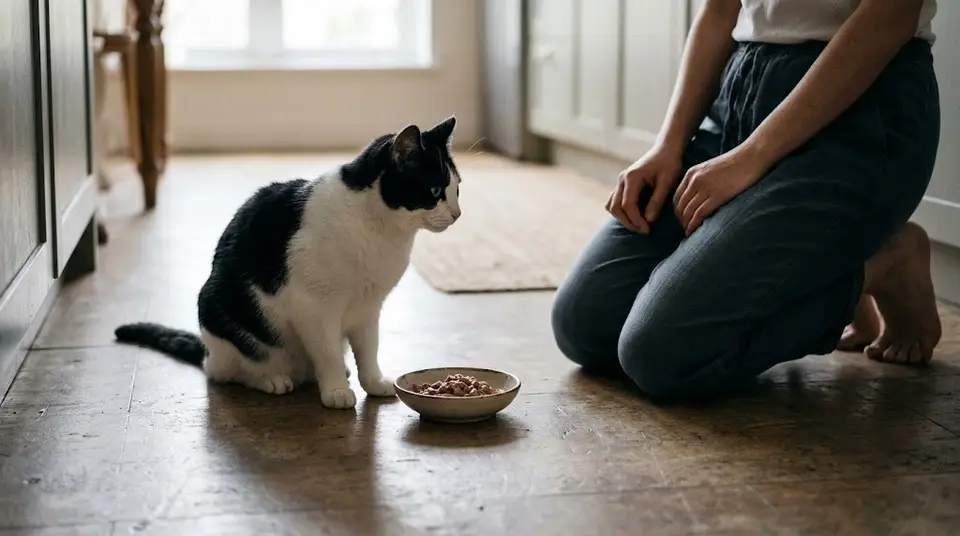
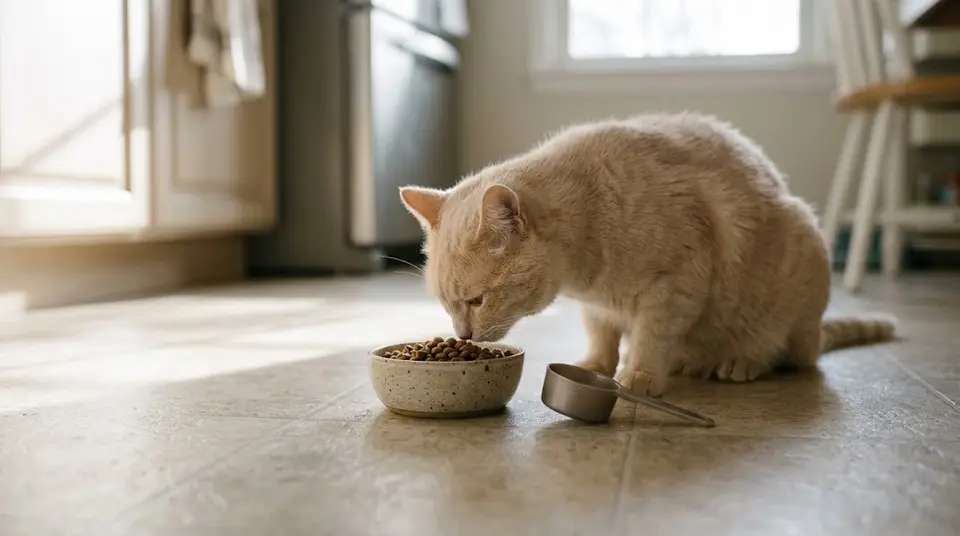
A purr can come mixed with a more insistent meow around feeding time. The NC State piece mentions that the “demand” cry at mealtimes can come together with purring. If your cat purrs and calls at the same time every morning, the timing points to breakfast as the subject of the conversation.
Reading a purr in context
Because cats purr both when content and when hurting, the purr itself is the least useful clue. Look at the rest of the cat:
- Relaxed body, soft eyes, kneading or slow blinking alongside the purr usually point to a comfortable cat. Kneading has its own explanation in our article on why cats knead with their paws.
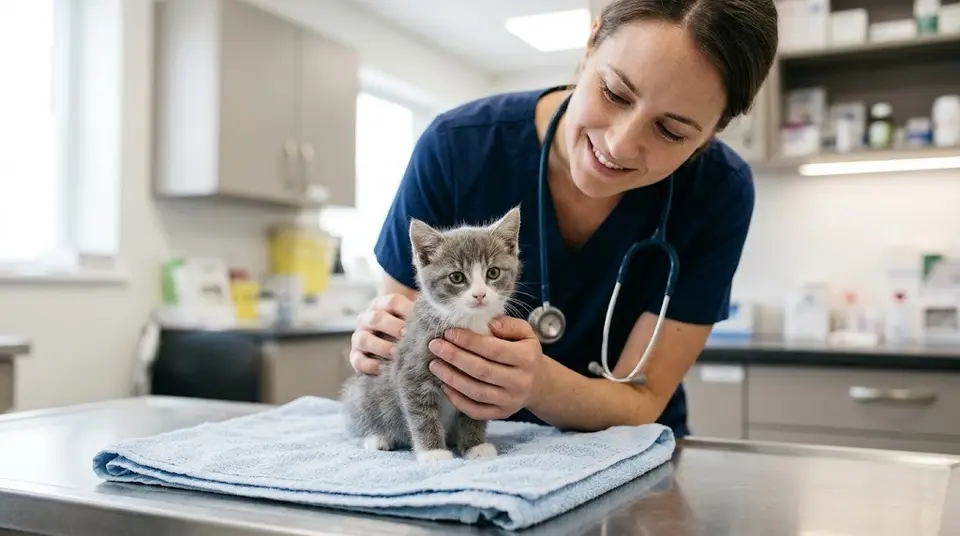
- Hiding, hunched posture, not eating, changes in litter box habits or a cat that resents being touched are reasons to call your vet, whether the cat is purring or silent.
- A change from normal is the thing to notice. A cat that has always purred a lot and suddenly stops, or one that starts purring in odd places, is worth mentioning to your vet.
For older cats, our senior cat care guide lists the routine checks to keep up as a cat ages, and the cat breed profiles note breed-specific health watch points.
Sources
- NC State University College of Veterinary Medicine, “Why do cats purr? NC State University College of Veterinary Medicine behavior expert explains” (read 16 November 2026): cvm.ncsu.edu
Recommended Gear on Amazon
- Self-warming cat beds - browse current options and reviews on Amazon.
- Cat window perches - browse current options and reviews on Amazon.
- Soft cat grooming brushes - browse current options and reviews on Amazon.
As an Amazon Associate, we earn from qualifying purchases - at no extra cost to you. This helps us keep producing free, in-depth guides.