Why Cats Chatter at Birds
The fast clicking jaw and tiny squeaks a cat makes at a bird through the window are a sign of a hunting animal that is switched on and cannot reach its target. What the common explanations are, what is known and not known, and how to give that energy somewhere to go.
 AI illustration
On health questions, we are not the authority. Chattering at birds is ordinary cat behaviour. A cat that suddenly makes odd jaw movements or teeth sounds with no bird, toy or other trigger in sight is a different matter, and that is a question for your veterinarian. We do not give veterinary advice; this piece is about reading normal behaviour.
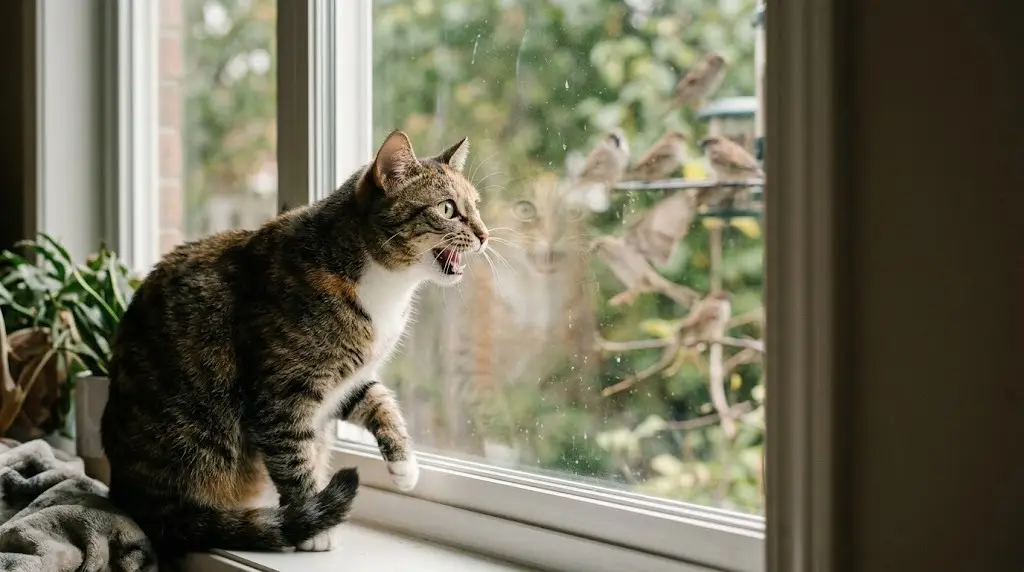
When a cat sits at the window staring at a bird, jaw trembling, making fast clicks or little bleating squeaks, it is reacting to prey it can see and cannot reach. The sound comes with the classic signs of a cat about to hunt: wide pupils, ears and whiskers pointed forward, tail twitching, body low or pressed to the glass. Nobody has settled exactly why cats make this particular noise. The explanations most often given are frustration, excitement, and a rehearsal of the bite a cat would use to kill small prey. None of them needs to be the only answer, and none suggests anything is wrong with the cat.
What chattering looks and sounds like
Chattering is easy to recognise once you have seen it. The mouth opens a little and the lower jaw moves very fast, so the teeth click or the lips smack. Some cats add short, high chirps or a stuttering bleat. It usually happens when the target is close but out of reach: a bird on the feeder outside, a squirrel on a fence, a fly high on the ceiling, a moth behind a lampshade.
You will often see it alongside the rest of the hunting sequence. A cat that chatters may also crouch, wiggle its hindquarters, flick the tip of its tail, or lunge at the glass. When the bird flies off, the noise stops and many cats walk away, groom, or look for something else to do.
It is common in indoor cats, partly because a window gives them a view full of targets they will never catch.
The usual explanations
Three overlapping explanations come up most often. They are explanations that fit what owners see, and as far as we could find, none has been tested well enough to call settled.
- Frustration. The cat’s hunting drive has been switched on and has nowhere to go. The jaw movement is the overflow of a behaviour that would normally end in a pounce.
- Excitement and arousal. The same burst of energy you see when a cat spots a toy it loves. Chattering often comes with dilated pupils and a tense, ready body, which point to a cat that is highly alert.
- Rehearsing the bite. Cats usually kill small prey with a bite to the back of the neck. Some people think the fast jaw motion is a version of that movement, played out at a distance.
A more speculative idea is that chattering imitates bird calls to draw prey closer. It comes up often online, and we could not find good evidence for it in pet cats.
What all three main explanations share is that chattering belongs to hunting. Our piece on why cats bring you dead animals covers the same instinct from the other end, when the hunt succeeds.
Is it a problem?
For most cats, no. Chattering is a normal, harmless behaviour. It is useful to you as a signal: it tells you the cat has spare hunting energy that the day is not using up.
Two situations deserve a closer look:
- Frustration that spills over. Some cats get so wound up at the window that they turn on the nearest target afterwards, which can be another cat in the house or a passing ankle. If you see that pattern, it is worth managing the window and adding more play, both covered below.
- Jaw movements without a trigger. Teeth chattering when nothing is there, especially with drooling, pawing at the mouth, eating less or dropping food, can point to mouth pain or other medical problems. That belongs with your vet, not with a behaviour article.
Give the hunting drive somewhere to go
You cannot remove the instinct, and there is no reason to try. What you can do is give it an ending.
- Play sessions that end in a catch. A wand toy that moves like a bird or a mouse, darting away and hiding, then letting the cat catch it at the end. A few short sessions a day, ideally before meals, match the hunt-catch-eat rhythm. Our guide to choosing cat toys goes into the kinds of toys that hold a cat’s interest.
- Food that takes work. Puzzle feeders and treat balls turn a meal into a small hunt.
- A good window seat. If your cat loves bird watching, a perch at the window makes it comfortable. Watching is enrichment in itself for many cats.
- Manage what is outside. If watching turns into frantic lunging or redirected attacks, move the bird feeder further from the window, or cover the lower part of the glass with frosted film so the cat sees less.
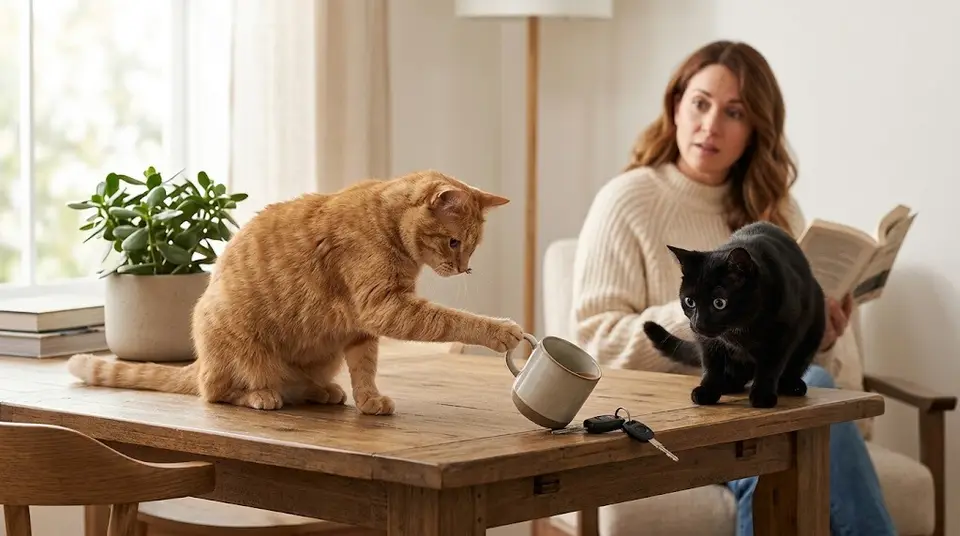
The same idea runs through other “odd” cat habits. A cat knocking things off tables is often running a small version of the same hunting pattern on whatever happens to be nearby.
A note on birds outside
If your cat goes outdoors, chattering at the feeder is a reminder that birds nearby are within its reach. Keeping a cat indoors or in an enclosed outdoor space such as a catio, and placing feeders where cats cannot ambush them, keeps those birds out of its reach. Rules and advice on outdoor cats differ by country and local area, so check what applies where you live.
For an indoor cat, the chattering at the glass is mostly a sign that it is paying attention and would like something to do. A play session with a toy that flies and lands may be exactly what it is asking for.
Recommended Gear on Amazon
- Wand toys - browse current options and reviews on Amazon.
- Window perch - browse current options and reviews on Amazon.
- Puzzle feeder - browse current options and reviews on Amazon.
As an Amazon Associate, we earn from qualifying purchases - at no extra cost to you. This helps us keep producing free, in-depth guides.