Senior Cat Care Essentials
Cats hide aging well. What changes after 11, the kidney and thyroid checks worth asking your vet about, and the litter box, grooming, and water fixes that help.
Not veterinary advice. This is general information only - for anything medical, your vet is the right person to ask.
Cats count as seniors once they are over 10 years old - that is the definition in the AAHA Senior Care Guidelines - and the core of senior cat care is compensating for one fact: cats hide illness well. The practical answer is more frequent vet visits with bloodwork (kidneys and thyroid are the big two to ask about), low-sided litter boxes, easier access to water, and a little grooming help. Those four things cover a great deal of what an aging cat needs.
Cat Age, Honestly
A rough conversion from Cornell’s Feline Health Center: a one-year-old cat is like a 16-year-old person, a two-year-old like a person of 21, and each year after that is worth about four human years - which puts an 11-year-old cat in its late fifties and a 15-year-old in its seventies. Many cats live well into their teens, so “senior” can be a long, manageable phase, not a countdown.
The tricky part is that cats show age quietly. A senior cat rarely limps dramatically or whines. Instead you see small behavioral shifts: sleeping in new (usually warmer or lower) places, skipping the jump to the windowsill, a coat that looks slightly unkempt, less interest in play. Each of these is easy to dismiss individually. Together, they are information.
Kidneys and Thyroid: The Two Big Conversations
Two conditions dominate feline old age, and both are worth asking your vet to screen for even in a cat who seems fine:
- Chronic kidney disease (CKD). Very common in older cats: according to Cornell’s Feline Health Center it affects up to 40% of cats over 10 and 80% of cats over 15. In the early stages there are usually no obvious signs; later the cat drinks and urinates more. It cannot be cured, but Cornell notes that the earlier it is diagnosed and treated, the better the outcome - which is exactly why senior screening with blood and urine tests exists.
- Hyperthyroidism. Also common in middle-aged and older cats, and sneaky in the opposite direction: the most common signs are weight loss with an increased appetite, and more thirst and urination. The cat eats well, seems energetic, even demanding - and loses weight anyway. A ravenous cat that is getting thinner is a classic pattern worth reporting, not celebrating.
We are deliberately not telling you how to treat either one - that is entirely your vet’s territory, and treatment depends on test results, stage, and the individual cat. Your job is earlier detection: regular checkups with bloodwork once your cat is a senior, plus watching water intake, litter box output, and monthly weight at home. A kitchen scale and a carrier, or a baby scale, will show a 200-gram drift long before your hands do.
The Litter Box, Revisited
Litter box problems in old cats often have a physical cause, and arthritis is a common one. Cornell puts it plainly: cats with painful arthritis may have difficulty getting to a litter box, especially if stairs are involved, and even climbing into the box may hurt.
- Low entry. Choose a box with a low entry. A cheap fix: a large plastic storage box with a U-shaped cutout, edges sanded or taped smooth.
- More boxes, easier locations. The old rule of one box per cat plus one still applies, but placement matters more now: one on every floor your cat uses, none that require stairs or a jump, none in cold garages or basements.
- Bigger and uncovered. Stiff cats need room to turn and dislike squeezing under hoods.
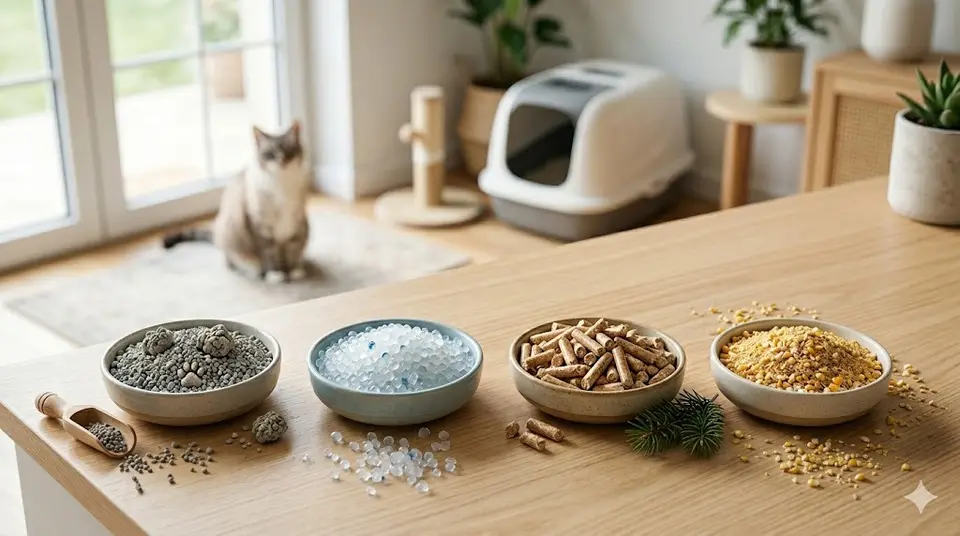
- Softer litter, kept shallow. Fine, soft litter in a shallow layer gives weak legs steadier footing than a deep one.
If accidents happen, treat them as data, not defiance. A previously clean cat who misses the box has a reason - pain, a medical issue, or a box that has become hard to use. Rule out the box logistics above, and if the problem persists, this is a vet conversation, not a discipline problem. Our problem solver has a walkthrough for litter box issues specifically.
Grooming: They Need Help Now
Grooming is one of the clearest windows into a senior cat’s comfort. Cats groom by bending and twisting, and arthritic cats quietly stop reaching their lower back, hips, and hindquarters. The result: greasy or clumped fur over the spine and rear, dandruff, and eventually mats.
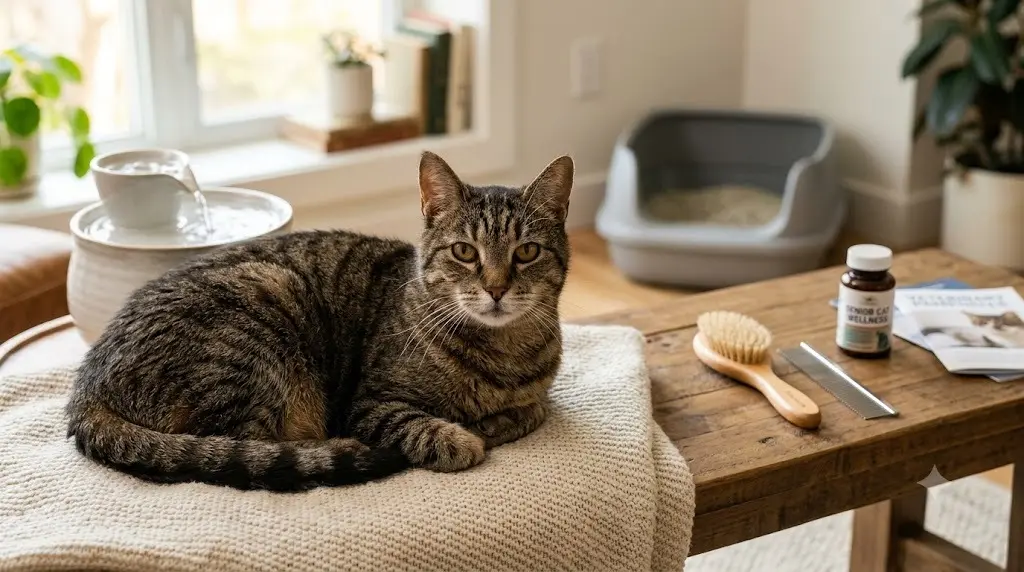
- Brush a senior cat regularly with a soft brush, focusing on the places they no longer reach.
- Mats should be teased apart or clipped with blunt-tipped tools - never scissors against the skin. For heavy matting, a groomer or vet is the safe route.
- Check nails every couple of weeks. Cornell notes that the claws of aging cats are often overgrown, thick and brittle; left alone, an overgrown claw can curl round into the paw pad. If you are not confident trimming them, your vet’s team can do it.
A cat who has visibly stopped grooming, or who resents being touched over the hips, is telling you something worth passing on to your vet.
Water: Make Drinking Effortless
Easy access to water matters for an older cat, and a change in how much it drinks is information: Cornell lists increased thirst among the warning signs to report to your vet.
- Multiple stations. Water on every floor, never next to the litter box, and ideally not directly beside food (many cats prefer them separated).
- Wide, shallow bowls. Some cats seem to prefer a wide ceramic or glass bowl filled to the brim. It costs nothing to try.
- Fountains. Some cats prefer moving water. If you buy one, clean it weekly - a slimy fountain is worse than a clean bowl.
- Wet food. The biggest lever for water intake: canned food is at least 75% moisture, dry food 6 to 10%. Whether and how to shift your cat’s diet is worth raising at your senior checkup, since diet choices interact with kidney and dental status.
Comfort Around the House
- Warmth. Old cats seek heat. A bed in a warm room, a self-warming pad, or simply a fleece in a sunny spot is usually welcome.
- Steps to favorite perches. Cats do not stop wanting the windowsill; they stop being able to jump to it. A small ramp, a stool, or pet steps preserve access - and preserving access preserves activity.
- Keep the map stable. Cats with fading vision or early cognitive changes navigate by memory. Avoid rearranging furniture, food, and boxes without need.
- Gentle play still counts. Two or three short wand-toy sessions a day help keep an old cat moving. Let the cat play lying down if that is what they offer - batting from a sphinx position is still exercise.
The Checkup Rhythm
Once your cat is over 10: the AAHA guidelines recommend a medical workup for senior pets once or twice a year. Their test table for senior cats lists a blood count, blood chemistry and urinalysis every 6 to 12 months, and thyroid (T4) and blood pressure checks every year. Between visits, track at home: monthly weight, water intake trend, litter box output, appetite, and grooming condition. Five lines in a phone note, updated monthly, make your vet visits more useful.
Call sooner (do not wait for the scheduled visit) if you see: weight loss, drinking noticeably more, vomiting more than occasionally, not eating for more than a day, crying at night, or any sudden behavior change. With cats, a “sudden” change is often a slow problem finally becoming visible.
The Short Version
- Senior from over 10; vet visits once or twice a year with bloodwork; ask about kidneys and thyroid.
- Low-entry, uncovered, well-placed litter boxes - an “accident” often has a physical reason.
- Brush the places they cannot reach; check those thickening claws.
- Make water abundant and effortless; discuss wet food with your vet.
- Warm beds, steps to perches, a stable home layout, and short daily play.
Senior cats are wonderful company - calmer, more affectionate, deeply settled into their people. Meet them halfway on the logistics, and the last third of their life can be as good as the first two.
Recommended Gear on Amazon
- Low-entry litter box - browse current options and reviews on Amazon.
- Heated cat bed - browse current options and reviews on Amazon.
- Pet steps - browse current options and reviews on Amazon.
- PrettyLitter - a colour-changing litter. It is not a medical test and does not replace the blood and urine tests above (affiliate link).
As an Amazon Associate, we earn from qualifying purchases - at no extra cost to you. This helps us keep producing free, in-depth guides.