Alien Betta
The Alien Betta is a hybrid variety created by crossing domestic Betta splendens with wild bettas of the smaragdina complex, producing a short-finned fish armored in metallic green, blue, or copper scaling from nose to tail.
Updated: October 2026
Species guide: Betta (Siamese Fighting Fish) · All betta varieties
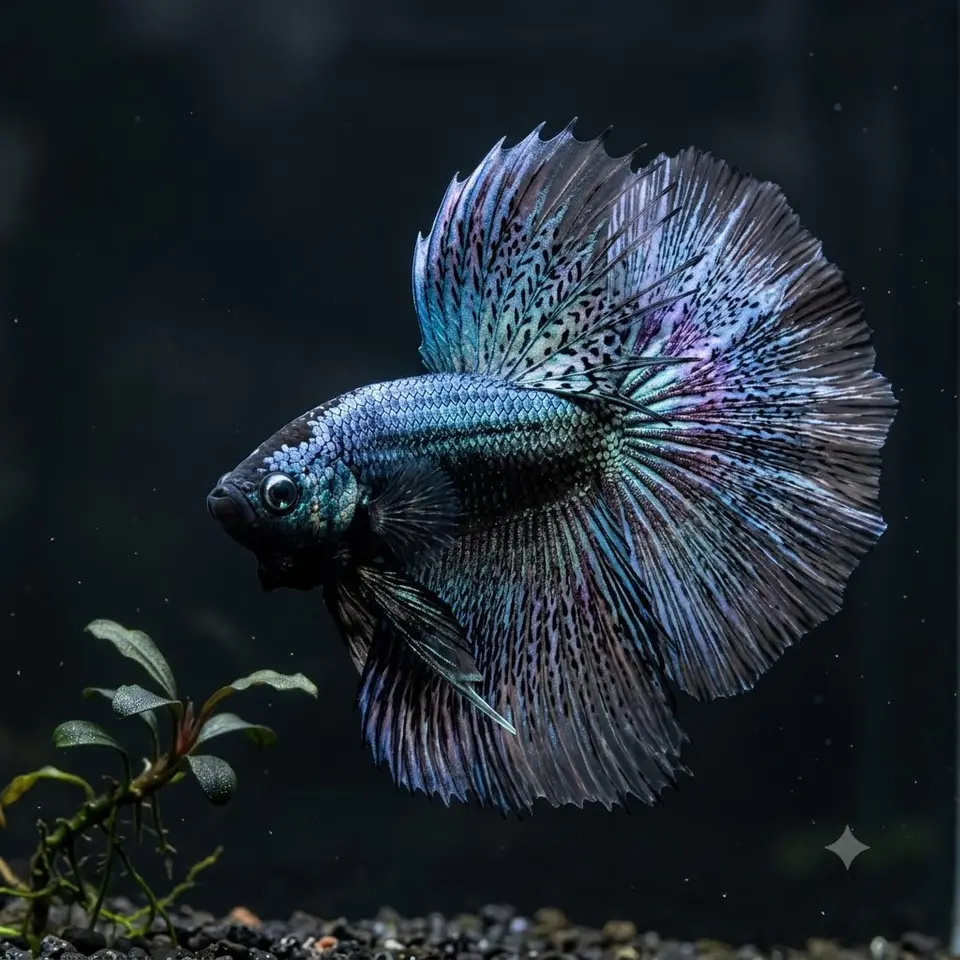 AI illustration
 Overview
The Alien Betta is a hybrid variety created by crossing domestic Betta splendens with wild bettas of the smaragdina complex, producing a short-finned fish armored in metallic green, blue, or copper scaling from nose to tail. Unlike halfmoons or crowntails, the alien is defined by pattern and genetics rather than fin shape: a fully masked iridescent head, black-edged snakeskin scales, and wild-type athleticism. Care is close to a standard plakat betta with two twists - these fish are serious jumpers, and many males are infertile.
Natural History
There is no wild alien betta. Thai breeders developed the line in the mid-2010s by crossing Betta splendens with wild species such as Betta smaragdina, Betta mahachaiensis, and Betta stiktos, chasing the wild fishes' full-body iridescence on a tank-hardy domestic frame. The results were marketed as "alien" bettas and refined over successive generations. Because it is a hybrid, the alien is neither a species nor a fin type; it sits alongside koi and dragon-scale bettas as a color and pattern project, and quality varies a lot between lines.
Appearance
A compact 2-2.5 in (5-6.5 cm) fish with short, plakat-style fins inherited from its wild parents. The defining trait is the full mask: iridescent scaling covers the entire head, which stays dark on ordinary bettas. Dense metallic scales with dark edging create a hexagonal snakeskin texture across the body. Green is the classic form, blue is common, and copper or gold aliens are rarer and pricier. The fins carry dark rays with iridescent webbing, giving a striped, ray-by-ray look. Females show similar color and are harder to sex than domestic strains.
Temperament & Tankmates
The wild genes show in behavior. Aliens are alert, fast, and noticeably more skittish than pet-store bettas, and they are exceptional jumpers. Aggression varies by individual - some are as fierce as any show plakat, so never count on getting a mellow one. Keep one male per tank, never pair males, and skip long-term female groups. Workable tankmates in a 10 gallon (38 L) or larger: nerite or mystery snails and small peaceful schoolers like ember tetras. Shrimp are at risk. Avoid fin nippers and other anabantoids.
Tank Size & Setup
5 gallons (19 L) minimum, 10 gallons (38 L) better for such an active swimmer. A tight-fitting lid is non-negotiable - jumping is the number one killer of this variety. Furnish heavily: live or silk plants, a cave or two, and Indian almond leaves for tannins. Dim light and tea-stained water mimic the wild parents' habitat and visibly calm a skittish alien. Keep filtration gentle with low flow.
Water Parameters
Heated water at 76-82F (24-28C). pH 6.5-7.5, ideally the lower half given the wild lineage; soft to moderately hard water. Ammonia and nitrite at 0, nitrate under 20 ppm, with 25-30% weekly water changes. Aliens tolerate standard betta parameters, but soft, slightly acidic, tannin-rich water brings out the best color and behavior.
Diet
A carnivore like any betta. Feed a quality betta pellet as the staple in two small daily meals, and rotate frozen or live bloodworms, brine shrimp, and daphnia two to three times a week. Freshly imported aliens sometimes refuse pellets at first - wean them over with frozen foods. Skip one feeding day per week to protect the gut.
Health & Lifespan
3-5 years. Short fins spare aliens the fin rot, tail biting, and swimming fatigue that plague halfmoons and rosetails, making them one of the sounder betta builds. Watch instead for velvet and ich, especially in new imports, plus internal parasites in thin transshipped fish. Stress illness from bare, bright tanks is common until cover is added. On breeding: many first-generation hybrid males are partially or fully infertile, which matters if you plan to spawn. Buying tips - expect $25-60 US from importers or Thai breeders via transshippers; choose a fish with a complete head mask, even snakeskin patterning without bare patches, and active, unclamped finnage.
Pros & Cons
Pros:
- Metallic full-mask look no other betta variety has
- Short fins mean fewer fin rot and tail-biting problems
- Hardy, athletic build compared with heavy-finned show types
- Standard betta care with no exotic equipment
Cons:
- Skittish and a world-class jumper - lid mandatory
- Many males infertile, so poor for breeding projects
- Pricier and harder to find than pet-store bettas
- Aggression unpredictable; tankmate plans can fail
Everyday gear for aquariums
Links go to Amazon or a partner brand's own store and may earn us a commission at no extra cost to you. As an Amazon Associate we earn from qualifying purchases. An Amazon link leads to a type of gear and you choose the exact product; a card that names a store leads to that partner's own shop.
Alien Betta - frequently asked questions
Is the Alien Betta a real species?
No. It is a man-made hybrid between Betta splendens and wild species like Betta smaragdina and Betta mahachaiensis. "Alien" is a trade name for the pattern, not a scientific name.
Can I breed Alien Bettas?
Sometimes. Many first-generation hybrid males are infertile, and even fertile pairs throw mixed-quality fry. If breeding matters, buy later-generation stock from a breeder who can vouch for the line's fertility.
Are aliens more aggressive than normal bettas?
Not reliably more, but not less either - the mixed genetics make individuals unpredictable. House every alien as if it were a typical territorial betta and treat any tankmate experiment as reversible.
Why does my alien betta hide all the time?
Wild-blooded bettas hate bright, bare tanks. Add plants, cover, and Indian almond leaves, dim the light, and give it a week or two - most settle into confident, curious fish once they feel secure.
Test yourself: guess the fish
Three clues from our quiz bank, each about another of our fish. Can you name them?
Clue 1.This peaceful armored aquarium fish gulps air from the surface and breathes part of it through its gut.
It's the Corydoras Catfish - read the full profile →
Clue 2.Prized for vivid stripes and patterns, this disc-shaped fish is one of the most colorful freshwater species kept.
It's the Discus - read the full profile →
Clue 3.Famous for multiplying fast, these fish carry developing fry internally until the babies emerge swimming.
It's the Molly / Platy / Swordtail (Livebearers) - read the full profile →