Why Does My Dog Eat Dirt?
Why dogs eat dirt and other non-food things (pica): puppy exploring, scavenging and compulsive eating, the medical causes vets rule out first, the signs of a blockage, and what Merck Veterinary Manual says helps - prevention and a work-for-food routine. A reading guide, not veterinary advice.
 AI illustration
This is a reading guide to what veterinary references say about pica, eating non-food things. A dog that vomits, stops eating or seems in pain after swallowing something it shouldn’t may have a blockage: call your vet now.
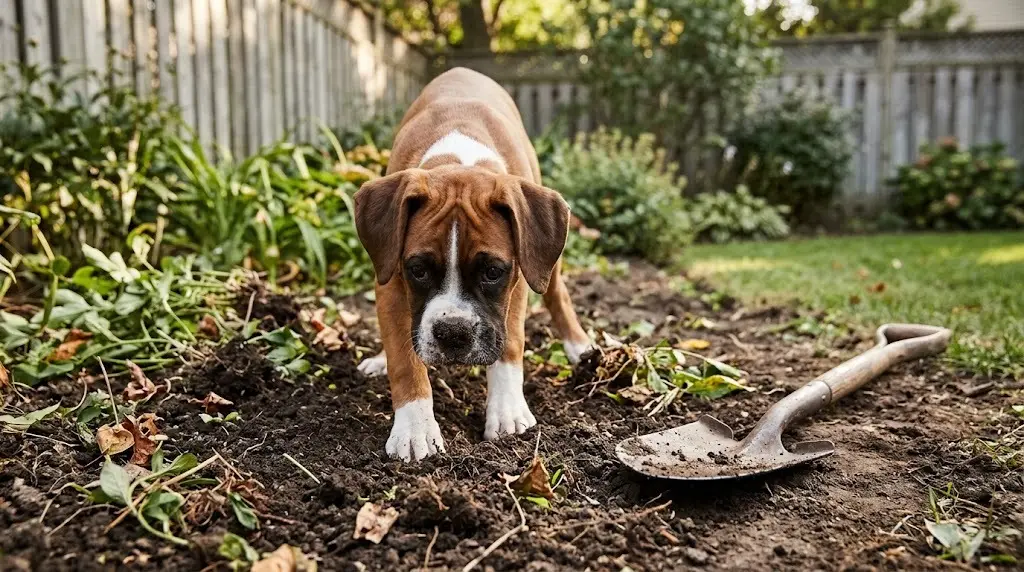
The short answer: eating dirt now and then is often plain exploring. Many dogs, especially puppies, chew and swallow non-food things as part of investigating the world. Some dogs scavenge because it pays off for them, the Merck Veterinary Manual notes. A dog that keeps eating dirt, stones, sticks, mulch or fabric has what vets call pica. Merck’s first rule for it, as for every eating problem, is to rule out a medical cause before treating it as behavior.
Medical Causes First
Merck says digestive problems can trigger pica. In its professional guidance, a vet looking at pica considers gut and metabolic diseases first, such as:
- stomach ulcers
- inflammatory bowel disease
- food intolerance
- Cushing disease and Addison disease
Some drugs make dogs ravenous, including corticosteroids and phenobarbital. So a vet visit for pica usually means an examination, a look at the diet and medicines, and blood, urine and stool tests.
Behavior and Habit
- Exploring. Puppies investigate with their mouths. This tends to fade with supervision and age.
- Scavenging that pays off. A dog that finds something tasty in the dirt, compost or trash keeps looking.
- Compulsive eating. Merck notes that some dogs with pica have a compulsive disorder. That means repetitive behavior done so much that it crowds out normal activity.
- Linked habits. In a large UC Davis owner survey, dogs that ate dirt were more likely to eat stools too (Hart et al., 2018). See why dogs eat their own poop.
The Real Risk: A Blockage
Stones, sticks, corn cobs, fabric and plastic can get stuck. Merck describes the signs of a blocked intestine as lethargy, loss of appetite and vomiting. They can also include diarrhea, belly pain or swelling, fever and dehydration. Without treatment, a complete blockage can kill through shock from fluid loss, so it is an emergency (Merck). Merck adds two points owners should know:
- Young, large-breed dogs are the most likely to have a blockage from a swallowed object.
- Many dogs that have swallowed things before keep doing it, even after the discomfort it caused.
What Helps
Merck’s advice for eating problems in dogs has two parts:
- Prevent access. Pick up what your dog goes for, fence off flower beds or the compost, and keep the dog away from them whenever you cannot supervise. When you can supervise, keep it busy with other chewing and play.
- Work for food. Use part of each meal as training rewards and serve the rest in toys the dog has to chew or move to empty. Merck says this makes eating an enjoyable, mentally challenging activity that takes longer. Our guide to tough dog toys covers hollow food toys and puzzles.
For compulsive pica, Merck notes that vets may add medication to a behavior plan. Ask your vet whether a referral to a veterinary behaviorist makes sense.
Related reading: why dogs eat grass.