Why Dogs Eat Their Own Poop
Why dogs eat stools (coprophagia): what a UC Davis survey of about 3,000 dogs found - 16% frequent stool eaters, mostly fresh stools, greedy eaters and multi-dog homes - the medical causes vets rule out first, and why prevention works better than powders. A reading guide, not veterinary advice.
 AI illustration
This is a reading guide to published veterinary research and references on stool eating. A medical problem can sometimes be behind it, so if your dog starts doing it suddenly or also eats much more than usual, the first step is your vet.
The short answer: stool eating (coprophagia) is common and usually not a sign of illness. In a survey of dog owners by veterinary behaviorists at the University of California, Davis, 16% of dogs were frequent stool eaters, meaning they had been seen at it at least six times. 23% had been seen doing it at least once (Hart et al., 2018). The Merck Veterinary Manual says the same in fewer words: it can be normal behavior in some dogs, and it occasionally has a medical cause.
What the UC Davis Survey Found
The study ran two online surveys of owners, mostly in the United States and Canada. One had 1,552 usable answers about dogs in general. The other had 1,475 answers from owners of dogs that ate stools often. Among its findings:
- Diet and age were not linked to it. The researchers found no evidence tying it to the dog’s food. Most stool eaters were adults, not puppies: 75% were over 4 years old.
- Stool eaters were house-trained as easily as other dogs, so they are not dogs that just do not mind feces.
- Greedy eaters do it more. 51% of stool eaters were described as greedy eaters, against 28% of the other dogs.
- Multi-dog homes see more of it. Terriers and hounds were the breed groups most likely to do it.
- It is mostly fresh stools. 85% of the frequent stool eaters ate stools no more than two days old.
The authors offer a hypothesis for that last point. Wolves may have cleared fresh feces from their resting areas before parasite eggs in them became infective, which for common worms takes at least two days. They call this explanation tentative.
Medical Causes a Vet Will Rule Out
Merck’s advice for all eating problems in dogs is to exclude medical causes first. Some drugs, such as corticosteroids and phenobarbital, increase appetite, and metabolic diseases such as Cushing disease can make dogs eat more. Exocrine pancreatic insufficiency, where the pancreas does not make enough digestive enzymes, causes excessive eating, weight loss and pale, loose, bulky stools (Merck). A check-up makes sense if your adult dog starts doing it for the first time. The same goes if it is hungrier than usual, losing weight, or has loose stools.
Other Reasons Vets Give
Merck lists a few non-medical reasons:
- Mothers clean their puppies. Eating the waste of young puppies is part of normal maternal behavior.
- Exploring. Many dogs are drawn to feces, compost and prey as part of exploring.
- Little to do. Dogs kept confined a lot with little stimulation may learn to eat feces.
- The puppy’s early life. Merck notes that pet-store puppies, which spend long periods in cages, may have learned to play with or eat feces.
What Helps
The survey’s sobering finding was that almost nothing owners tried worked. In the UC Davis results, chasing the dog away, lacing stools with pepper and punishment collars succeeded for 1 to 2% of owners, rewarding “leave it” did best at 4%, and the 11 food additives and tablets sold for the problem succeeded for 0 to 2%. That leaves two practical steps, both in line with Merck’s general advice:
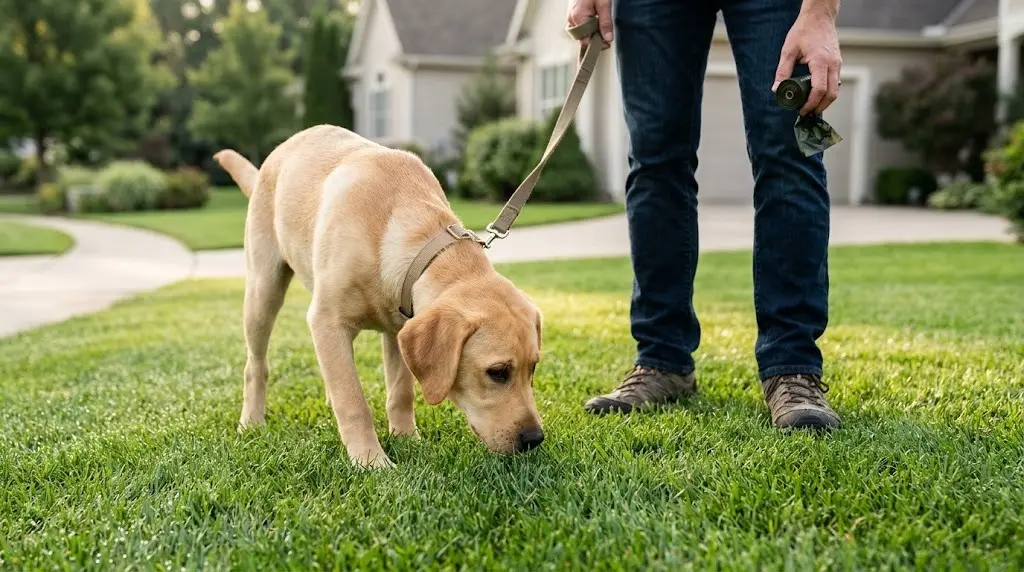
- Prevent access. Pick up stools right away, especially in a multi-dog home, and supervise the dog in the yard. Since dogs go for fresh stools, quick clean-up targets exactly what they eat.
- Give the mouth and mind something else to do. For eating problems in general, Merck suggests a “work-for-food” routine: use part of the food as training rewards and serve the rest in toys the dog has to chew or move to empty. Our guide to tough dog toys covers hollow food toys and food puzzles.
The UC Davis authors also note that some parasites and bacteria in feces can infect a dog straight away, which is one more reason to clean up quickly. Ask your vet how often to check your dog’s stools for parasites.